E-mail to a friendE-newsletterContact us
HomeAbout usAdviceBirdsJoinOur workReservesSupport usShopThings to do
  • Overview
  • Awards & recognition
  • Contact us
  • Facts and figures
  • History
  • How we are run
  • Inspiring work
  • Job vacancies
  • Looking to the future
  • Media centre
  • Offices
  • The RSPB view
  • What we do
  • Overview
  • Farming
  • Gardening
  • Green living
  • Helping birds
  • Land management
  • Law
  • Watching birds
  • Overview
  • Aren't birds brilliant!
  • Birds by name
  • Birds by family
  • Bird identifier
  • Features
  • Reserves
  • Webcams
  • Wildlife garden guide
  • Overview
  • Campaigns
  • Corporate membership
  • Credit card
  • Donations
  • Fundraising
  • Gift Aid
  • Shop
  • Green energy
  • Holidays in the UK
  • Join the RSPB
  • Leave a legacy
  • Recycle your mobile phone
  • Share giving
  • Vehicle breakdown cover
  • Overview
  • Join now
  • Why join?
  • Membership as a gift
  • Membership benefits
  • Renewals
  • Other ways to support us
  • Overview
  • Great days out
  • By habitat
  • By name
  • By location
  • Recent sightings
  • Shops on reserves
  • Overview
  • Around the UK
  • Conservation
  • Document library
  • Farming
  • International
  • Job vacancies
  • News
  • Media centre
  • Policy
  • Reserves
  • Science
  • Teaching
  • Shop homepage
  • Binoculars
  • Bird care
  • Books and DVDs
  • Calendars & diaries
  • Christmas
  • Homeware
  • Toys
  • Virtual gifts
  • Wildlife care
  • Overview
  • For kids
  • Near you
  • Events
  • E-newsletter
  • Fundraising
  • Local groups
  • Reserves
  • Surveys
  • Volunteering
  • Webcams
The Royal Society for the Protection of Birds
Oak woodland, Haweswater Nestbox on tree, RSPB Wood of Cree reserve Blue tit on snowy branch
ABCDEFGHIJKLMNOPQRSTUVWXYZ
Blue tit

Green conservation status

Sound files

Listen

Video files

1 video

Sound clips and movies require Adobe Flash player.

Latin name

Cyanistes caeruleus

Family

Tits (Paridae)

Overview

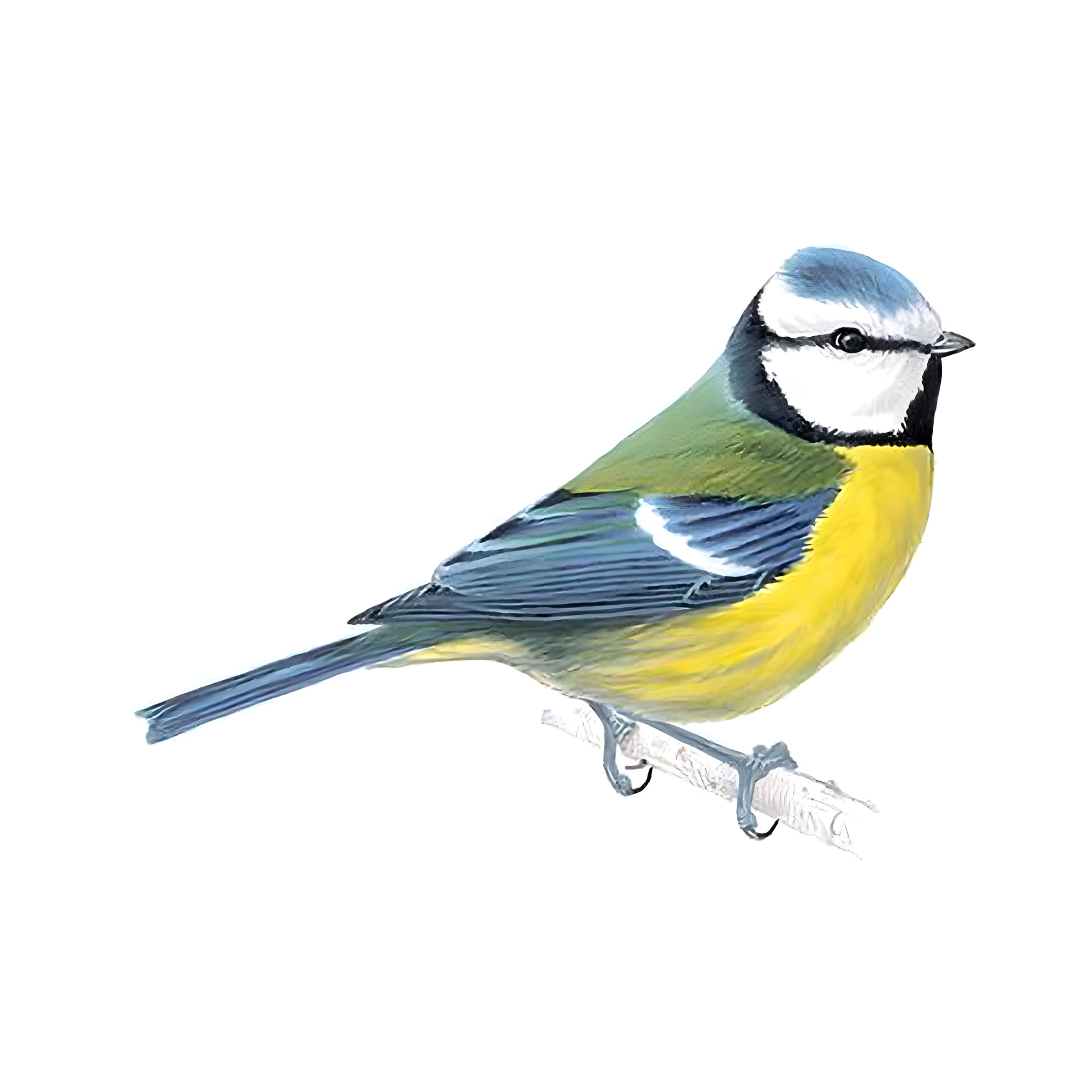
Its colourful mix of blue, yellow, white and green make the blue tit one of the most attractive resident garden birds. Almost any garden with a peanut feeder will attract them and they readily breed in nestboxes. In winter they form flocks with other tit species and a garden with four or five at a bird table at any one time, may be feeding 20 or more.

Where to see them

A common woodland and garden bird, also seen along hedgerows and in most places with trees and bushes.

When to see them

All year round.

What they eat

Insects, caterpillars, seeds and nuts.

Estimated numbers

EuropeUK breeding*UK wintering*UK passage*
20-44 million pairs3,535,000 territories15 million birds-

* UK breeding is the number of pairs breeding annually. UK wintering is the number of individuals present from October to March. UK passage is the number of individuals passing through on migration in spring and/or autumn.

Distribution

Key

In the UK
All UK
In Europe
All Europe
Worldwide
Europe, N Africa and Near East

Please note that the map is only intended as a guide. It shows general distribution rather than detailed, localised populations.

Find out more

  • Videos

Audio is from commercial recordings Bird Songs and Calls of Britain and Europe on 4 CDs or Bird Sounds of Europe & North-west Africa, copyright WildSounds & CEBA (www.wildsounds.com, (UK) +44 (0) 1263 741100)

Print this page

2 illustrations

12

Illustrations
Blue tit

Blue tit

Blue tit - juvenile

Blue tit - juvenile

Help the Blue tit

The RSPB is working for a better environment for birds and people. Join today and add your voice.

About the RSPB

The RSPB speaks out for birds and wildlife, tackling the problems that threaten our environment. We rely upon memberships and donations to fund our work. Nature is amazing - help us keep it that way. More...

Contact us

Visit our Contact us section for telephone numbers, office addresses and more.

Latest news

Quest launched to find Europe's rarest bird

Later today, the RSPB, and other partners within BirdLife International, will launch a final quest to search for the last individuals of one of the world’s rarest birds – the slender-billed curlew.

Tide finally turns for marine wildlife

The future of the UK's globally-important marine wildlife looks brighter with the introduction of a Marine and Coastal Access Bill in today’s Queen's Speech.

EU unlikely to meet wildlife target

Many of Europe's formerly 'common' farmland birds continue to suffer from the effects of agricultural change, mirroring dramatic declines of these species in the UK.

More news...

Add your voice for nature

As a charity, we rely on the support of members to continue our work protecting birds and wildlife.

Join now from only £2.84/month.

Free e-newsletter

Over 200,000 people enjoy our monthly e-mail newsletter.

Why not sign up?

Contact us
© 2008 The Royal Society for the Protection of Birds. Charity registered in England and Wales no 207076, in Scotland no SC037654
Privacy policy
Last published: 14/06/2008 01:06:20
Show/hide picture credits
Oak woodland, Haweswater - Andy Hay (rspb-images.com, Ref: 2000-1913_009 )
Nestbox on tree, RSPB Wood of Cree reserve - Andy Hay (rspb-images.com, Ref: D_2006_11968_0009 )
Blue tit on snowy branch - Steve Round
Bird illustrations by Mike Langman (RSPB)