How to identify

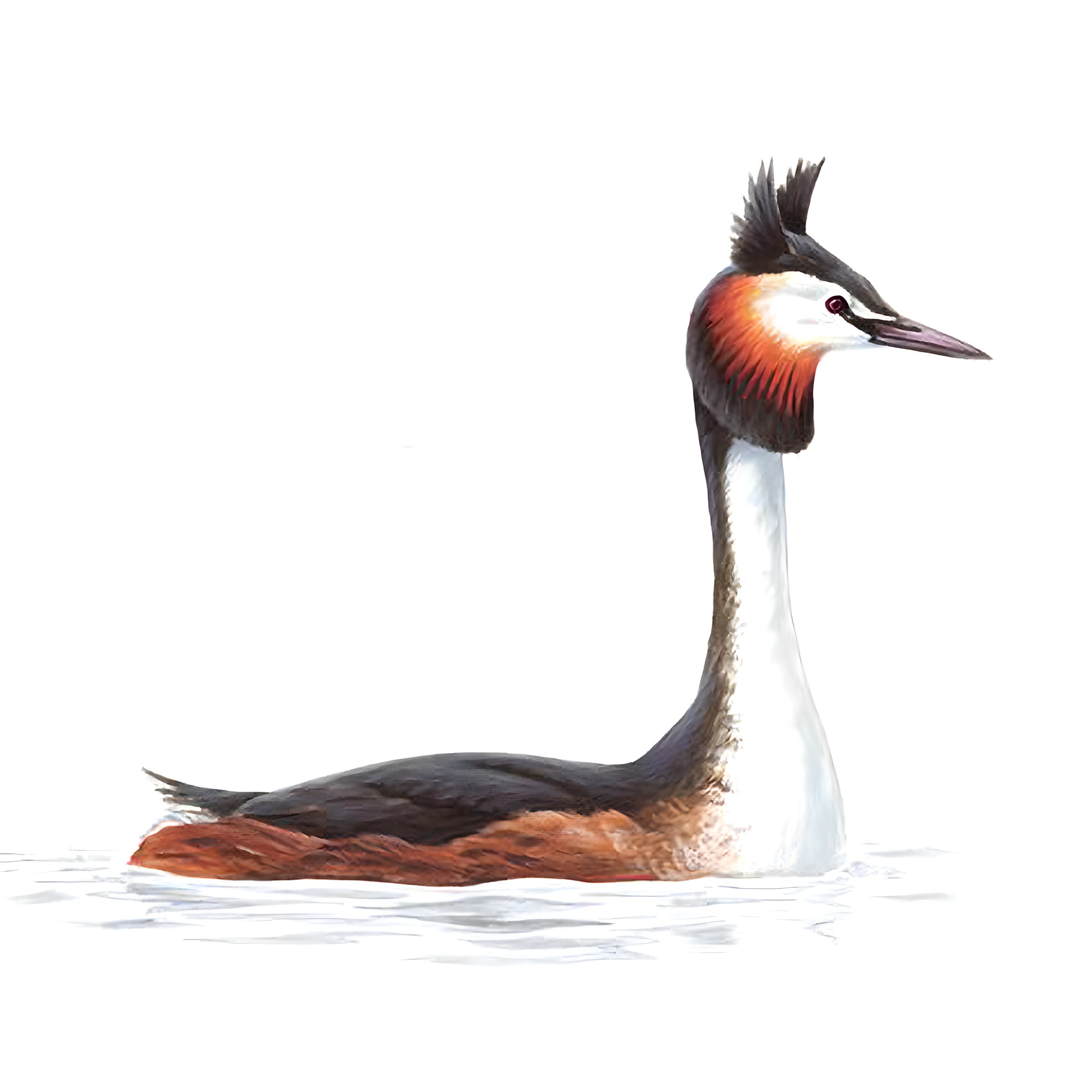
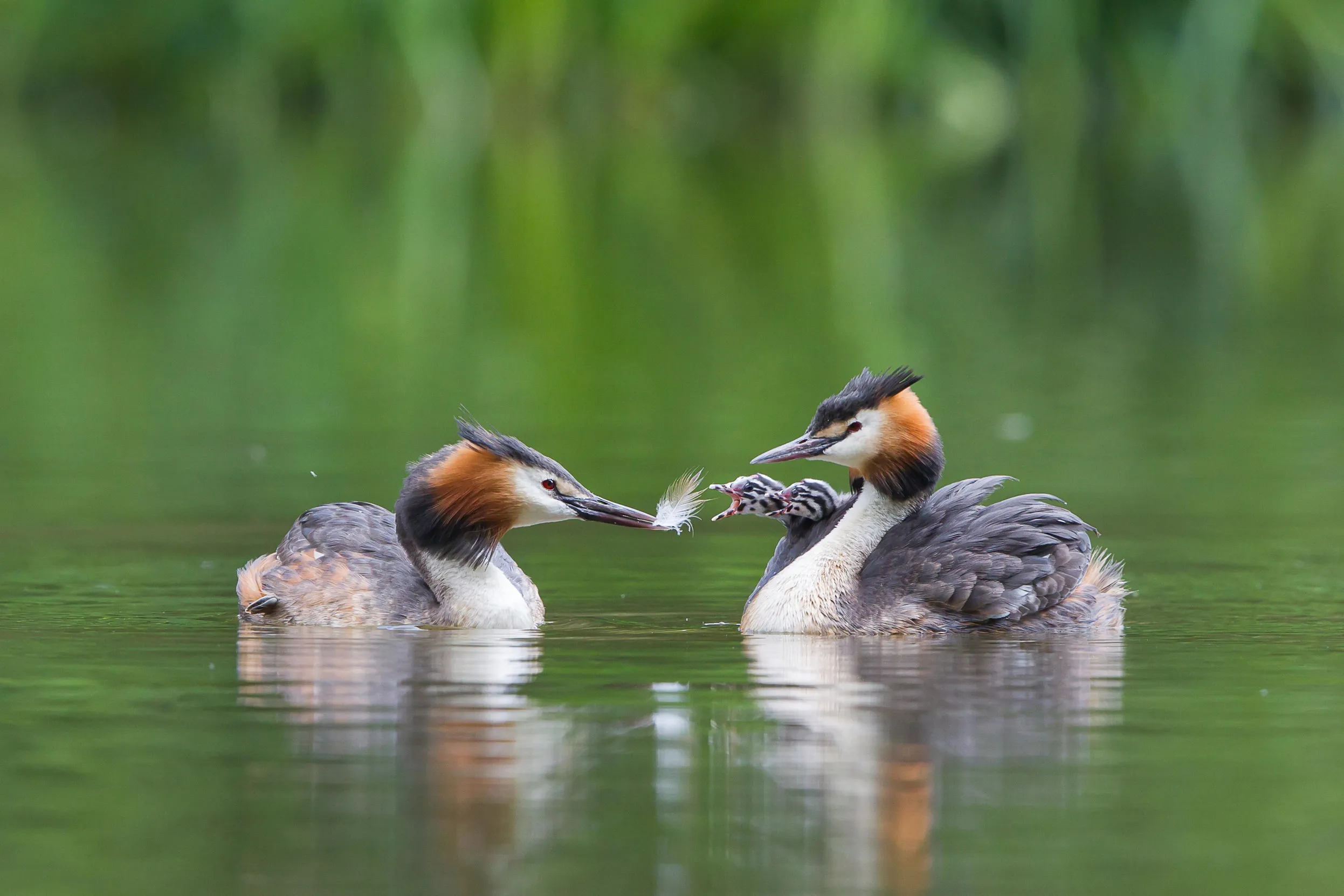
The Great Crested Grebe is a delightful, elegant waterbird with decorative head plumes. It was once hunted for these fancy feathers, almost causing the UK population to be wiped out. Great Crested Grebes dive to feed and also to escape, preferring this to flying. On land they are clumsy because their feet are placed so far back on their bodies. They have an elaborate mating display which sees them rise out of the water and shake their heads. Very young Grebes often ride on their parents' backs.

Call

Great Crested Grebe

Marco Dragonetti / xeno-canto

Conservation status

Today, the Great Crested Grebe is on the UK’s Green List – the lowest level of conservation concern. These birds came close to extinction in the late 1800s when the overwhelming demand for feathered headwear was driving species to the brink. The Plumage Prohibition, the RSPB’s first campaigning success, was passed in 1921.

Where and when to see them

Difficulty rating - Moderate

Great Crested Grebes breed on freshwater pools. Check out your local lakes, ponds, reedbeds, rivers and canals.

Key

  1. Resident
  2. Passage
  3. Summer
  4. Winter
* This map is intended as a guide. It shows general distribution rather than detailed, localised populations.
  1. Jan
  2. Feb
  3. Mar
  4. Apr
  5. May
  6. Jun
  7. Jul
  8. Aug
  9. Sep
  10. Oct
  11. Nov
  12. Dec

Where best to see them

Behaviour

Great Crested Grebe pair courting
Great Crested Grebe
A springtime spectacle you won’t want to miss! 

Breeding pairs will toss their heavily decorated heads in unison to claim their territory and strengthen their bond. Then, they seal the deal with a romantic proposal. Diving below the water’s surface, both birds retrieve some weed and rising out of the water together, pressed chest-to-chest, they offer up their green gifts in a series of headshakes.

Great Crested Grebe, engaged in courtship dance
Great Crested Grebe
Birds of the month

Head outside and discover fascinating birds each month. Read on for top ID tips, what to listen for, and where to see them.

Key facts