How to identify

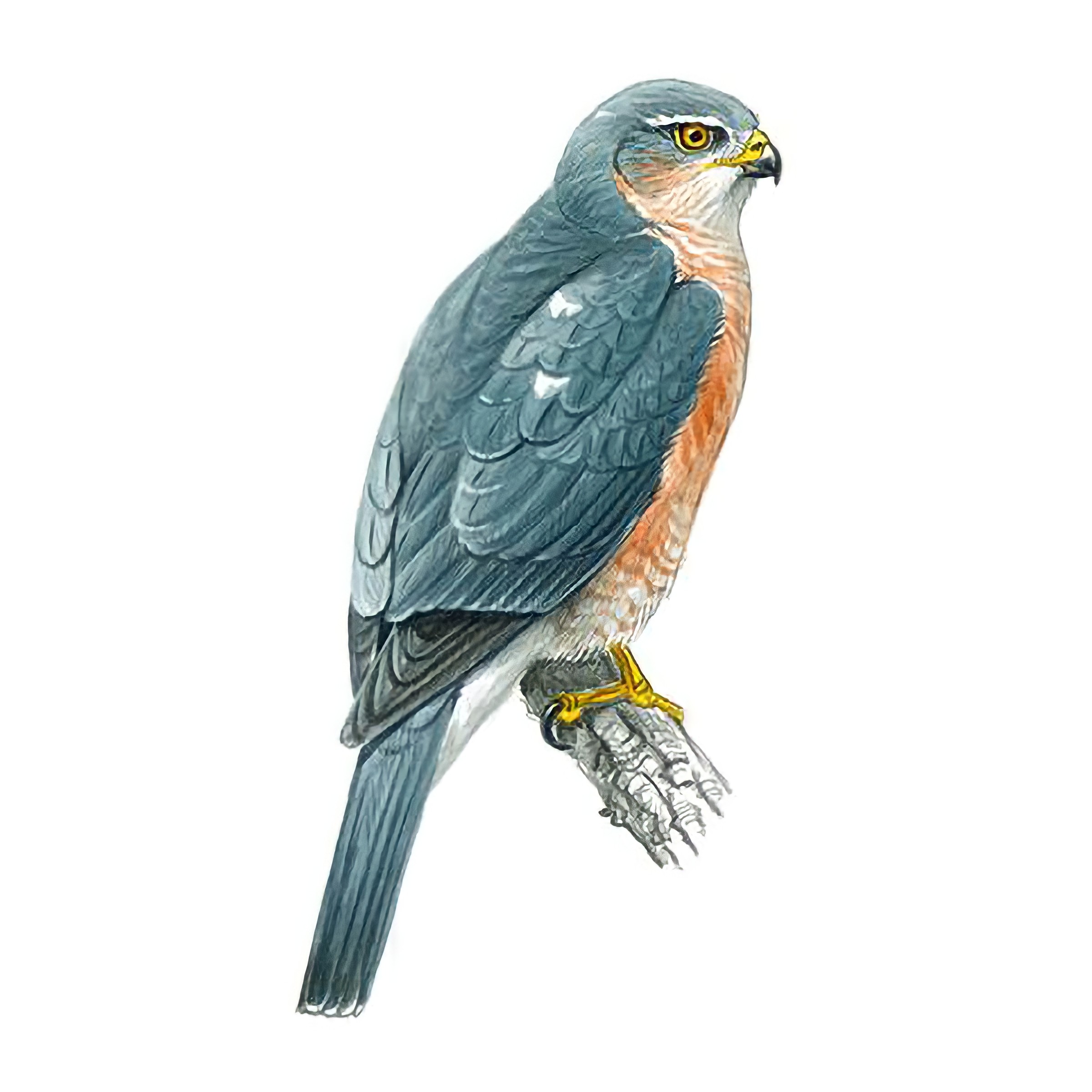
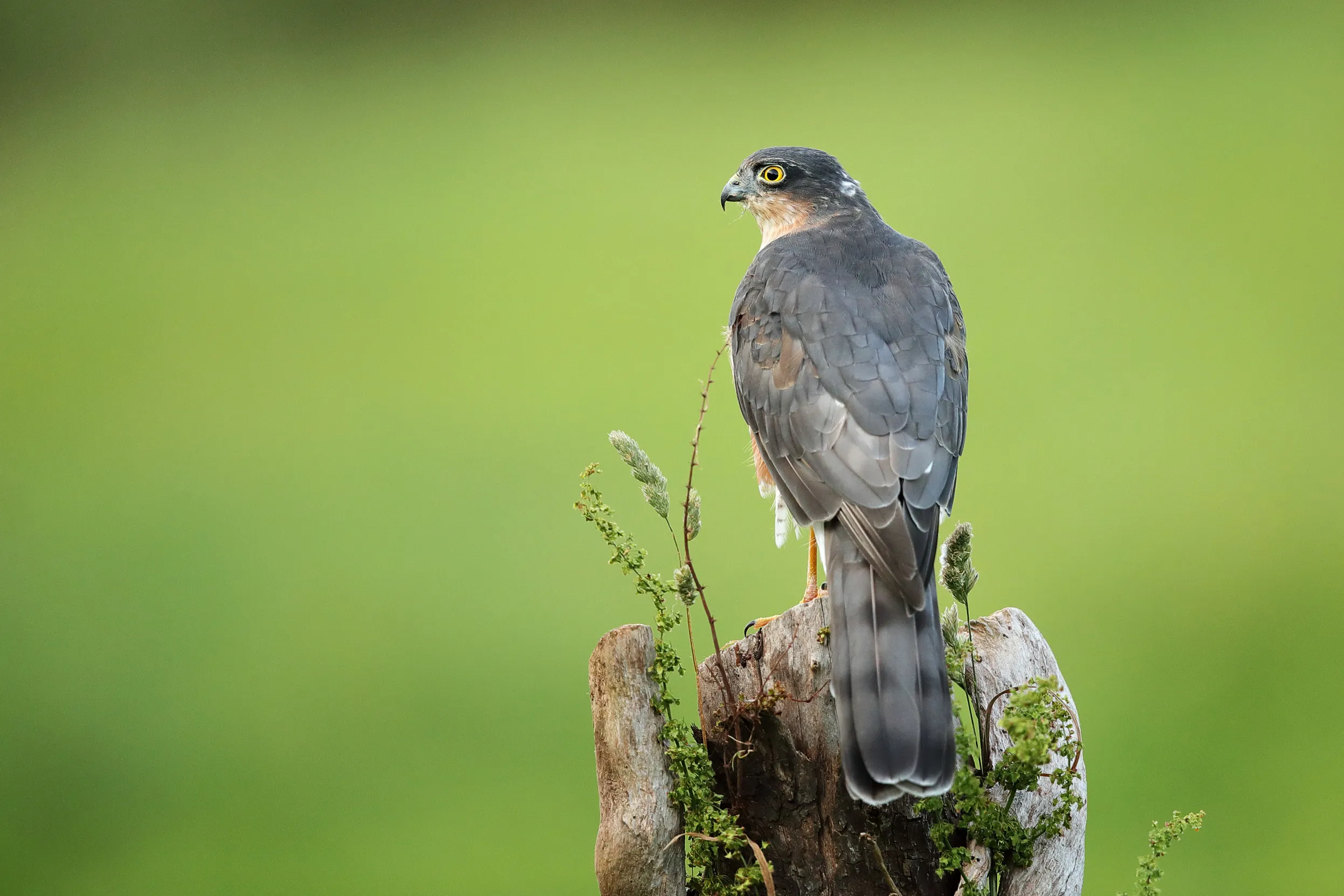
Sparrowhawks are small birds of prey. They're adapted for hunting birds in confined spaces like dense woodland, so gardens are ideal hunting grounds for them. Adult male Sparrowhawks have a bluish-grey back and wings and orangey-brown stripes on their chest and belly. Females and young birds have brown back and wings, and brown stripes underneath. Sparrowhawks have bright yellow or orangey eyes, yellow legs and talons. Females are larger than males, as with all birds of prey.

Call

Sparrowhawk

Sophie Neill / xeno-canto

Key features to look out for

  • Males have a blue-grey back, and orangey-brown bars on their underparts 
  • Females and juveniles have a brown-grey back, and pale underparts with brown barring 
  • Females are much bigger than males 
  • Both have striking yellow eyes and long, thin yellow legs 
  • In flight, Sparrowhawks have a T-shaped silhouette, with a long square-ended tail and blunt wing tips 
  • They have a distinctive ‘flap-flap-glide’ flight pattern 
Sparrowhawk standing on roof ridge
Sparrowhawk
What’s that bird of prey

From tiny Merlins to enormous White-tailed Eagles, the UK’s birds of prey come in all shapes and sizes. These masterful predators are a real treat to see, but they’re often super-fast and many species look quite similar, which can make identifying them a challenge. In this guide, we share some simple ID tips to help you.

Conservation status

Sparrowhawk numbers plummeted in the 1950s and 60s, largely as a result of organochloride pesticides. These chemicals built up in the food chain and resulted in the shells of Sparrowhawk eggs becoming very thin and prone to breaking during incubation.

After these pesticides were banned, Sparrowhawk numbers recovered. However, between 1995 and 2023, Sparrowhawks declined by 25% and they now feature on the Birds of Conservation Concern Amber List.  

Where to see them

Difficulty rating - Moderate

You’ll have to keep your eyes peeled to spot a super-fast Sparrowhawk! Try to listen out for the alarm calls of small birds – this is a tell-tale sign that a Sparrowhawk could be nearby. 

You could see a Sparrowhawk almost anywhere in the UK, except for parts of Scotland. They’re most common in woodlands, farmland and gardens. 

Key

  1. Resident
  2. Passage
  3. Summer
  4. Winter
* This map is intended as a guide. It shows general distribution rather than detailed, localised populations.
  1. Jan
  2. Feb
  3. Mar
  4. Apr
  5. May
  6. Jun
  7. Jul
  8. Aug
  9. Sep
  10. Oct
  11. Nov
  12. Dec

Behaviour

Sparrowhawks are woodland birds that have adapted to urban green spaces. They’re fast and agile and hunt by surprise, using buildings and plants as cover before darting out at the last moment to catch small birds. They’re so quick, you might only be alerted to their presence by alarm calls and the sudden scattering of birds from your feeders.

Female Sparrowhawk on a recent wood pigeon kill
Female Sparrowhawk
Birds of Prey appeal

Birds of prey are being shot, trapped and poisoned across the UK. Give a regular gift and help keep them in our skies.

Male Sparrowhawk perched on garden fence after a failed attempt at hunting
Male Sparrowhawk
Birds of the month

Head outside and discover fascinating birds each month. Read on for top ID tips, what to listen for, and where to see them.

Key facts