I absolutely love wildlife and have been part of the incredible RSPB Wildlife Enquiries Team for nearly seven years. I love to go birdwatching and have been very lucky to experience so much of the natural world. In my spare time I love to visit nature reserves and I am also a keen wildlife photographer.
Feature
Ask an RSPB expert: your August questions answered
Our expert, Katie Nethercoat, answers some of this month's most commonly asked questions.

On this page
- Am I too late to look for Ospreys?
- I don't have a pond, yet I keep seeing dragonflies - why and can you tell me what species I am seeing?
- My garden is really quiet at the moment, with barely any birds or birdsong. Why?
- I’ve heard it is International Bat Night on 29-30 August. What is this?
- Meet our expert
Am I too late to look for Ospreys?
In short, no! Ospreys migrate to the UK in spring to breed alongside lochs and estuaries. With breeding season over, they begin their migration back to West Africa. This means that at this time of year, you could see Ospreys in other areas as they pass through.
Some people on the south coast of England have even been lucky enough to have them over their gardens, myself included! So keep an eye out for their white underparts and their angled wings. They can easily be mistaken for a large gull from a distance but will have strong brown markings on the head and a mottled necklace-like pattern on the chest which is more obvious in the females.
To throw a real curveball, we do also have pale morph Buzzards in the UK. These are naturally occurring variants with whiter features. These Buzzards can be easily mistaken for Ospreys due to the amount of white they can have on their chest, but they will have broader and shorter wings.
Whilst Ospreys mate for life, they migrate alone. Flying over 100km a day, for around four to six weeks is no easy feat. The toll of migration can be tough, especially for young birds. Storms and food availability on route are all factors which can go against Ospreys on their journey, which is why areas to feed and rest are so important and why safeguarding sites along the East Atlantic Flyway is crucial.
As August progresses, look up to say a fond farewell to our Ospreys as we wish them a safe journey to Africa!

I don't have a pond, yet I keep seeing dragonflies - why and can you tell me what species I am seeing?
Whilst we most often associate dragonflies with ponds, streams and rivers, they can be found in almost every habitat, even along hedgerows!
We have 36 species of dragonfly in the UK, all a burst of colour as they perform a quick fly-by. They are larger than their cousins, the damselflies, and if you see one resting on a rock or vegetation, you will notice they hold both their wings open unlike the damselfly which holds them closed.
A bit like birds, different species need different habitats and can be seen in varying months of the year. For example, the Common Hawker is only found across upland moorland and heathland sites due to its need for acidic water and they can be seen into late October. On the other hand, the Migrant Hawker is found in wetland habitats throughout England and Wales and can be seen into November.
Golden-ringed Dragonfly
One of our most eye-catching species is the Golden-ringed Dragonfly. Common throughout much of Scotland, Wales and England, you may see these from May to early August, around woodland, heathland and running water. They are very striking with black and yellow markings and at over 8cm long, the females are our largest species of UK dragonfly.

Emperor Dragonfly
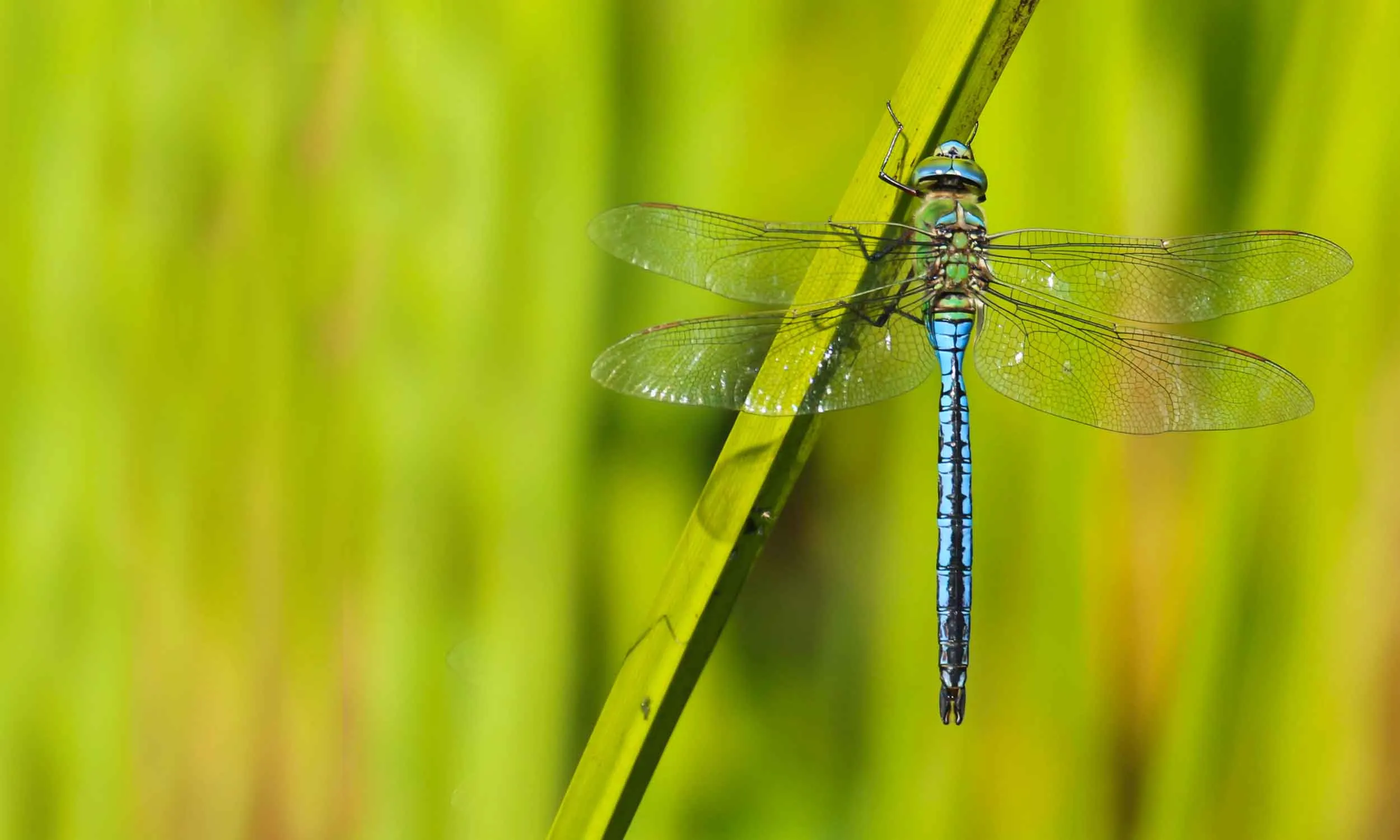
Now the Emperor is certainly hard to miss. At nearly 8cm long, they are an impressive (but fast) sight. Males are pale blue on their thorax (upper body) and green with a dark line down their abdomen. The females are a pale green on the thorax, but they too have a central line down their abdomen.
Common Darter
Be sure to keep eyes peeled, even near woodland edges, for the Common Darter. Widespread throughout the UK, you can see them flying right into late November sometimes December if it is mild. Females are a wonderful golden-yellow with a brown thorax whilst the males are red. Their name comes from their hunting habits where they will suddenly dart out of a hover to surprise their prey which they will take back to a specific perch to eat.
My garden is really quiet at the moment, with barely any birds or birdsong. Why?
Please don’t worry – this can be very normal for this time of year.
Garden bird numbers naturally fluctuate throughout the year due to various factors such as weather conditions, food availability and environmental changes, such as when the trees lose their leaves, providing less shelter. These types of changes can prompt birds to move to more suitable areas. This can be temporary, and the birds may return as the conditions in other areas change, such as when food resources become depleted.
In late summer, more natural food away from our gardens becomes available as grain, berries and fruit ripen. This natural food often means that birds are less interested in the food we provide. Many birds move from their nesting areas to where the most food is. In areas where farmland is nearby, House Sparrows, Starlings and many finches move out to fields to feast on the abundance of grain before it’s harvested, and on the spilt grain after the harvest.

Another reason why you may be seeing fewer birds at this time of year is because many are in ‘moult’. Once our garden birds finish breeding, they start to moult old feathers and grow fresh new feathers. Completing their moult can take several weeks, and while they are moulting their wing feathers, they are less able to escape predators. During this time, birds conceal themselves as much as possible, both to avoid predators and any territory disputes. This can give the impression that they've disappeared.
These seasonal fluctuations can be more obvious in some years compared to others, but rest assured, the birds will be back when they are ready.
I’ve heard it is International Bat Night on 29-30 August. What is this?
Organised by Eurobats, Bat Night has taken place since 1997 with more than 30 countries taking park in raising awareness about bats. We also run special bat events on our nature reserves, and not just on Bat NIght. Take a look here.
August is peak time to watch our nocturnal neighbours when they are busy feeding and raising their young all before entering hibernation in November.
We have 18 species of bat in the UK, some restricted to certain areas, and one species sadly a non-breeder in the UK, the Greater Mouse-eared which is our rarest species.
The most common species are the Pipistrelles. We have three species; the Common, Soprano and Nathusius’ Pipistrelle, and they are found throughout the UK. They can be found roosting in houses, but please don’t worry, they are lovely neighbours. Pipistrelles can be seen foraging throughout different habitats such as woodland edges, gardens and parks.

Our largest species is the Noctule. They are most often seen flying above treetops and have long, narrow wings, a bit like a Swift, and can even reach speeds of 30mph and cover an area of 10km from roosting to feeding areas. They are heavily reliant on trees for hibernating and breeding, often taking over old woodpecker nests.
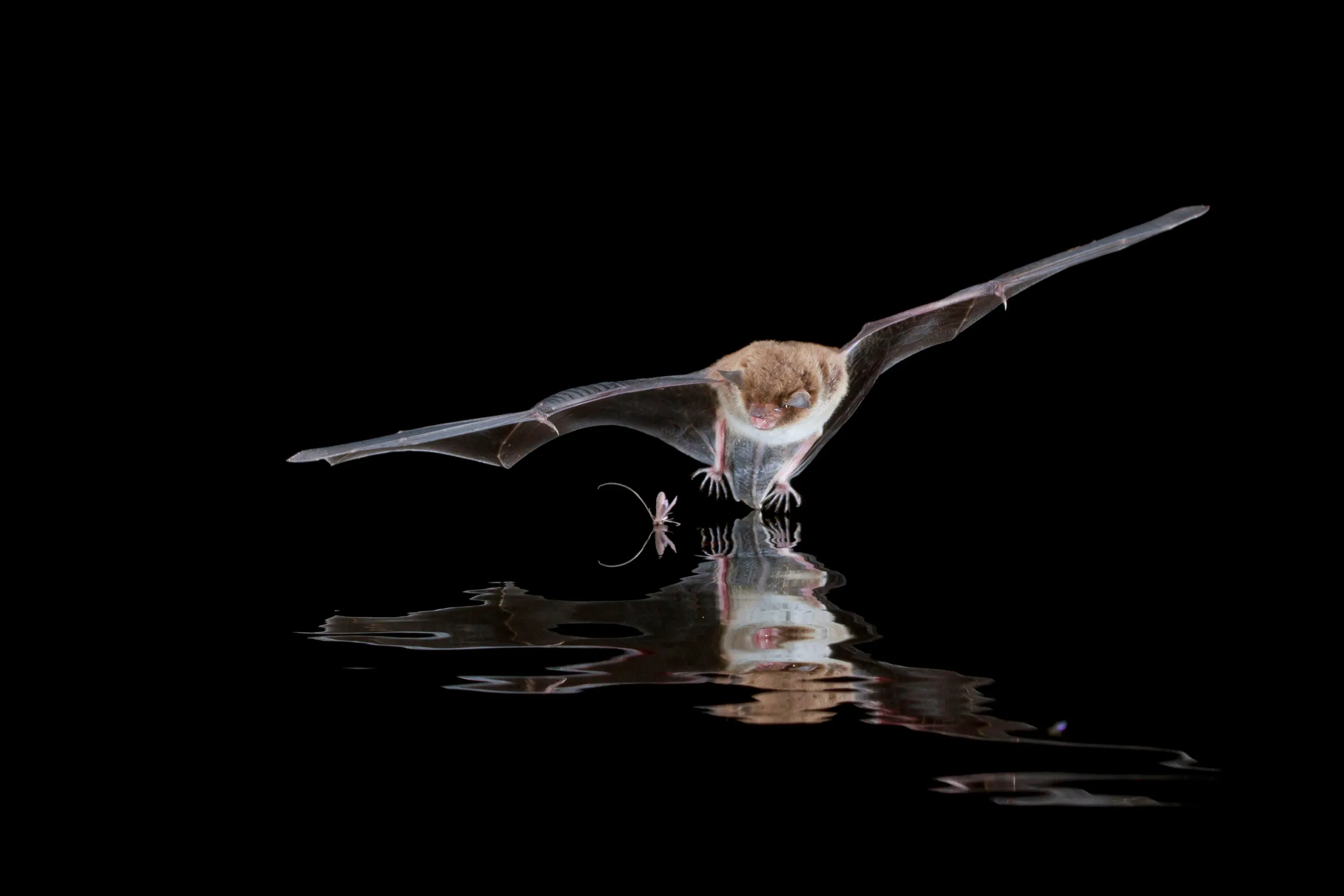
Known as the ‘water bat’, the Daubenton’s Bat feeds on insects from the water surface. They use their feet or sometimes the membrane of their tail to scoop up prey from the water surface up to their mouths. Daubenton's Bats are widespread right into northern Scotland and Northern Ireland and can live an impressive 22 years.
Whilst often portrayed as villains, vampires or a jump-scare within caves, bats are actually incredibly special as they play a crucial role in the eco-system and are known as an indicator species. So if you have any in or around your garden or green space, you can be sure that it is an area full of life for them and other species.

Meet our expert
Katie Nethercoat