
Corvids: how to identify the crow family
There are eight different species of corvid in the UK! Once you know what to look for, there are easy ways to tell the difference.


There are eight different species of corvid in the UK! Once you know what to look for, there are easy ways to tell the difference.
Jackdaws aren’t as common in big urban centres, but they will live in smaller towns and villages, or older suburbs where there are houses with chimneys.
They also live in parks, woods, farmland and around sea cliffs. They will visit gardens looking for food or nesting materials, and come to feeders and bird tables, but they don’t tend to hand around for long.

Jackdaws seem to be more comfortable with people than Crows or Rooks, though they’re still cautious. They often nest in buildings and can be seen perched on chimneys and rooftops, or walking around pavements looking for food, often singly or in pairs.
In the air, they have a faster flight than the bigger corvids and can be very playful, with tumbling aerobatics. In the winter, Jackdaws often come together in groups to roost, sometimes with Rooks, and perform noisy display flights at dusk and dawn.
They eat insects, seeds and fruit, but will also take eggs and young birds.
Jackdaws are well known for nesting in chimneys, but they also nest in outbuildings, large buildings like churches, on cliffs, in tree holes, or in large nest boxes.

Scientists have shown that Jackdaws can recognise individual human faces.
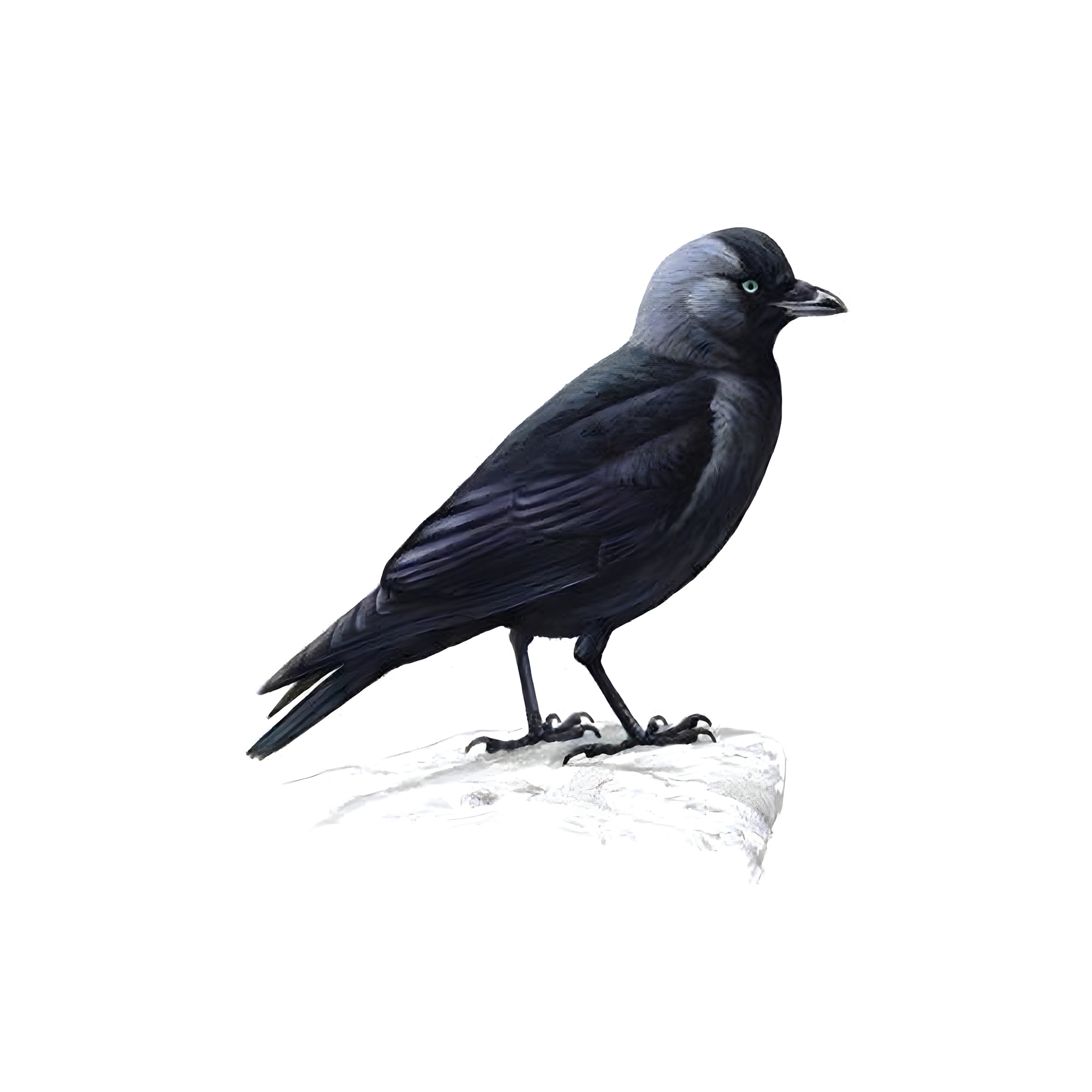
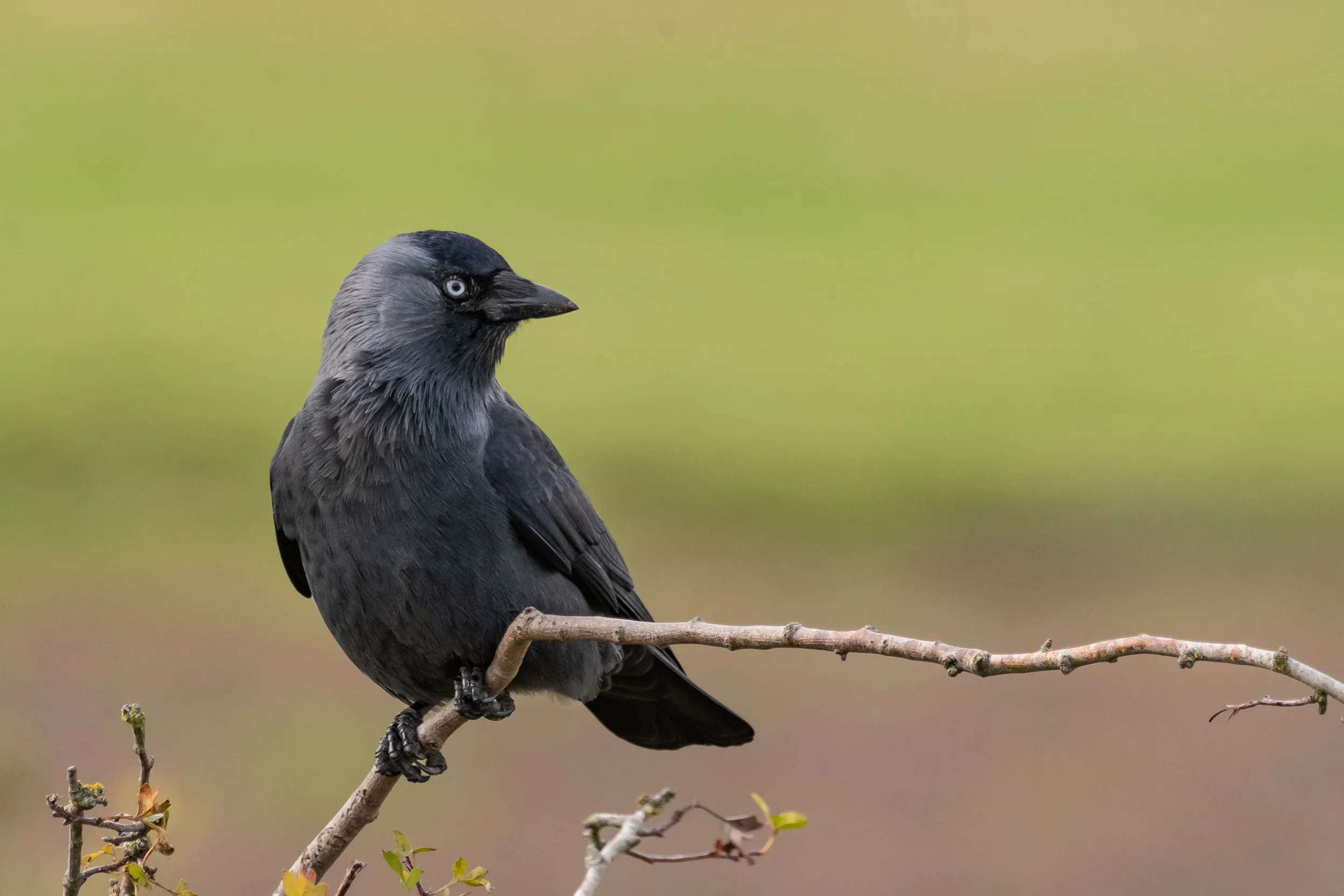
Jackdaws are all black but have a pale grey head and neck with striking pale eyes. Jackdaws often travel in noisy groups and can create large flocks in winter for roosting.
Jackdaws are omnivores. They eat insects, seeds, fruit, grains and scraps, and may also take small animals and eggs.
Jackdaws nest in holes and cavities, including chimneys, buildings, cliffs, trees and nest boxes.
Jackdaws usually nest from April to June, raising one brood each year.
Most UK Jackdaws are resident all year, although some birds move south in winter and others arrive from Europe.
Jackdaws can be seen in the UK throughout the year, so they don't have a specific arrival time.
Most Jackdaws stay in the UK all year, although some birds migrate or move south during winter.
Jackdaws tend to live for around 5 years in the wild, with some surviving longer, with the maximum age of a ringed bird being 18 years.
No. Jackdaws are common and widespread across much of the UK, particularly in farmland, towns and villages.
Crows can look similar but they are larger and lack the silver head. Learn how to identify the crow family