
Advice
Feeding birds near you
If you want to attract birds to your garden, you’ve come to the right place.
The season of reds, golds and ghouls is here – blow out the cobwebs with five birding treats.

Autumn is upon us and Halloween is on the horizon. But while human thoughts turn to pumpkins and poltergeists, our feathered friends are conjuring some frightfully fantastic treats – not tricks – that are worth stepping out from behind the sofa for.
Catch a spring tide this autumnal October and you’re in for a spine-tingling showcase, as tens of thousands of whirling waders take centre stage. No time to swap ghosts for the coasts? Peer through your window or head to an oak woodland to catch sight of Jays and Nuthatches making the most of autumn’s bounty.
The leaves might be falling. The weather might be appalling. But when Wing Tips comes calling, wild wonders await to raise the spirits.
Just a few days a year, when the tide is right, a whirling wader spectacular explodes in The Wash, a large bay on England’s east coast. In autumn and winter, migrating wading birds gather in huge numbers on the coastal mudflats there, including on RSPB Snettisham, our North Norfolk nature reserve. They are here for the invertebrate-rich mud, their long bills perfectly suited to probe for food.
With the feasting flocks of thousands in place, the stage is set. Then, during extremely high spring tides, the water comes rushing in, pushing the birds ever closer to shore until finally, they’re forced to take to the air. Tens of thousands of Knots, Dunlins, Oystercatchers and more take flight in a bewitching spectacle that beggar's belief!
Head to our dedicated Snettisham Spectacular web page to check the tides, times and experience the magic for yourself. Parking bays on the reserve are limited and ticketed, so make sure you book a space before you go!


The Wash, North Norfolk.
Autumn and winter during extremely high spring tides – see the Snettisham Spectacular webpage for updates.
Medium – head to the right place, at the right time.
Grey weather and dark nights making you feel blue? Then we’ve got the bright bird for you! Jays are famous for their fondness of acorns, and in October, these clever corvids can be seen zipping between trees as they forage for their favourite treat. Just like squirrels, these brilliant birds bury their bounty, returning for a quick fix through winter.
Safe to say that Jays have the brains. But they also have beauty. With stunning pinky-brown plumage, a white rump and dazzling, blue-striped wing panel, these birds give the most colourful autumn leaves a run for their money. Yet, despite their glamourous appearance, these bonny birds are quite bashful beneath it all. Usually quite shy, Jays are most commonly seen in autumn when their love for acorns draws them from their woodland dwelling.
So, if you fancy spotting a jazzy Jay this month, head to an oak woodland, keep quiet and stay patient. An acorn-obsessed corvid might just brighten your day.

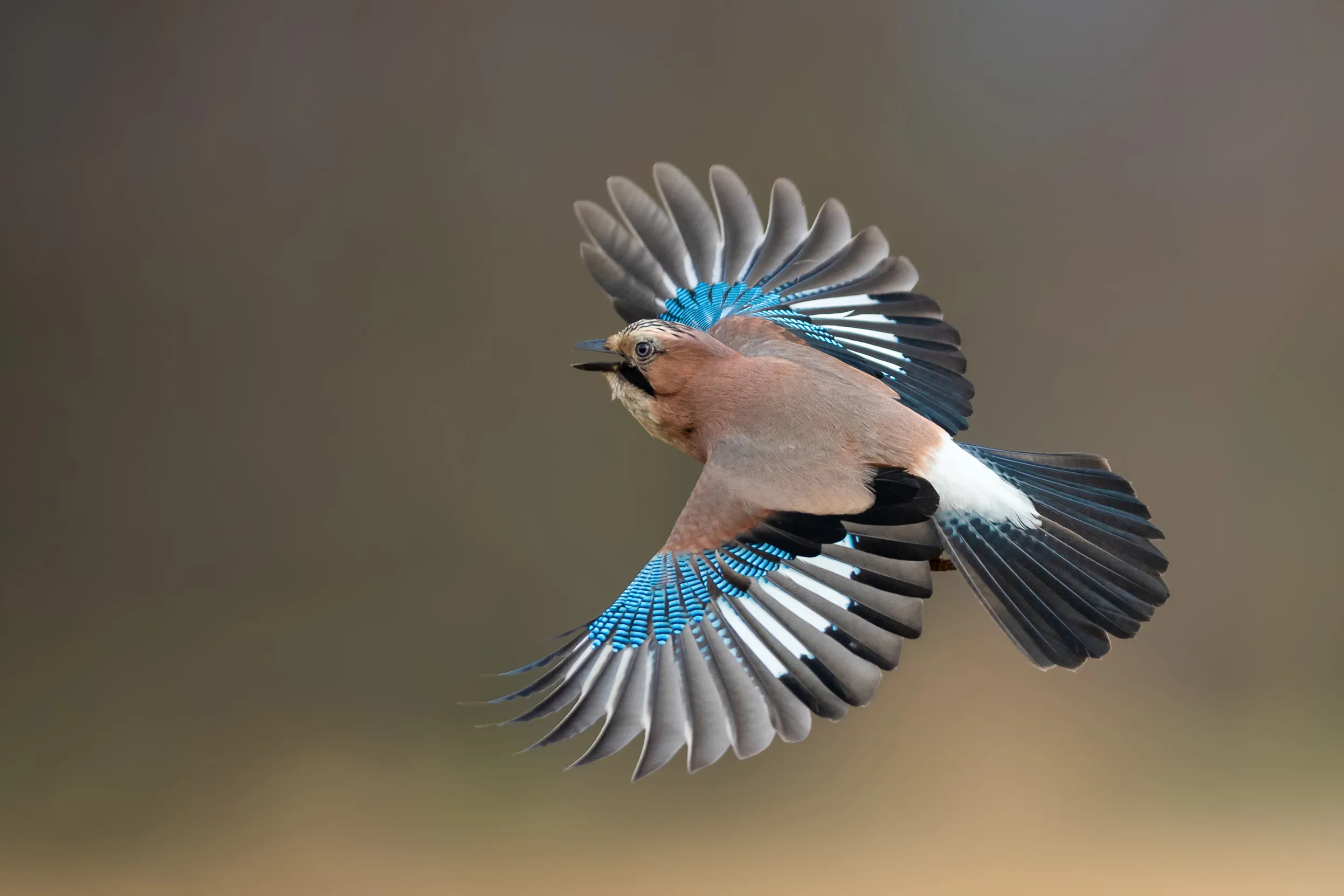

A harsh screech.
Woodlands, farmland and suburban areas with oak trees.
Medium - look for the oaks and the Jays shouldn’t be far behind.
Jays are currently listed as green, the lowest level on the UK’s List of Conservation Concern.
Jays aren’t the only birds worth a watch in October. Nuthatches are eye-catching little birds, and just like their colourful corvid counterparts, these plump bundles of blue and chestnut are busy stashing away their favourite seeds for winter.
The spritely species is usually found in woodlands but as winter approaches, many visit our gardens as they look to build up their food supply. Nuthatches also have a unique talent – they’re the only bird in the UK that can climb down a tree trunk beak first! Safe to say, these bite-sized beauties have a head for heights!
Take care though, nut-watchers, Nuthatch behaviour can be confused with that of the Treecreeper. It’s a similarly sized bird that likes to scamper up the side of trees in search of insects before flying back down.


A series of whistles from the woodland canopy.
Woodlands and gardens across England, Wales and more recently, southern Scotland.
Easy/Moderate.
Nuthatch numbers increased by an amazing 291% between 1967 and 2023. As a result of this boom, the species is on the UK’s Green list of Birds of Conservation Concern.
Can’t see Snettisham’s whirling wader spectacular this month? Fret not, feather fans, many of the species that take part in the display can be found up and down UK coasts. That includes Oystercatchers, whose striking binary plumage and bright orange beaks make them difficult to miss.
These stocky black and white wading birds can be seen on UK shores all year round, but in October, numbers on our east coast are bolstered by Norwegian winter migrants. That said, on England’s west coast, Morecambe Bay hosts the UK’s largest flock, or ‘covey’, of Oystercatchers, with about 40,000 birds counted in 2025!
So, get the wellies ready and head to the beach to see if you can catch sight of a covey making the most of some tasty shellfish snacks.
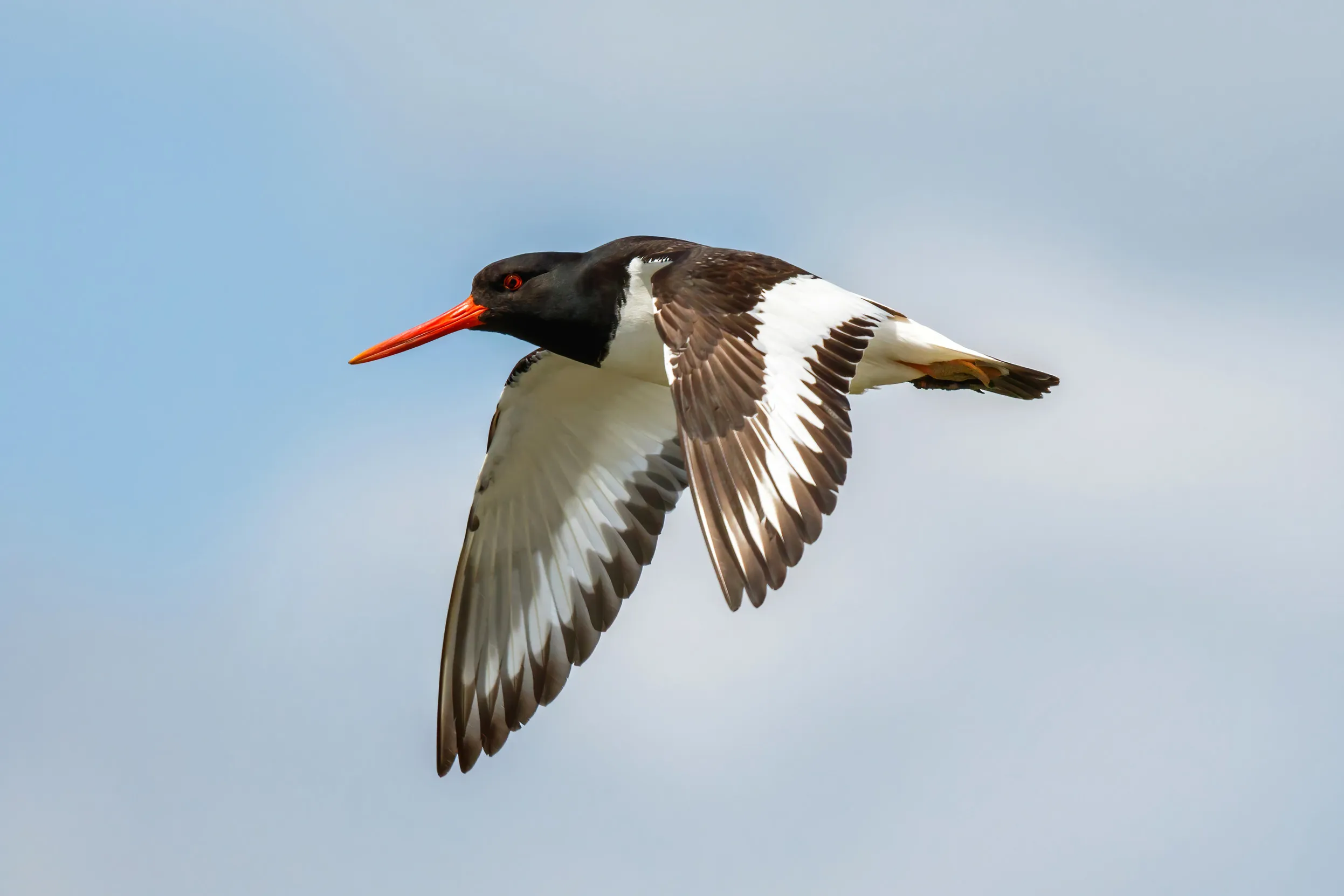

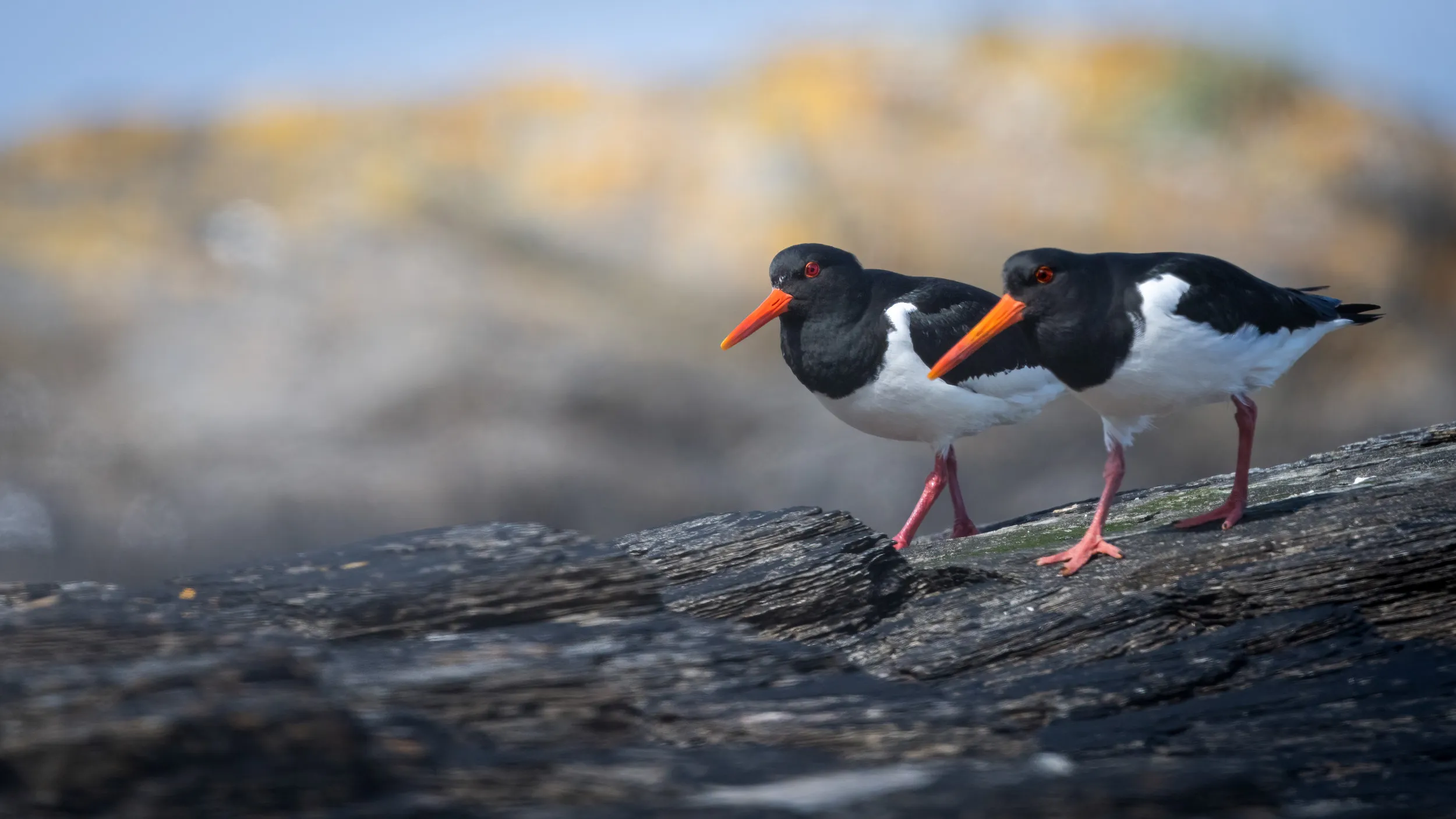

A shrill ‘peep, peep’ or ‘kleep kleep’ call.
Coasts, bays and estuaries right across the UK.
Easy – just head to the coast.
Despite being an easy sighting, Oystercatchers are on the UK’s Amber list of Birds of Conservation Concern. This follows a decline of 39% between 1995-2018 in Scotland. Threats to the species include high levels of predation, human disturbance, overfishing of shellfish and cold weather events.
While numbers have stabilised in England, we’ve made Oystercatchers an RSPB priority species and are working to identify solutions to their decline.
Big round eyes. A small, dumpy frame. A cute whistling call. Despite their low numbers, Ringed Plovers are widespread on our coastlines and can be found on UK shores all year round.
Typically, the birds like to breed on shingly beaches in summer, though a handful have taken to inland sand and gravel pits. October is the perfect time to peep a Plover, as the danger of disturbing their highly protected nests has passed. Plus, flocks are boosted by overwintering birds from Europe and passing migrants from Greenland and Canada.
So, for a doe-eyed dose of adorable, head to the coast and listen out for the sweet whistling call of a ridiculously cute Ringed Plover.


A mellow, whistled ‘poo-ee’ or ‘too-li’ call.
Coasts around the UK, with relatively large numbers in Norfolk.
Difficult
Sadly, the UK population of breeding Ringed Plovers declined by 37% between 1985 and 2007. In Norfolk, which is a key breeding area for the birds, numbers fell by 77% in the 35 years leading up to 2018.
To help halt and reverse these declines, we teamed up with partners to launch Plovers in Peril in 2021, a project designed to protect nesting Ringed Plovers during the breeding season. The birds have also been named an RSPB Priority Species, and we’re currently testing conservation solutions to help the birds bounce back.
We hope you feel inspired and ready to get out there this September. We'd love to hear what you find. You can share your photos with us at NotesonNature@rspb.org.uk. We'll share some of the best in a future issue of Notes on Nature.
Please be mindful when taking photos not to disturb wildlife or habitats. Further guidance can be found in The Nature Photographer's Code of Practice.

