
News
Transforming the RSPB for the future
Our plan to continue delivering our mission for birds, wildlife and nature.
14th Oct 2026
RSPB Conservation Scientist Andrew Stanbury looks at the results of the latest Heathland Bird Surveys.
5 min read
Few wildlife experiences in the UK are more evocative than spending an early morning or evening on lowland heathland in the summer. In 2025, more than 1,200 birdwatchers from across the UK, headed out to survey three birds with strong links to heathland: the Dartford Warbler, Woodlark and Nightjar. A huge thank you if you were one of them.
Packaged together as the Heathland Bird Surveys, the three surveys were a partnership between the RSPB, British Trust for Ornithology (BTO) and Natural England. We have spent the winter crunching the numbers. The results so far paint a positive picture for all three species. The number of Dartford Warbler and Woodlark territories recorded have increased by around 27% and 29% respectively since 2006, while Nightjar saw the number of territories increase by around 20% since 2004. Both Woodlark and Nightjar show notable range expansion, with Nightjars breeding in increasing numbers in Scotland.
You might have spotted a recent story about record numbers of Dartford Warbler on RSPB reserves in 2025. Lowland heathland, an RSPB priority landscape, is one of the most threatened habitats in the UK. Around 80% has been lost since the 1800s, mainly due to land use change, including forestry and development, such as urban expansion. To tackle this, dedicated RSPB staff and volunteers have been restoring and managing the precious habitat on nature reserves. The results from the national survey are testament to the impact of all this hard work.
Most of the Dartford Warblers in the UK are in the core areas of lowland heathland in southern and eastern England, including the Dorset Heathlands, Thames Basin Heaths, the New Forest, Wealden Heaths and the Suffolk coast. The survey only detected limited range expansion outside areas occupied during the last survey in 2006, with no evidence of further increases at higher elevations.

Dartford Warbler
Unlike many warblers, this species is resident in the UK and has benefited in recent decades from milder winters and targeted and effective habitat management of lowland heathland. The scratchy sound of the dainty Dartford Warbler’s song can be heard in southern and eastern England, southern Wales, and the Channel Islands.
There is, however, also a climate change story here. Dartford Warbler numbers have increased by around 27% compared to the last national survey in 2006. Evidence from the Rare Breeding Bird Panel suggests that the population declined following the cold winters in 2008/09 and 2009/10. A series of milder winters since then has enabled the UK population to recover.
Dartford Warblers are particularly sensitive to cold, harsh winter weather, particularly extended periods of snow cover. In the UK, at the northern edge of its range, the species has benefited from a recent run of milder winters. The Dartford Warbler’s global range is predicted to shift northwards and eastwards due to climate change. A warming climate is predicted to benefit the UK population (though this is dependent on available habitat) but to impact the species elsewhere. By the late 21st century, more than 60% of its current global range is projected to become unsuitable. This is particularly the case in Spain and Portugal, where most of the global population of Dartford Warblers currently occurs.
Overall, the species has declined by more than 50% across Europe since the late 1990s. Climate change also brings with it increased risk of uncontrolled fires in important breeding sites.
Understanding how species are faring nationally is vital. Up to now, we have been relying on data which is 20 years old. This new information will be invaluable for assessing the effectiveness of the extent and management of the current Special Protection Area network for these species, conducting Sites of Special Scientific Interest (SSSI) condition assessments, evaluating the impacts of climate change, recreation and development, and updating species status assessment, such as the Birds of Conservation Concern Red, Amber and Green lists.

Nightjar
NIghtjars are secretive crepuscular birds, known for their eerie ‘churring’ song, most often heard at dawn or dusk. These cryptically camouflaged summer migrants arrive in the UK in spring having spent the winter in Africa south of the Sahel.
We would like to thank everyone who took part in the survey, the BTO Regional Organiser network, county bird recorders and county bird clubs who helped to promote and organise survey, and the landowners who gave access permission; without whom such surveys would not be possible. The survey was funded by Natural England, DEFRA and the RSPB.
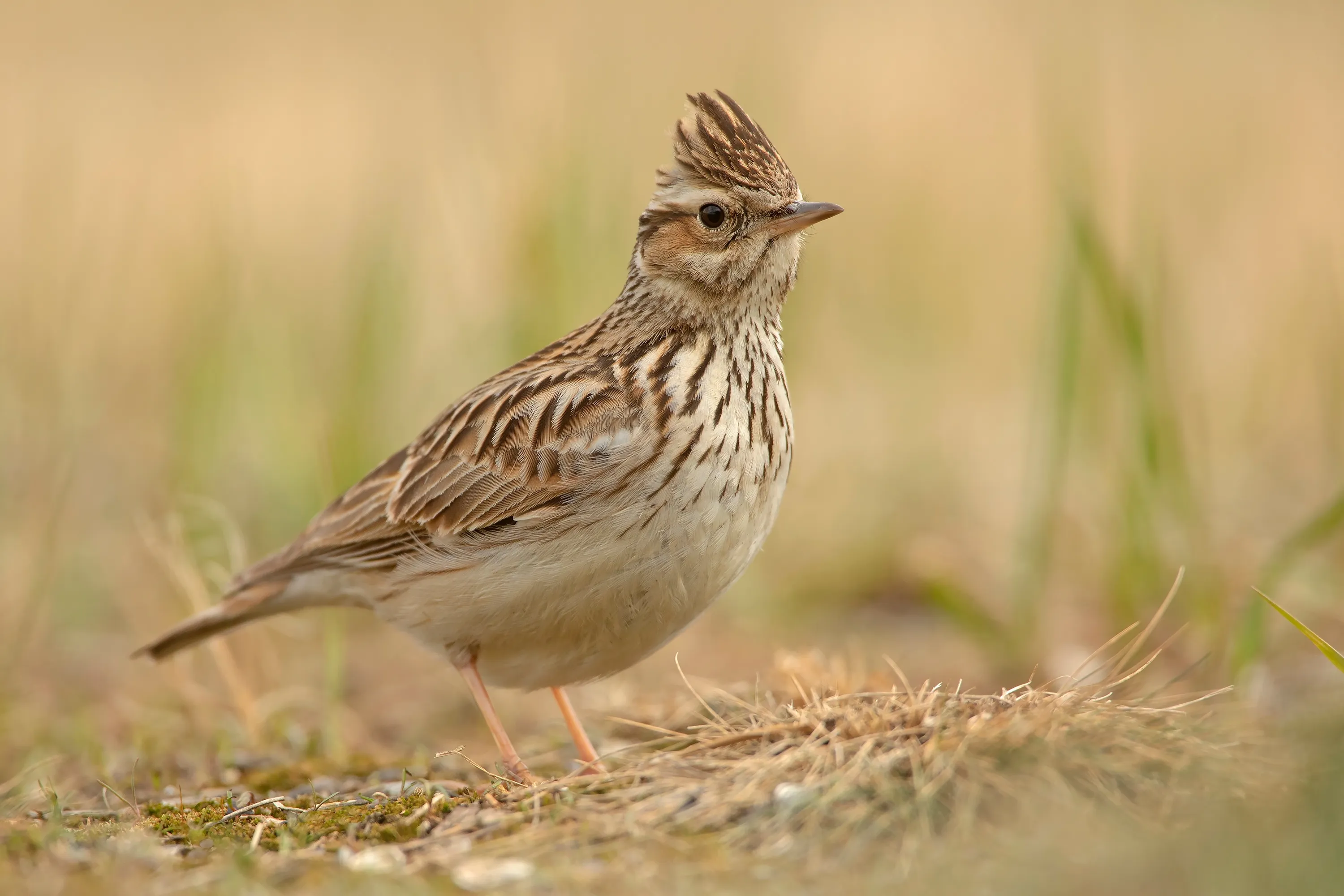
Woodlark
Less familiar than its commoner cousin, the Skylark, Woodlarks are mainly found in southern and eastern England. These understated birds of wooded heathland and farmland edges are also famed for their distinctive, lilting song.


