
News
Pioneering Project Launched on the Blackwater Estuary
A new initiative will see dredged sediment reused to restore shingle beach nesting habitat for endangered seabirds, incl...
20th Oct 2026
Wardens recorded the highest number of nesting Roseate Terns in more than 50 years.
5 min read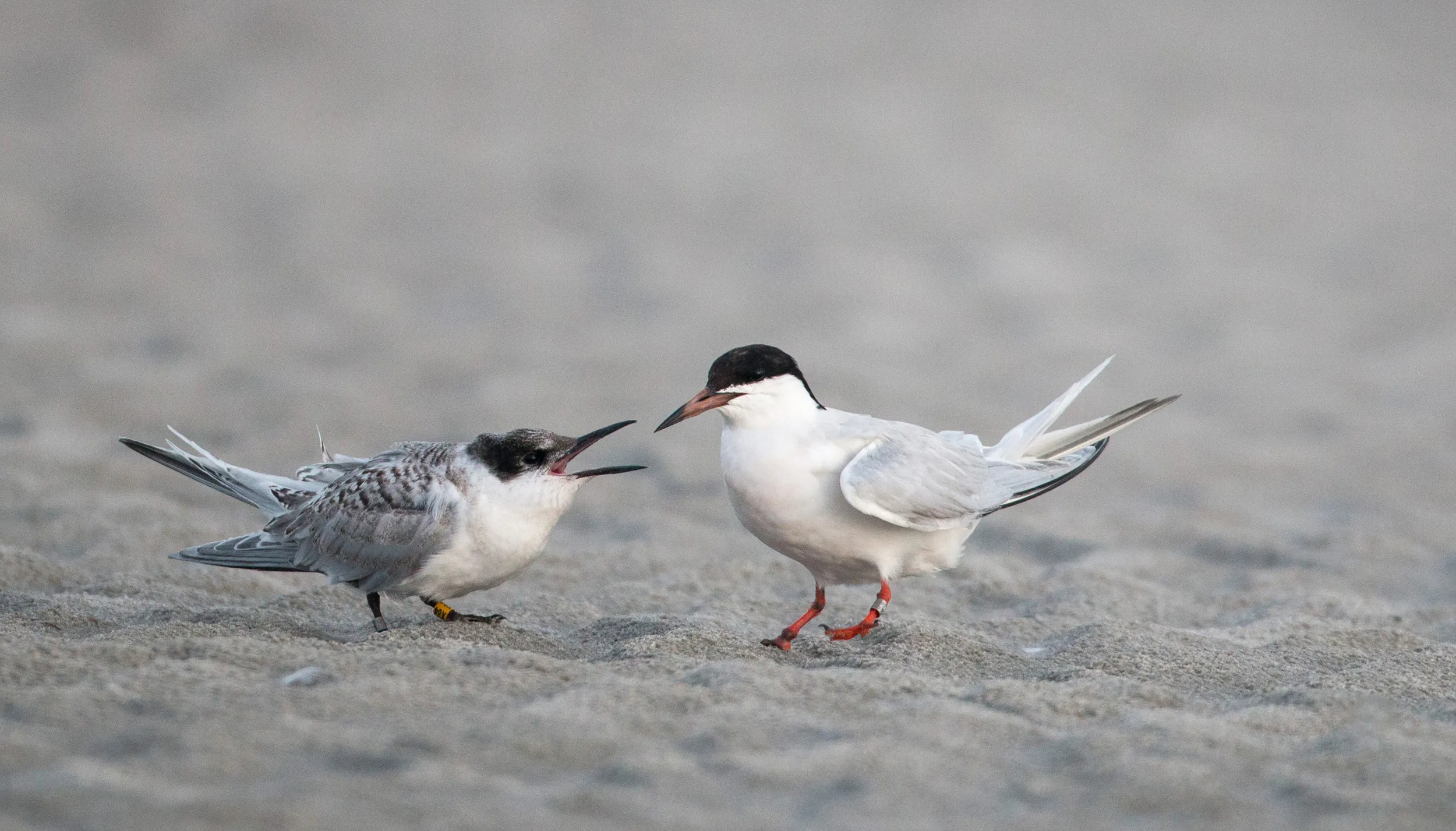
There's plenty to celebrate on RSPB Coquet Island this summer (2026) after our wardens recorded the highest number of nesting Roseate Terns in more than 50 years.
This year's seabird census found 155 pairs of England's rarest breeding seabird nesting on the island – beating the previous high of 154 pairs in 2022.
More than 150 Roseate Tern chicks have already fledged this year, with more expected over the coming weeks.
As the UK's only breeding colony of Roseate Terns, every extra pair is an important step in the species' recovery.
"To record the highest ever number of Roseate Terns since we started managing the island is incredibly special. Just one extra pair may not sound like much, but when you're talking about England's rarest breeding seabird, every pair really matters.
"This milestone reflects the dedication of our staff, volunteers and partners who work so hard to keep Coquet a safe, undisturbed place for these birds to breed. Seeing the colony continue to grow is a real cause for celebration."
The good news doesn't stop there.
Wardens also recorded 27,170 pairs of Puffins nesting in burrows – a 45% increase on last year and the highest total since 2018. If breeding success is similar to last year, the island could produce thousands more Puffin chicks this summer.
Razorbills are continuing their comeback too, with five breeding pairs recorded and three chicks successfully fledging (we recorded the very first fledgling in 2025).
Every summer, Coquet's wardens spend days surveying every corner of the island to monitor this internationally important seabird colony.
"None of this would be possible without our fantastic volunteers. We're also incredibly grateful to the local community, Amble's boat operators and our conservation partners, whose continued support plays a vital role in protecting this special island."
Not every species had such a successful breeding season, with Sandwich Terns, Eiders and Fulmars all declining this year. We know that seabirds continue to face pressures including climate change, food shortages and avian influenza.
But Coquet's latest results show what's possible through long-term conservation – and are a brilliant reminder of the difference our staff, volunteers, partners and crucially RSPB members and supporters are making for some of the UK's most threatened seabirds.
So, thank you, for supporting us.


