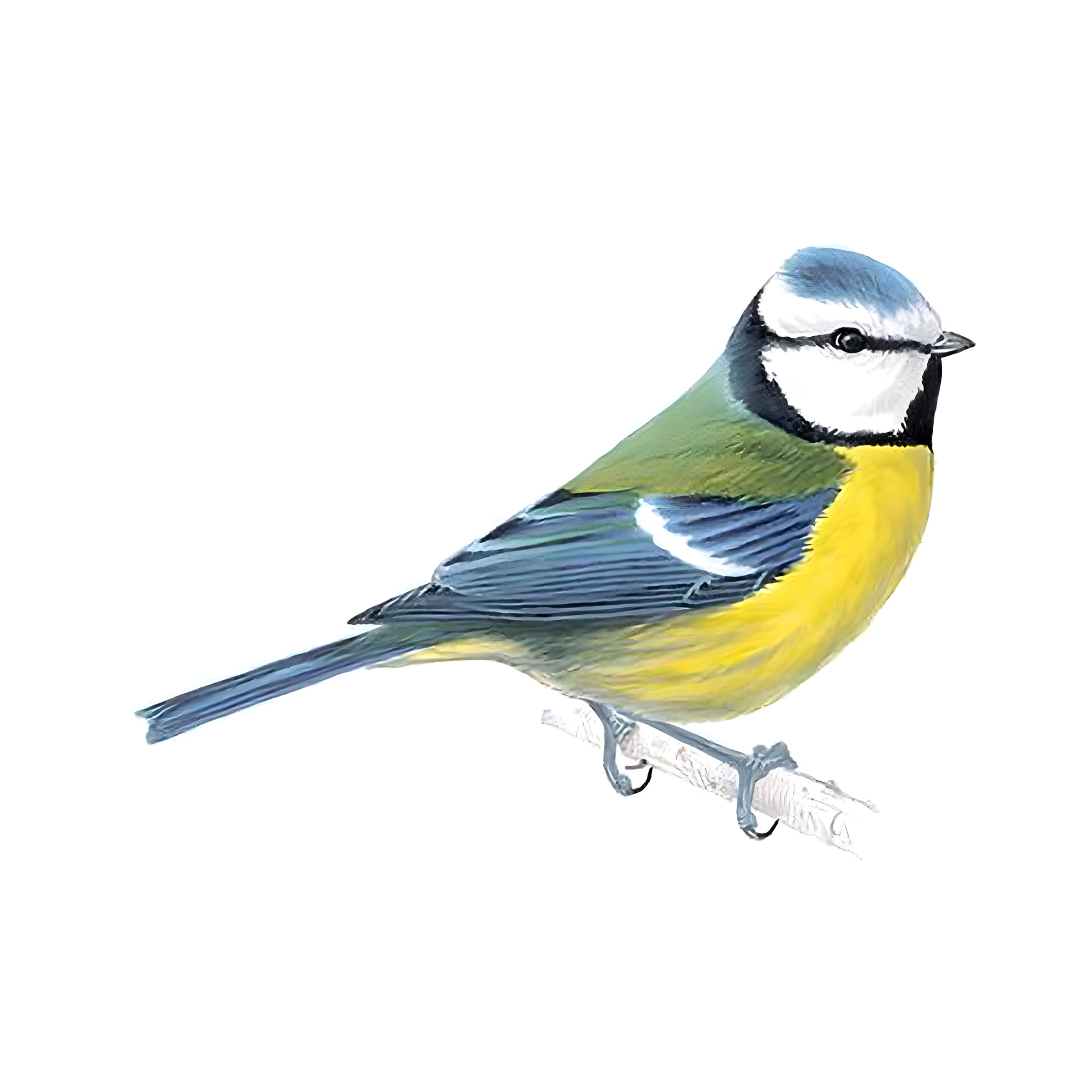
How to identify

A colourful mix of blue, yellow, white and green makes the Blue Tit one of our most attractive and most recognisable garden visitors. In winter, family flocks join up with other tits as they search for food. A garden with four or five Blue Tits at a feeder at any one time may be feeding 20 or more.

Call

Blue Tit

Patrik Åberg / xeno-canto

Key features to look out for

  • A colourful mix of blue, yellow, white and green feathers. 
  • Look for a very short and thin black beak – perfect for nibbling on nuts.

When and where to see them

Blue Tits are common in woodland, hedgerows, parks and gardens. They're widespread and found across the whole of the UK with the exception of some Scottish islands. 

Key

  1. Resident
  2. Passage
  3. Summer
  4. Winter
* This map is intended as a guide. It shows general distribution rather than detailed, localised populations.
  1. Jan
  2. Feb
  3. Mar
  4. Apr
  5. May
  6. Jun
  7. Jul
  8. Aug
  9. Sep
  10. Oct
  11. Nov
  12. Dec

Behaviour

You'll often see them clinging confidently to the feeder after other birds have flown off. They like to chase each other about the garden, and even developed a reputation for stealing the creamy top off morning milk deliveries in bygone times!

Call/song

A short, trill phrase that often gets repeated in close succession. Usually a couple of high pitched ‘tseep’ sounds, followed by a lower pitched, closing rattle.

When and where to hear them?

Blue Tits belt out all year round. In spring and summer, they’ll use their voice to defend territories and attract a mate. Throughout winter, they’ll hang out in feeding flocks of multiple species, where they keep in touch through contact calls.

While they’re a little shier than their larger relatives, they’re still a regular feature at the bird feeder, especially through winter. They can be heard all across the UK – apart from on some of the Scottish islands where, like Great Tits, they’re a bit of a ‘twitch’ when blown across by storms.

Nesting

Blue Tits produce famously large clutches and have been known to lay up to 16 eggs! However, they will only lay one clutch per year, which they synchronise with the emergence of caterpillars. The female builds the nest with little input from her partner, and she will often choose a location near a tree, which will make the many hungry beaks easier to feed.

Key facts