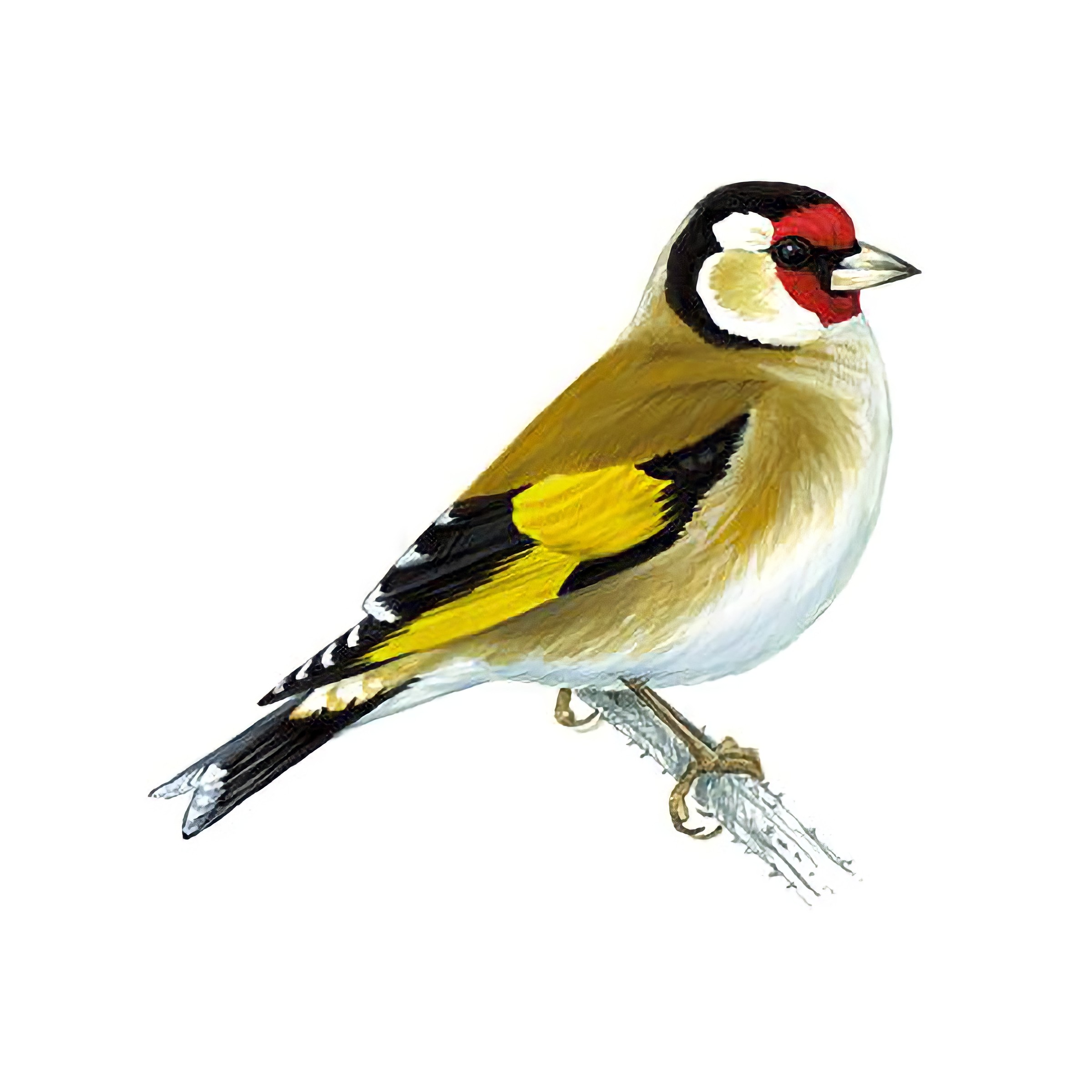
Juvenile Goldfinches have a streaky brown body and head, and lack the red, black and white markings seen on the face of adults. However, like adults, they have black wings with a bright yellow patch and a black tail with white marks.


Juvenile Goldfinches have a streaky brown body and head, and lack the red, black and white markings seen on the face of adults. However, like adults, they have black wings with a bright yellow patch and a black tail with white marks.
Goldfinches can be seen anywhere there are scattered bushes and trees, rough ground with thistles and other seeding plants. They like orchards, parks, gardens, heathland and commons. They're less common in upland areas and most numerous in southern England.

Long verses of a twinkling, fast-paced tune. They’re often heard before they’re seen when flying together in flocks (known as a ‘charm’ of Goldfinches). Here, they make a similar contact call, composed from notes in their song, which makes their presence obvious when they’re overhead.
You can hear Goldfinch throughout the year. Their beaks are perfectly adapted to their seed diet. They can be found eating teasles or thistles out in the countryside. But they’re a regular garden visitor too, especially where nyjer or sunflower seeds can be found.

A fast-paced song with chirps, trills and warbling notes, a charm of Goldfinches warbling together is a lovely sound. Less a specific tune, and more like the babbling of a brook.
Goldfinches mainly eat seeds, especially those of thistles, teasels and dandelions. They also visit garden bird feeders for sunflower hearts and nyjer seeds.
Goldfinches nest in trees and shrubs. Their small, cup-shaped nests are often made from moss, grass and plant fibres.
Many UK Goldfinches stay here all year, while some birds move south in winter and others arrive from northern Europe.
Goldfinches can live for several years in the wild. The oldest recorded wild Goldfinch was over 10 years old.
Goldfinches are small, colourful finches with a bright red face, black-and-white head, golden-yellow wing patches and a short, pale bill.
Goldfinches usually nest between April and August. They may raise two or even three broods during the breeding season.
No, Goldfinches are widespread and common across much of the UK. They are a familiar sight in gardens, parks, farmland and woodland edges.
Goldfinches can be seen in the UK throughout the year. Migrant birds from northern Europe may arrive during autumn and winter.
Goldfinches do not all leave the UK. Many remain here year-round, while some UK birds move south and continental birds may arrive for winter.