
Advice
Feeding birds near you
If you want to attract birds to your garden, you’ve come to the right place.
To celebrate World Wetlands Day and the month of love, here’s five top things to see and do.

If music be the food of love, bird song. Yes, Valentine’s Day is on its way and don’t our birds know it! We also celebrate World Wetlands Day this month. From mudflats to reedbeds, on February 2, World Wetlands Day celebrates some of our most dynamic and valuable habitats.
With wetland bird populations bolstered by hundreds of thousands of winter migrants, there’s no better time to get outside and see something amazing.
So, we’ve picked out some spectacular species, enthralling events and heartwarming love birds for you to spot this month. How many will you see?
From peat bogs to saltwater lagoons, UK wetlands include an incredibly diverse range of habitats. Not only are they a vital resource for an enormous number of species, but they lock up carbon, filter water and reduce flooding too.
The UK is situated on the East Atlantic Flyway, a superhighway in the sky for migrating birds. That’s why, in winter, our wading bird populations swell by hundreds of thousands as long-distance travellers use our wetlands to rest and refuel.
There’s truly no better time to get outside and experience these incredible habitats.
Head to our coastal reserves this month, and you could see huge flocks of waders like Knots, Dunlins and Oystercatchers feeding on the vast tidal mudflats. Plus, if you’re lucky, you might catch some spectacular aerial displays too. So, dig out your wellies and wrap up warm – it's time to celebrate our wonderful wetlands!
.jpg)
On coasts, bays and estuaries across the UK.
For the best chance of spotting waders, it’s best to visit coastal wetlands on a rising tide, as the oncoming waters force the swirling masses towards land.
Easy – simply head to a coastal wetland.
If there’s a bird that embodies World Wetlands Day and the month of love, it’s the Great Crested Grebe. This month, wetlands around the UK will transform into aquatic dancefloors, as Great Crested Grebes display their flamboyant breeding feathers.
Carnival-like crests of sunburnt orange flash as breeding pairs begin their most elaborate routine, the Weed Dance. It begins with vigorous shakes of the head. Then, the birds dive under water and re-emerge with waterweed clasped in their bills. That’s when you know the crescendo approaches.
The grebes suddenly rise out of the water, breast to breast in a vertical ballet, paddling furiously to stay upright. Jerking their heads and weedy gifts from side to side, they dance in unison all in the name of territory and love. A must-see February thrill.


Medium sized (46-51cm)
Russet head crest, sharp pointed beak
Feet set far back on the body make these birds clumsy on land

Freshwater wetlands around the UK.
Easy - head to a freshwater wetland.
Great Crested Grebes and other birds were being driven to extinction due to a fashion for feathers at the turn of the 20th century. But thanks to campaigning led by the RSPB’s founders, eventually, the 1921 Importation of Plumage (Prohibition) Act was passed, marking this the RSPB’s first successful campaign for nature.
Have you ever spotted a bird hovering in place above a grassy motorway verge? That’s a Kestrel. With their pointed wings flapping furiously and their long tails fanned out, these sharp hunters keep their heads perfectly still as they home in on their prey.
Kestrels can be spotted all year around. However, there’s scarcely a better time to catch some awe-inspiring views of these pocket-powerhouses. This month, clear winter skies and late winter sun can cast hovering Kestrels in breathtaking silhouette. But these pretty little falcons aren’t bad in colour, either.
Males have a pastel slate-grey head, while both genders are pale underneath with striking black speckles. If you’re out for a walk or whizzing by fields on a train or in a car, keep an eye out, you might just witness a hovering hunt.


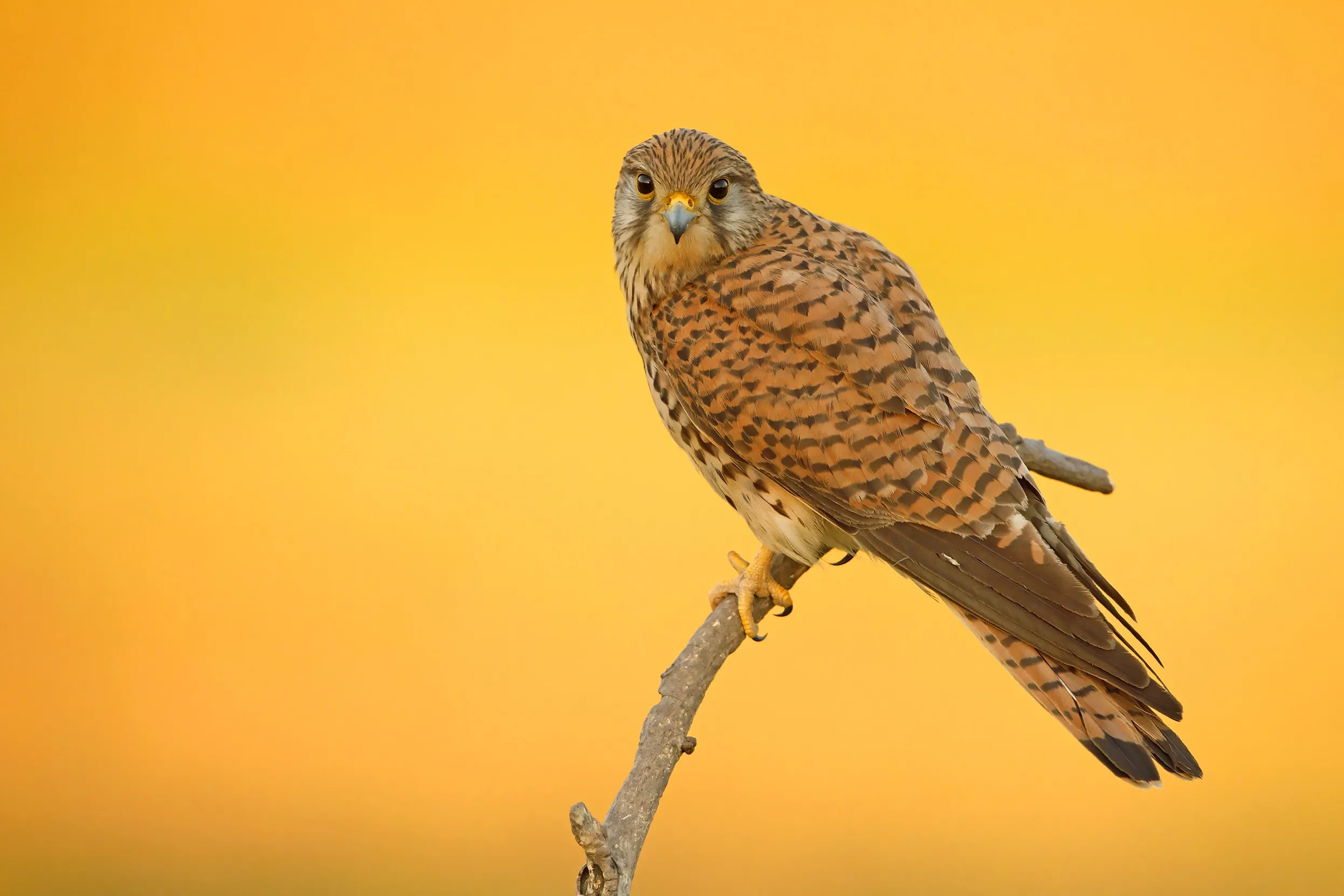
Small raptor (32-35cm)
Males and females have a pale underside with black speckles and dark ‘tear’ marks below either eye
Males have a slate-grey head and upper tail
Look for that tell-tale hovering behaviour
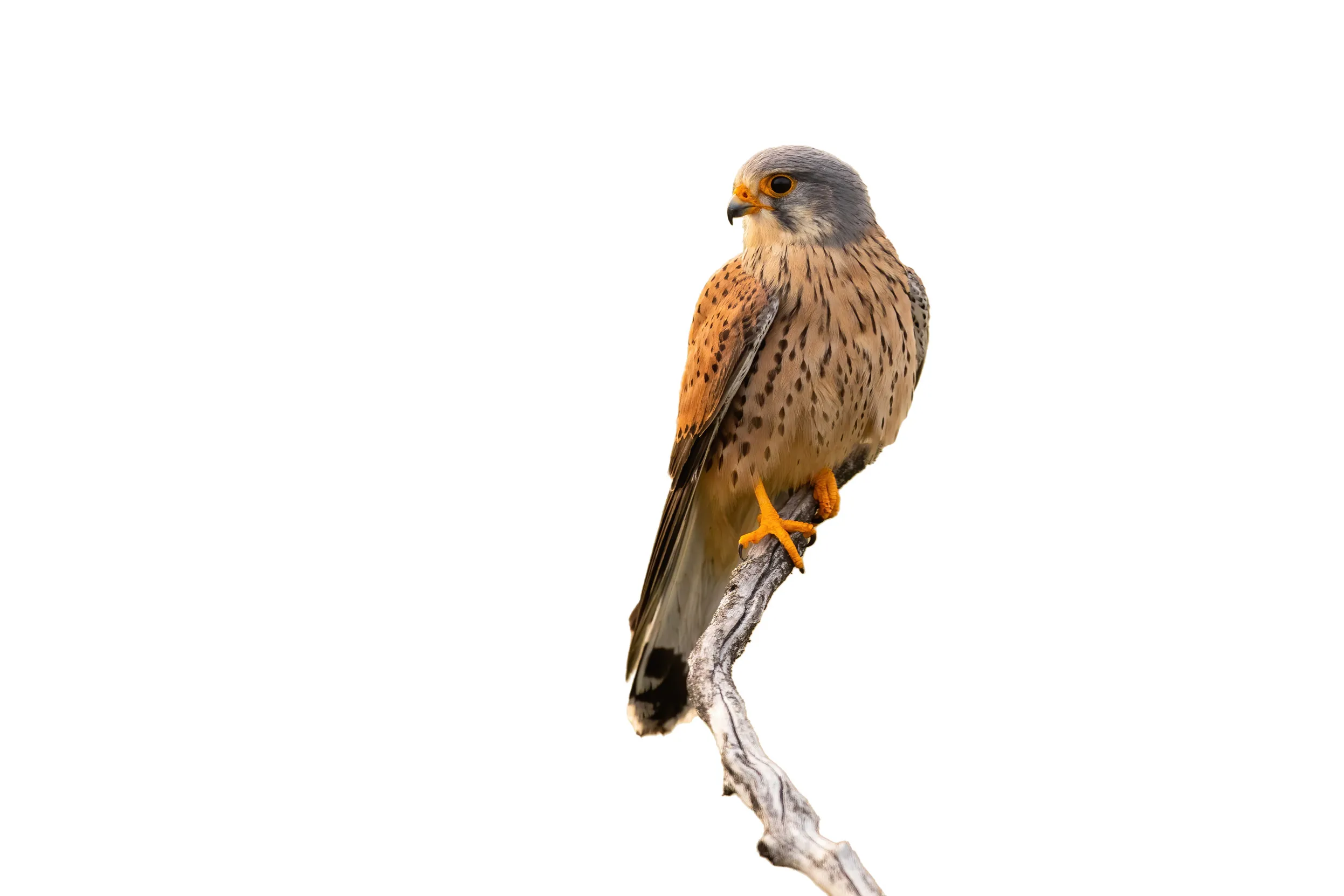
Open habitats like grass and farmland right across the UK.
Easy/Moderate – Kestrels are widespread but you’ve got to have a keen eye.
Kestrels are an RSPB Priority Species and are on the UK’s Amber List of Birds of Conservation Concern. This follows a 37% drop in numbers between 1995 and 2023. The reason for their decline isn’t currently clear, so we’re conducting research to better understand the problem.
RSPB Species Lead for Kestrels, Louise Scott explains: "Our work on Kestrels is currently focused on advocacy rather than field-based action. Over the coming years, we’ll monitor population trends to assess whether steps taken are having a measurable impact on Kestrel populations.
"These include the ban on Second-Generation Anticoagulant Rodenticides (SGARs), a proven driver of Kestrel decline, and the uptake of wildlife-friendly agri-environment measures."
Along with Yellow and Grey Wagtails, the Pied Wagtail is one of three regularly occurring species in the UK, and there’s no doubting how they got their name.
When these spritely little birds aren’t flitting around hunting for food, they’re merrily wagging their long tails.
An incredibly adaptable bird, the black, white and grey Pied Wagtail can be seen in urban and rural environments across the UK. In fact, you can often see them scuttling around car parks, where they keep a close eye out for insects and scraps left by us humans.
February is a great time to spot Pied Wagtails, as they gather in large roosts in towns and cities to take advantage of the slightly warmer urban temperatures. So, head outside this February, wagtail watchers, you might just see a flock!


A small, slender bird (18cm) with a long, wagging tail
Grey, black and white colouring with a white mask across the eyes
Often calls during its ‘bouncing’ flight
Right across the UK in urban, suburban, farmland, grassland, wetland and intertidal areas.
Easy/Moderate – they're out there, but you need a bit of luck.
The Pied Wagtail is currently listed as Green, the lowest level on the UK’s List of Conservation Concern.
Spring is in the air... well, almost, and for garden favourites like Blue Tits and Great Tits, their attentions are turning to one thing – love. Glance outside this month, and you might catch the blue flash of a Blue Tit, or the grey blur of a Coal Tit, as they hunt for the perfect nesting spot.
Both species are common in green spaces and wooded areas across the UK. So, if you don’t have access to a private garden, take a stroll through your local park, woodland or RSPB nature reserve for a glimpse of these loved up homemakers.
Amazingly, Blue Tits can lay clutches of up to 16 eggs. Plus, the female will aim to synchronise the hatching of her eggs with the emergence of spring caterpillars. Talk about springtime-ing!
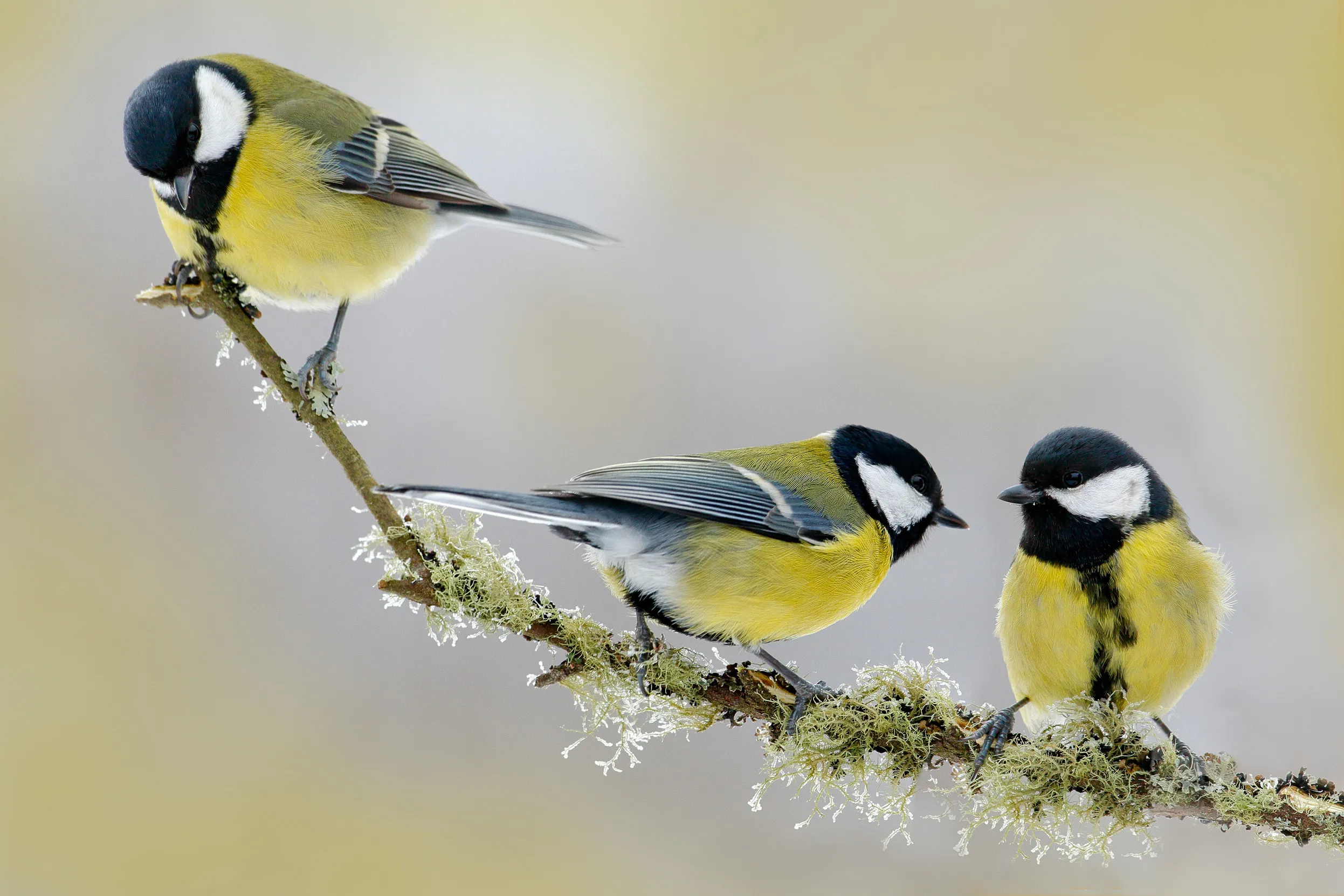


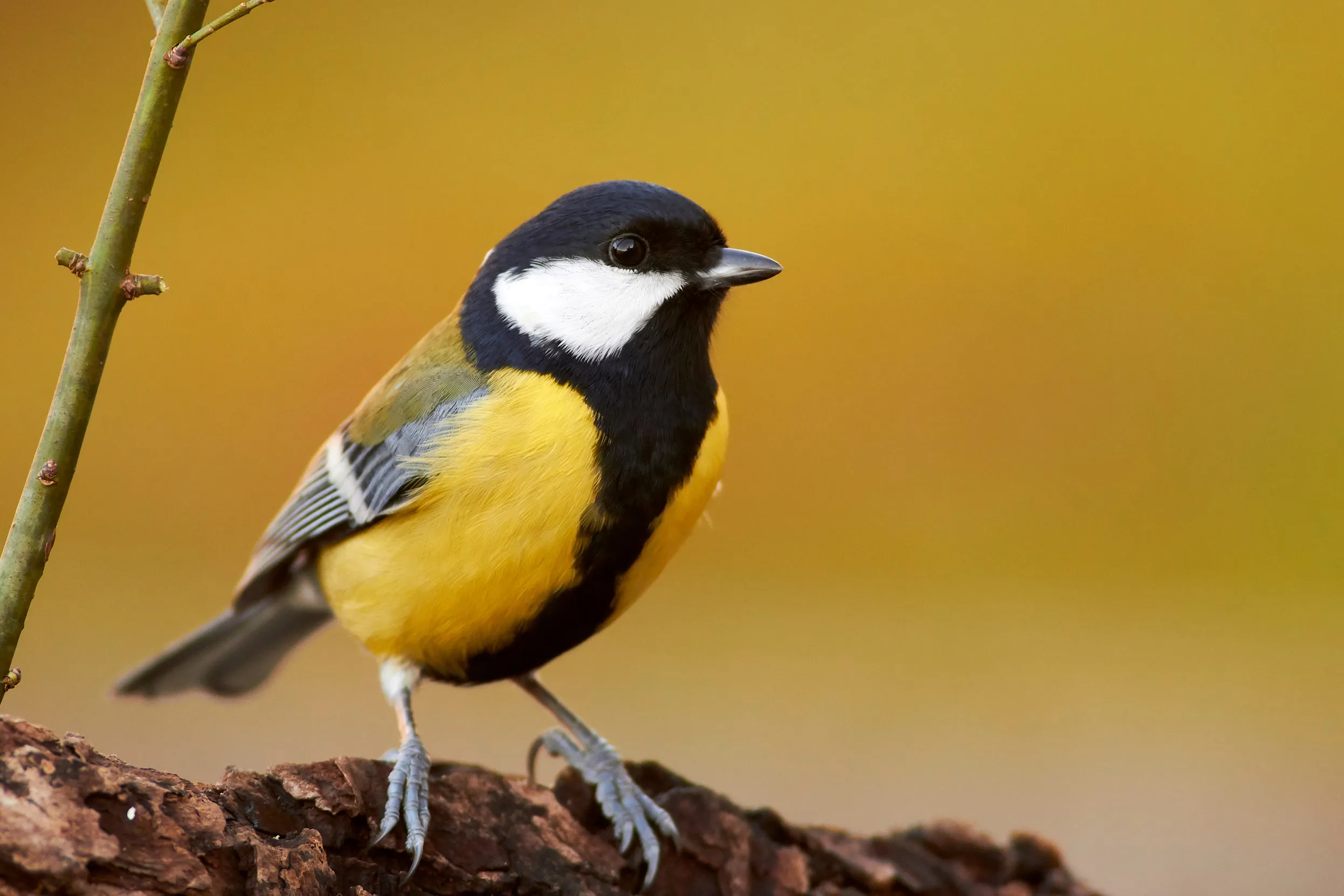
Hedgerows, trees, conifer woodlands, parks and gardens across the UK.
Easy – just head to a green space near you.
Both species are listed as Green – the lowest level on the UK’s List of Conservation Concern.
We hope you feel inspired to try and see some of these birds and events this month. We’d love to hear how you get on. You can share your photos with us at NotesonNature@rspb.org.uk We’ll share some of the best in a future issue of Notes on Nature.
Please be mindful when taking photos not to disturb wildlife or habitats. Further guidance can be found in The Nature Photographer's Code of Practice.


