
Involved projects
Find out how we’re protecting and recovering some of England’s most iconic seabirds and their habitats.
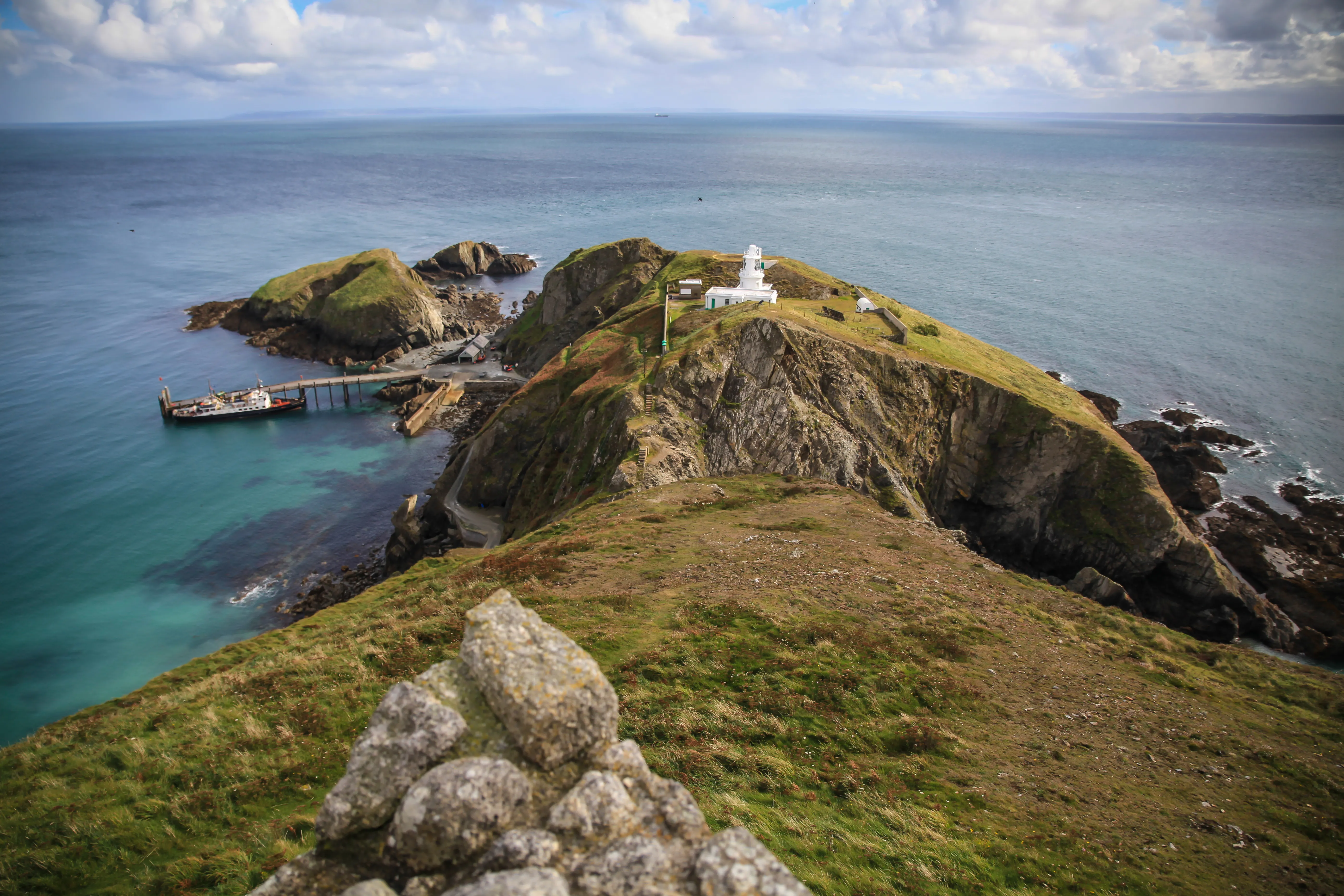
Our vision is for a thriving network of predator-free seabird islands and cliff-nesting sites, surrounded by a healthy and food-rich marine environment. Key marine habitats, such as ocean fronts, sheltered bays, subtidal sands and gravels, are sustainably managed so that prey species can flourish and support resilient seabird populations.
Extensive, well-connected habitats across the seascape will give wildlife the space it needs to adapt to a changing climate. Communities on land and at sea will benefit from sustainable fishing practices that help to maintain the biodiversity of this remarkable area.
The Western English Channel, Celtic Sea and islands Seascape is hugely important for seabirds. It includes a number of significant breeding seabird colonies scattered around the southwest peninsula of England. Exposed to the raw nature of the Atlantic and with calmer inlets and bays, nutrient-rich upwellings and fish nursery areas provide important food sources for seabirds. The area has a long history of fishing, and is likely to see considerable change happening over the next few decades with the emergence of floating wind as an increasingly viable option for renewable energy.
The seascape supports the only breeding sites for the Manx Shearwater and European Storm Petrel and formerly much larger colonies of breeding seabirds. This means this area provides a unique opportunity in England to protect and recover seabird populations by working with owners, fishers, industries and policy makers, with a view to providing not only safe nesting sites on land, but also provide the food and safe areas they need at sea that will allow them to flourish.
This seascape spans a wide area of sea, incorporating a network of offshore islands in the south‑west of England, covering 32,430 km² in total. It stretches from Lundy in the north‑east to the Isles of Scilly in the southwest, and south eastwards to the Channel Islands, including the surrounding marine waters that connect these island groups.


The seascape includes a variety of designations including Marine Conservation Zones for specific habitats and species, Sites of Special Scientific Interest (SSSIs) for breeding seabirds and other features.
It also contains two Special Protection Areas (SPAs), one in the Isles of Scilly for breeding seabirds and the other off south Cornwall for wintering divers and grebes. There are Ramsar Sites in the Channel Islands for breeding seabirds too.
Despite these designations, the area protected is very small and we’re seeking further protections for the most important seabird sites.
This seascape is a stronghold for breeding seabirds found nowhere else in England, making its protection critical for national and international species conservation. It also provides essential spawning, nursery and feeding grounds for a wide range of fish species, on which seabirds and other marine life depend.
Finally, it plays a key role in storing blue carbon, supporting ecosystem resilience and helping buffer coastal communities from storm surges.

The seascape’s important burrow-nesting seabirds are highly vulnerable to predation by non-native invasive species, especially rats. Recovering impacted colonies through island restoration and strong biosecurity measures is essential to the survival of these species. The area also supports internationally significant numbers of seabirds at sea, yet many of these important places still lack appropriate protection and management.
The seascape has a large static net-fishing fleet. This creates an important opportunity to work directly with fishers to test and refine measures that reduce bycatch and make the sea safer for vulnerable species.
With major offshore wind development planned for the Celtic Sea, early and proactive engagement here is vital to ensure the rollout of renewable energy avoids harmful impacts and delivers real gains for seabird conservation.

Since then, Lundy’s seabird populations have undergone a remarkable recovery, increasing from around 6,000 birds to more than 46,000 individuals by 2025. Today, Lundy is the third largest seabird site in England and supports an internationally important seabird assemblage.
Biosecurity and monitoring plans are now in place to safeguard the island’s rat free status and track ongoing seabird recovery. The next phase of work focuses on identifying and protecting the key marine areas of the Celtic Sea that Lundy’s seabirds rely on for foraging.
Check the RSPB volunteering pages for roles that support our work in the seascape.
We work alongside a variety of organisations to deliver impactful work across the seascape. These include a range of partners on the Isles of Scilly, in particular the Isles of Scilly Wildlife Trust, Duchy of Cornwall, Defra, Natural England, Isles of Scilly National Landscape and Council.
On Lundy, we work with the Landmark Trust, Lundy Bird observatory, National Trust, Natural England and Oxford University on Biosecurity, breeding colony management, monitoring and seabird tracking.
In Cornwall, we work with the Cornwall Marine and Coastal Code Group on disturbance, with the National Trust on seabird monitoring, and with Inshore Fisheries and Conservation Authorities (IFCA), Fishtek and Exeter University on bycatch mitigation trials.
In The Channel Islands we work with Guernsey Government, Alderney Wildlife Trust and Jersey National Trust on seabird monitoring, Island Restoration and Colony Management.