
Want to visit?
The following RSPB nature reserves form part of Scotland’s Rainforest Priority Landscape:
Discover how we’re working to protect a fragile world of ancient oaks, emerald mosses, and rare lichens unlike anywhere else on Earth.

Our vision for Scotland’s Rainforest sees a rejuvenated landscape where ancient woods are expanding, linking isolated fragments.
They will be free from rhododendrons and non-native conifers, and sustainable grazing levels will benefit trees and lichens.
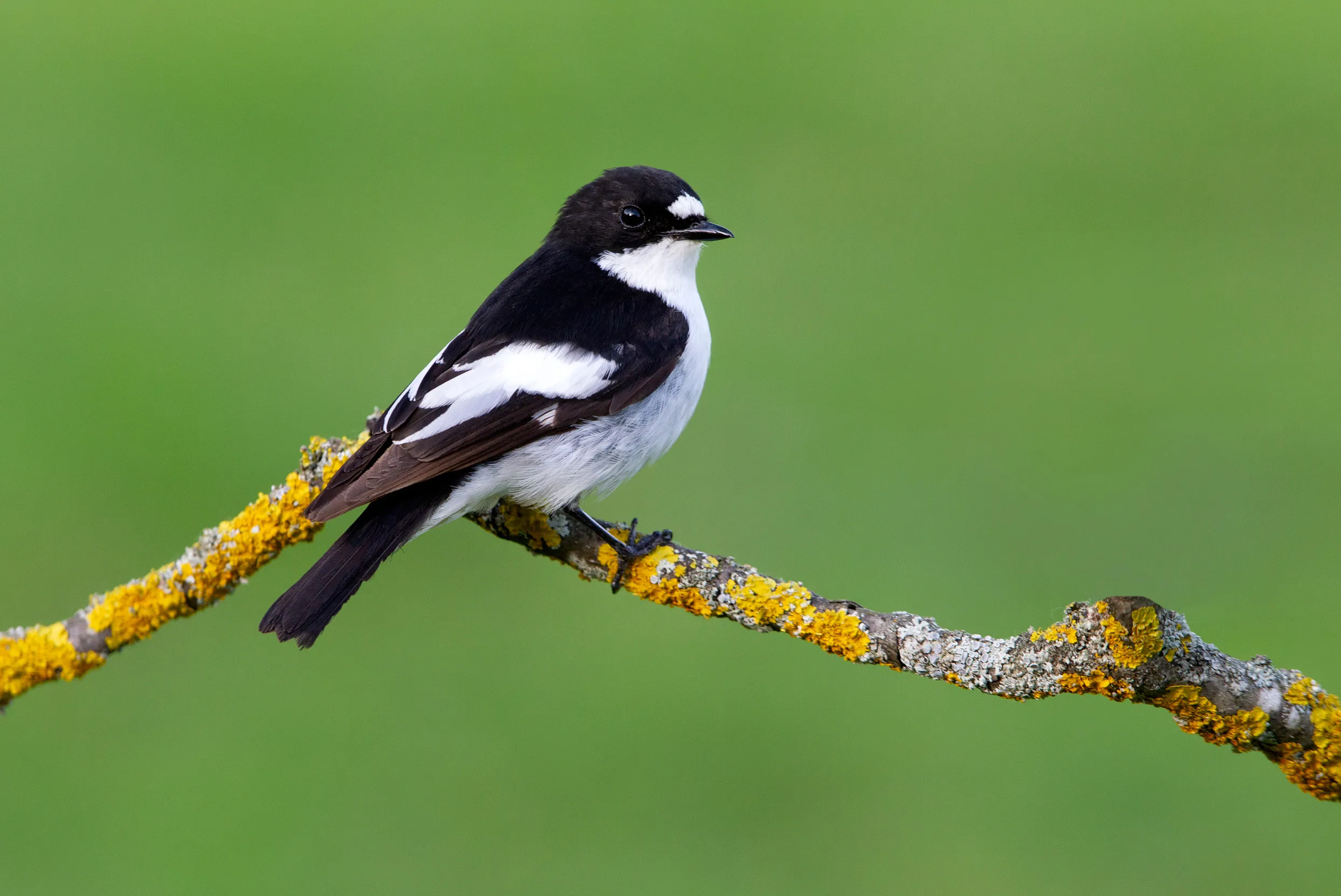
This will deliver positive outcomes for birds such as Pied Flycatchers and Wood Warblers, and rare Chequered Skipper and Pearl-bordered Fritillary butterflies will flit through the undergrowth.
Scotland’s rainforest can only be found in the west of the country, where it’s wet and stays relatively mild all year. Here, ancient, tangled woodlands full of oak, birch, Ash and Hazel trees sprawl up steep hillsides and cling to the shores of lochs.
These are the temperate rainforests, home to a staggering range of mosses, liverworts and lichens, the abundance of which make these woods internationally important.
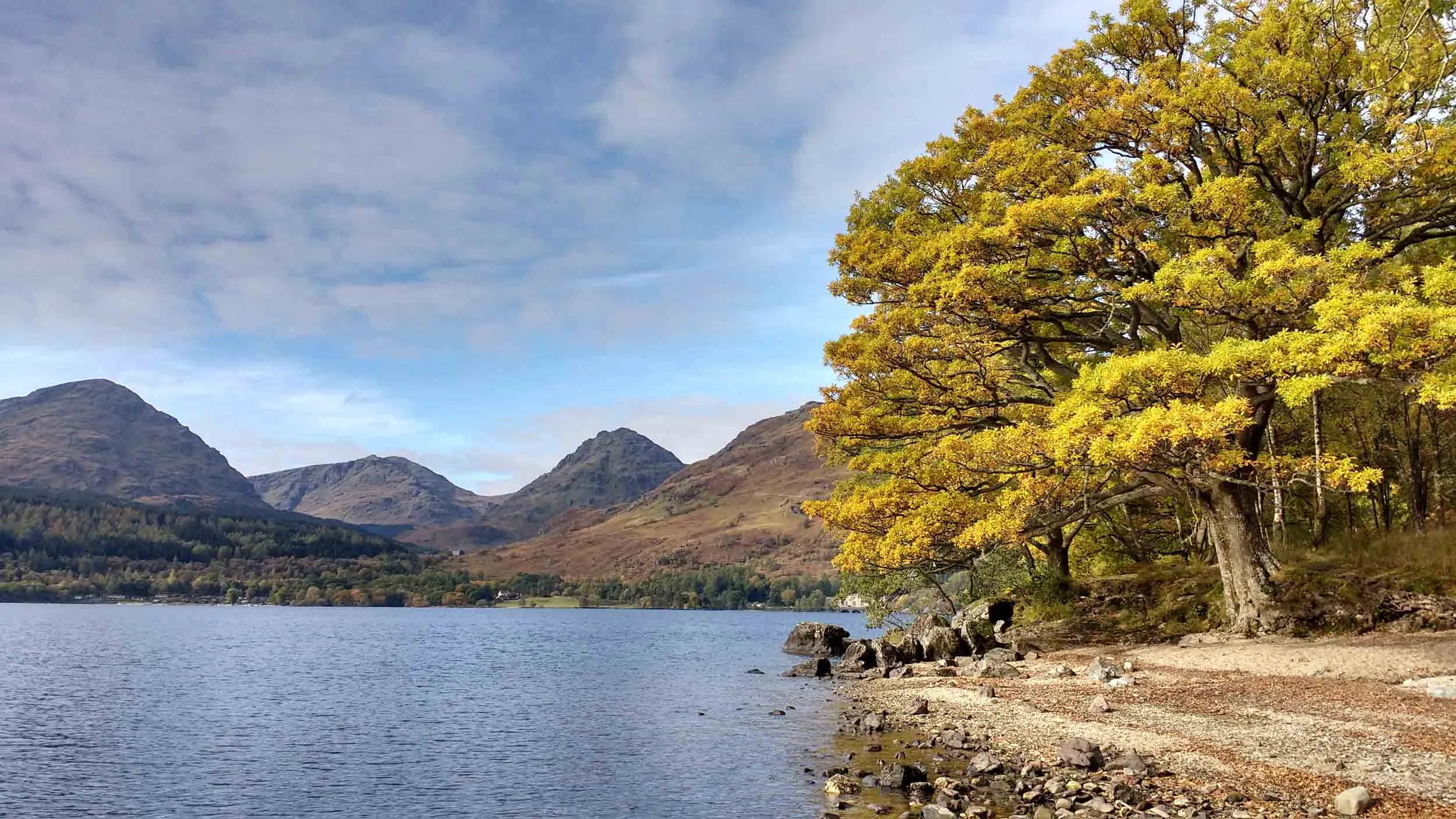
The total area of this landscape is 4800km2 and covers much of Argyll. It extends northwards into Morvern and eastwards to Loch Lomond, and includes four RSPB Scotland reserves:
Glencripesdale, Glenborrodale, Inversnaid and Loch Lomond.
In the landscape, there are 214km2 of core rainforest, representing over two thirds of the remaining core rainforest habitat in Scotland.



There are 11 Special Areas for Conservation (SAC) and 38 Sites of Special Scientific Interest (SSSI), designated for their rainforest woodland habitats. Loch Lomond & the Trossachs National Park lies within the landscape.
This landscape contains the majority of rainforest habitat in Scotland, with large scale restoration potential. There are also several Alliance for Scotland’s Rainforest (ASR) priority projects (https://savingscotlandsrainforest.org.uk/projects) delivering at scale with the RSPB involved from Morvern to Loch Lomond.
The landscape can also deliver well-being and sustainable community benefits – with a myriad of projects initiated by local communities.
Scotland’s rainforest is a rare and threatened habitat, rich in biodiversity. Its recovery aligns with the RSPB’s mission to restore nature at scale, deliver for priority species, and tackle climate change.
The landscape also contains many of the best remaining fragments of rainforest anywhere in Europe. It hosts internationally important lichens, bryophytes and fungi and key migrant bird species such as Pied Flycatchers and Wood Warblers.
The rainforest needs immediate intervention to reverse loss and degradation, especially from over grazing and invasive rhododendrons. The RSPB, alongside ASR, is uniquely placed to deliver coordinated, long-term action and inspire wider public support and champion political change.

Invasive non-native species, especially rhododendrons, and commercial non-native conifers causing fragmentation.
Herbivore pressure, particularly over-grazing by deer; the resultant lack of re-generation limits structural diversity.
Ash-dieback & climate change - ash woods are important for lichens and bryophytes, whilst climate change threatens the climatic conditions the rainforest needs.
Long term loss leading to woodland fragmentation.
Political and public support, providing a sound basis for increased action on a local to a national scale.
A diverse array of funding potential to deliver positive outcomes.
Collaborative partnerships to deliver project opportunities and lobby for policy change.
Working with communities to ensure sustainable outcomes and skill creation for green jobs and volunteering.

Secure funding through effective partnership, working to enable rainforest restoration that delivers restoration outcomes at scale across the landscape.
Promote the cultural heritage and communities as intrinsic to future work, leaving a legacy that establishes rainforest restoration as a local, green sectoral career opportunity.
To shape future policy and funding through exemplar management on our reserve network and landscape-scale projects.
Saving Morvern’s Rainforest is a key template for how to deliver landscape-wide restoration alongside community legacy.
In 2020, we began the Saving Morvern’s Rainforest (SMRF) project which aims to be an exemplar project and is one of the best sites for large-scale rainforest restoration in Scotland; it holds important biodiverse rainforest (2 SACs) and is a ‘near island’ - easily defendable from reinfestation of rhododendrons whilst having a progressive Deer management group.
The SMRF project employs a team of seven who work with land managers to deliver restoration. We have also acquired a new rainforest reserve – Glencripesdale. Communities have taken the rainforest to heart, and it is a feature of local place plans across the landscape.
In collaboration with the Loch Lomond & The Trossachs National Park and Loch Lomond Countryside Trust we’ve secured National Lottery Heritage funding to develop a landscape-scale project that could lead to a decade of rainforest and native woodland restoration.
Collaborative working with the ASR has brought about wide recognition of the habitat and shifted policy into positive outcomes including a dedicated national funding stream (Rainforest Restoration Fund).

Watch this page for updates and also check out the information on https://savingscotlandsrainforest.org.uk
To get in touch, you can email us at: MorvernsRainforest@rspb.org.uk.
We’re working alongside Alliance for Scotland’s Rainforest, which includes many key partners: Loch Lomond & The Trossachs National Park, Woodland Trust Scotland, NatureScot and PlantLife amongst others.
Much of the work to date has been supported through the Scottish Government's Rainforest Restoration Fund as well as its Nature Restoration Fund and private donations. Forestry & Land Scotland have assisted work in Morvern alongside undertaking rainforest work on the national estate.
The following RSPB nature reserves form part of Scotland’s Rainforest Priority Landscape: