RSPB - giving nature a home
Search
Close
Skip to content
Shop | Community
Log in | Sign up
  • About the RSPB
      About us
    • Our history
    • Our mission
    • How the RSPB is run
    • RSPB Media Centre
    • RSPB job vacancies
    • At home & abroad
    • International
    • England: At home & abroad
    • Northern Ireland
    • Scotland
    • Wales
    • Get in touch
    • Contact us
    • RSPB offices
    • Connect with us your way
      Our activities
    • Gardening for wildlife

      Gardening for wildlife

      See our ideas to keep you connected to nature during coronavirus

    • Connect with us your way

      Connect with us your way

      From our regular emails to your favourite social media, there’s more than one way to keep in touch with nature

    • Martin Harper Blog

      Martin Harper Blog

  • Our work
      Nature conservation
    • Conservation and sustainability
    • Projects
    • Landscape scale conservation
    • Centre for Conservation Science
    • Satellite tracking birds
    • RSPB News
    • RSPB News
    • 'Our work' blog
    • Policy and Insight
    • Policy and Insight: England and Westminster
    • Casework
      Featured news
    • Mindful mornings

      Mindful mornings

      If you can’t get outside, why not bring the outside in by downloading our bird song radio app?

    • How nature can help protect our homes

      How nature can help protect our homes

      Following the floods this winter, watch how one area is using nature as a natural protector.

    • Casework

      Casework

      Catch up with the RSPB’s own nature detectives on the case as they look to save some very special places.

  • Birds & wildlife
      Wildlife guides
    • Identify a bird
    • Bird A-Z
    • Other garden wildlife
    • Guide to birdwatching
    • UK conservation status explained
    • Nature's Calendar
    • Nature's Home magazine
    • About Nature's Home magazine
    • Birds and wildlife articles
    • RSPB Podcasts
    • Nature's Home blog
    • Birds & Wildlife Advice
    • How you can help birds
    • Gardening for wildlife
    • Ask an expert
    • Wildlife and the law
    • How to report crimes against wild birds
    • Bird songs
    • Which bird song is that?
    • Most popular bird guides this month
    • Which bird song is that?

      Which bird song is that?

      Find out how to identify a bird just from the sound of its singing with our bird song identifier playlist.

    • Who to contact if you spot an injured or baby bird

      Who to contact if you spot an injured or baby bird

      Read more advice about what to do if you find a bird that needs help

    • In for a duck

      In for a duck

      It’s nesting season for our waterfowl too but what are the rules you need to follow for ducks, geese or swans?

  • Get Involved
      Activities
    • Big Garden Birdwatch
    • Nature on Your Doorstep
    • RSPB Competitions
    • Dolphinwatch
    • #MyClimateAction
    • Community & advice
    • Join our local groups
    • How green are you?
    • RSPB Community
    • Get involved blog
    • Volunteering & fundraising
    • Volunteer
    • Fundraise
    • Help nature thrive as a corporate partner
    • Our grant funders
    • Campaigning
    • Campaigning in Scotland
    • Campaigning in Wales
    • Campaigning in England
    • Campaigning in Northern Ireland
    • The nature and climate emergency
    • Protecting wildlife sites
    • Campaign with us
    • Top activities to do
    • Nature on Your Doorstep

      Nature on Your Doorstep

      Great ideas on how your garden, or even a small backyard or balcony, can become a mini nature reserve

    • How green are you?

      How green are you?

      See some of the ways you can get into green living.

    • Campaigning

      Campaigning

  • Reserves & events
      Reserves A-Z Events Find a reserve
      Top reserve this month
    • Marshside

      Marshside

      This fantastic wetland site is located north of Southport town centre and has some of the best wildlife in the region.

    • Lytchett Fields

      Lytchett Fields

      The reserve has seen more than thirty species of wading birds.

    • Arne

      Arne

      Heathland home to more than 2565 species.

  • Fun & Learning
      For teachers
    • Supporting resources
    • Wild Challenge
    • School outreach visits
    • Big Schools Birdwatch
    • Sign up for the newsletter
    • School trip ideas
    • For kids
    • Fun factoids for all the family
    • Games and activities
    • Kids stories
    • RSPB kids competitions
    • For families
    • Big Wild Sleepout
    • Wild Challenge
    • Nature reserves for families
    • Robin Robin
    • Cameron's Cottage
    • Your Support
    • About Cameron's cottage
    • Latest kids' activities
    • Wild Challenge

      Wild Challenge

      Nature is an adventure waiting to be had. Get out, get busy and get wild!

    • Fun factoids for all the family

      Fun factoids for all the family

      Find out more about the nature and wildlife outside your window.

    • Youth membership

      Youth membership

      As well as a free gift and magazines, you’ll get loads of ideas for activities to try at home.

  • Join & Donate
      Join us
    • Choose a membership
    • Family membership
    • Youth membership
    • Gift membership
    • Discover RSPB Life Fellowships
    • Renew your membership
    • Our 2020 film
    • Donate
    • Philanthropy & Major Gifts
    • Our appeals
    • Make a one-off donation
    • Make a regular donation
    • Memorial donations
    • Plant a celebration tree
    • In memoriam booklet download form
    • Leave a gift to nature in your Will
    • Why Include a Gift to Nature in Your Will
    • How to Include us in Your Will
    • Information for executors & solicitors
    • Download your free guide
    • Other ways to help
    • Gift Aid
    • Support us when you shop
    • RSPB Images
    • RSPB second-hand binocular scheme
    • Win with the RSPB
    • Payroll Giving
    • Stamp out albatross deaths
  • Login to your account Sign up for an RSPB account
  • Shop
  • Community
  • Home
  • Reserves & events
  • Reserves A-Z
  • Insh Marshes

Insh Marshes

All of Scotland’s wild places and green spaces are vital for the survival of its unique, amazing wildlife. If you plan to head out to these areas please respect and protect Scotland’s great outdoors. As guidelines change, we ask that all visitors follow the latest Scottish Government restrictions and advice. See below for reserve details and our dedicated Covid-19 updates page for the latest safety information (link below). Thank you for your continued support and patience. Stay safe everyone.
gallery image
gallery image
gallery image
gallery image
gallery image
gallery image
gallery image
gallery image
gallery image
gallery image
gallery image
gallery image
Address
Insh Marshes RSPB Reserve, Insh Marshes, Kingussie PH21 1NT
Grid ref
NN775998
What3Words
evenly.companies.offstage
See our reserves Covid-19 updates page for which sites are open and other important details.

The Insh Marshes covers 10 square kilometres of the River Spey floodplain between Kingussie and Kincraig in Badenoch and Strathspey. It is said to be one of the most important wetland areas in Europe, supporting populations of breeding waders including curlew, lapwing, redshank and snipe.

Plan your visit

Opening times

Covid update: The car park, hide and trails are open at this reserve. 

Open at all times.

Entrance charges

Free entrance to RSPB members
Yes
Adults
Free, but donations are very welcome.
Children
Free, but donations are very welcome.

Facilities

  • Car park
  • Picnic area
  • Guided walks is closed
  • Viewing point
  • Nature trails
  • Educational facilities

Accessibility

  • Full accessibility information (external website)

How to get here

By train

Kingussie station is a 1.5 mile (2.4 km) walk away.

By bus

The nearest bus stop is in Kingussie, a 1.5 mile (2.4 km) walk away.

By bike

This reserve is on Route 7 of the National Cycle Network.

By road

From A9, take exit to Kingussie. Follow B970 south from village towards, and then beyond, Ruthven Barracks. Reserve entrance is 1 km to the east of the barracks.


Sat nav POI file: If you have a satellite navigation system that can accept POI files, please see our POI page for a download link and instructions.

Other ways to get there

From Aviemore, take the B9152 south-west to Kincraig. There are opportunities to see ospreys in spring and summer on Loch Insh from Kincraig. Join the B970 and head south-west towards Insh village and Kingussie. The reserve entrance is 3.2 miles (5 km) south-west of Insh village and 0.6 mile (1 km) to the east of Ruthven Barracks.


Get directions from Google Maps
View on What3Words
RSPB reserves on Google Earth

Downloads

Helping you find your way around. PDF, 683Kb

Insh Marshes trail guide

Contact Insh Marshes

  • Insh Marshes RSPB Reserve, Insh Marshes, Kingussie PH21 1NT
  • insh@rspb.org.uk
  • 01540 661518

What will you see?

Our star species

    Wading curlew illustration

    Curlew

    In spring, you can hear their gorgeous, 'bubbling' song.

    Standing Lapwing illustration

    Lapwing

    Watch the nesting lapwings here chasing predators that may come too close.

    Redshank, summer plumage

    Redshank

    Keep an eye out for the redshanks' display flights over the wet meadows in spring.

    Snipe illustration

    Snipe

    These cryptically-coloured waders can be seen here all year-round, with the greatest numbers in spring.

    Whooper swan

    Whooper swan

    Up to 100 whooper swans arrive here in October from Iceland, where they spend the summer, and stay until early April.

Seasonal highlights

  • Spring
  • Summer
  • Autumn
  • Winter

Spring is best for breeding waders including lapwings, curlews, snipe and redshank. Ospreys fish in Loch Insh and the River Spey.

Breeding waders including lapwings, curlews, snipe and redshanks until mid-summer. Breeding goldeneye and ospreys fish in the Loch Insh and the River Spey.


Arrival of winter migrants including whooper swans and greylag geese from Iceland. Hen harriers gather to roost.

Arrival of winter migrants including whooper swans and greylag geese from Iceland. Wintering ducks such as wigeon and tufted duck. Hen harriers gather to roost.


About Insh Marshes

Habitat

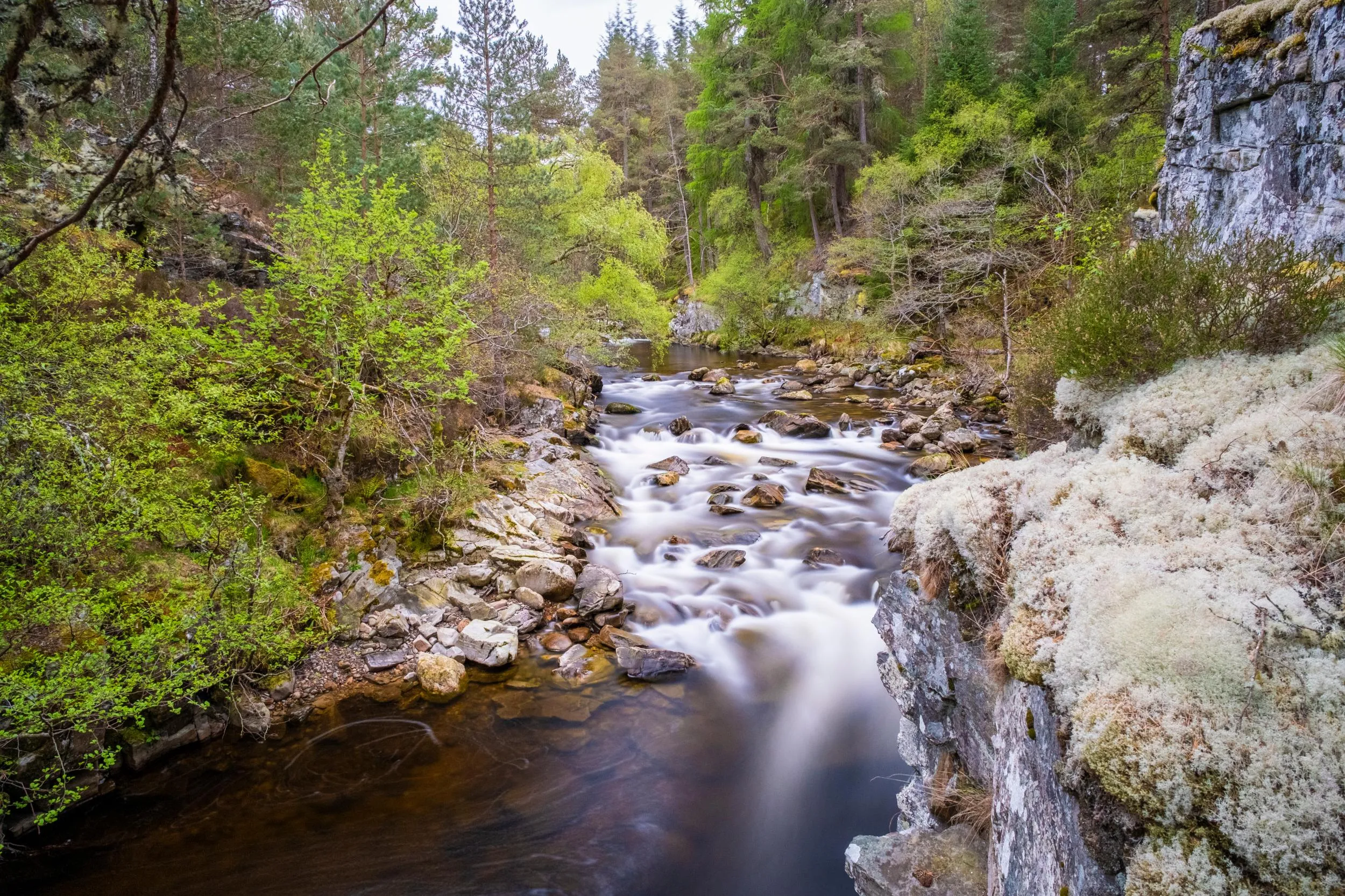
Insh Marshes is a reserve mainly comprised of woodland and marshland habitats.

Conservation

Fitter floodplain - The historical attempt to drain some of Insh Marshes and the decline of grazing in the area had allowed the open floodplain habitat to deteriorate, with too much encroaching willow scrub and rank grassland. We now lightly mow the floodplain, and work closely with local farmers to restore grazing by sheep, cattle and ponies. We are also removing some areas of willow scrub. Our work will benefit breeding waders and wildfowl, wintering hen harriers and whooper swans, and the rare plant communities the occur at Insh Marshes.

Other habitats - We are encouraging the natural regeneration of our semi-natural woodland, including its nationally important aspen stands. This will benefit diverse fauna and flora, including important invertebrate communities. Meanwhile, we are removing exotic conifers from Loch Insh Wood and lightly grazing our flower rich meadow at Invertromie.

Site information

This nature reserve is important for wildlife. RSPB Scotland welcomes responsible access, in line with the Scottish Outdoor Access Code.

Activities and events

Activities for children and families

For more information on events and to book tickets, please visit events.rspb.org.uk/inshmarshes

Share this

  • Facebook Facebook Created with Sketch.
  • Twitter
  • Pinterest

You might also be interested in

loch garten

Loch Garten, Abernethy

Ancient, wild and immeasurably special, it boasts ancient Caledonian pineforest, moorland, wetland and mountains.
 Insh Marshes RSPB reserve, Loch Insh, 2000

The Cairngorms

The Cairngorms contains both the lower altitude floodplain of Badenoch & Strathspey and the higher Caledonian Pinewood.
RSPB Giving Nature a Home Campaign

Join us - legacy

Become an RSPB member by signing up here.

We spend 90% of net income on conservation, public education and advocacy

Quick links

  • Contact us
  • Online Community
  • Vacancies
  • Media centre

Information for

  • Teachers
  • Policy makers
  • Farmers & landowners
  • Scientists

Our work in

  • England
  • Scotland
  • Wales
  • Northern Ireland
  • International

Follow us

  • Facebook
  • Twitter
  • Pinterest
  • Instagram

Partnering with

BirdLife_logo

The RSPB is a member of BirdLife International. Find out more about the partnership

Fundraising Regulator logo OSCR logo

© The Royal Society for the Protection of Birds (RSPB) is a registered charity: England and Wales no. 207076, Scotland no. SC037654

  • Terms & conditions
  • Cookie policy
  • Privacy policy
  • Charter and statutes
  • About our site
  • Modern Slavery Act

Cookie Preferences

Accepting all non-essential cookies helps us to personalise your experience

Edit settings
Accept all

Essential cookies are required

These cookies are required for basic web functions

Enable analytics cookies

Allow us to collect anonymised performance data

Enable marketing cookies

Allow us to personalise your experience

Save settings
Read our cookie policy