Feature
Berwick Bank developer applies to change plans
Worrying new development for deadly offshore wind farm.

On this page
The developer of Berwick Bank offshore wind farm has applied to change its plans for a development forecast to kill thousands of seabirds.
Here’s what this means for the project’s future - and how you can help speak out.
What has happened?
Berwick Bank developer SSE Renewables has applied to change the original planning consent granted by Scottish Ministers in July 2025. The project was greenlit on the condition that sufficient compensation would be found for all the seabirds which would be killed.
However, now developers want to change this. They have requested that the project is split into three phases, with compensation measures found for each phase separately. This would allow construction to start with seabird compensation for the first phase alone, rather than for the whole project. This essentially means it could be easier for the developer to find compensation for the number of seabirds Berwick Bank will kill.
RSPB Scotland is going through these new documents in detail. We have until 18 June 2026 to submit a response.

'Deadliest wind farm in the world'
Aedán Smith, head of policy and advocacy for RSPB Scotland, said: “We’ll be looking closely at this new application, but the fact remains that Berwick Bank threatens to become the deadliest wind farm in the world for seabirds.
“We support offshore wind that works with nature, sited carefully away from the most important places for wildlife. But Berwick Bank is planned in the worst possible place, near iconic seabird sites like the Bass Rock. It should be stopped to make way for other, less damaging projects.”
What is compensation?
Developments are required to avoid harm to wildlife wherever possible by considering alternative sites and designs. If this is not possible, developers must do what they can to minimise any damage to wildlife through careful design and planning. As a last resort, if the harm cannot be avoided or mitigated, the developer must compensate for any significant impacts on wildlife.
Compensation can come in many different forms. For example, if a development is removing woodland, compensation might include the creation of new native woodland, or restoration of existing ancient woodland. For offshore wind farms, developers are expected to directly compensate for significant impacts. For example, if a wind farm is predicted to kill 10 Puffins a year, the developer must fund projects that will result in 10 more Puffins.
What is the cost of Berwick Bank?
Berwick Bank is a huge 307-turbine wind farm planned off the East Lothian coast of Scotland, dangerously close to some of the most important seabird colonies in the world.
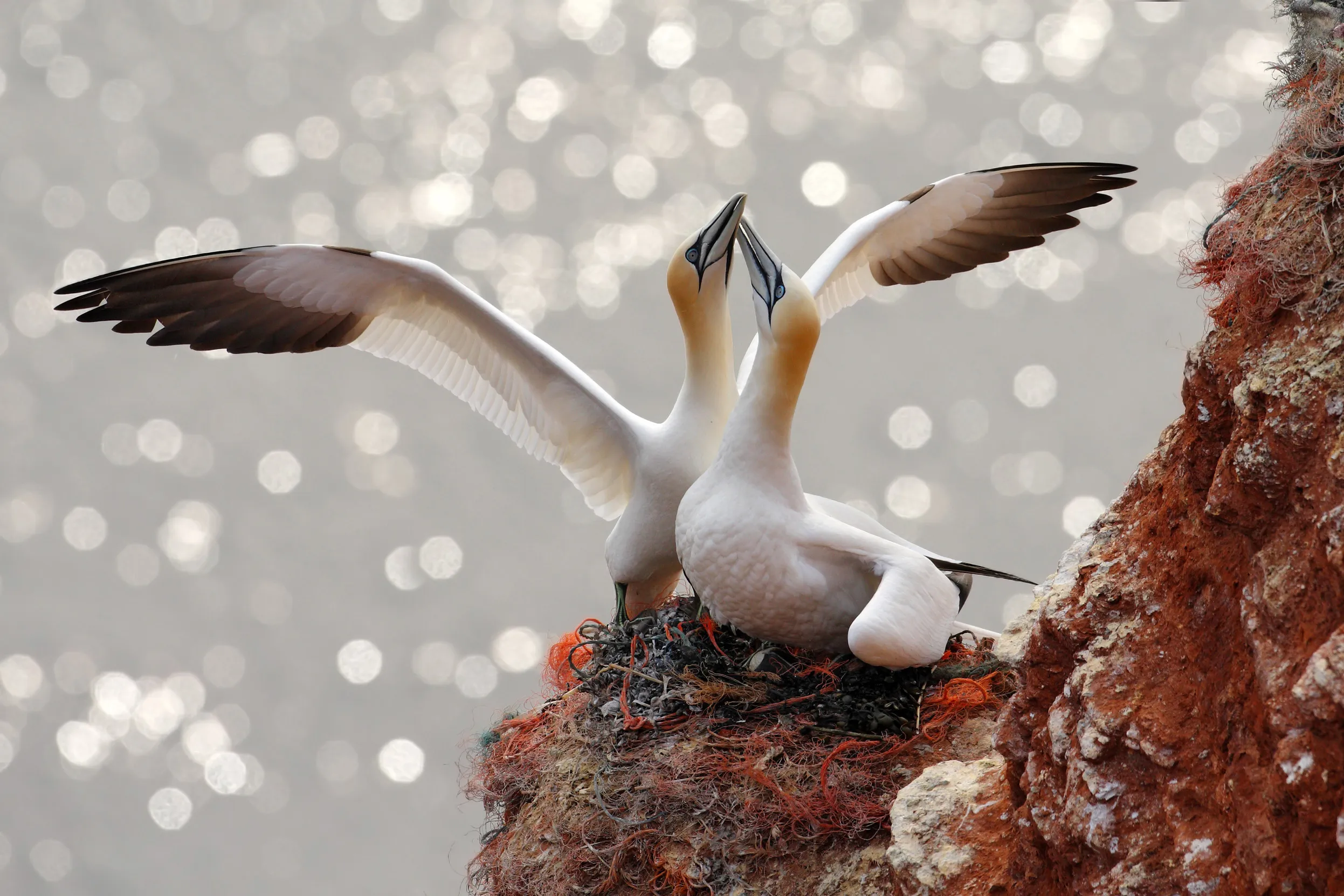
It is predicted to kill 2,808 Guillemots, 261 Gannets, 815 Kittiwakes, 66 Puffins and 154 Razorbills in its first year alone, according to the Scottish Government’s case assessment. Over its 35-year lifespan, tens of thousands of protected seabirds would be killed.
The Scottish Government’s scientific report into Berwick Bank said it estimates: “large and wide scale impacts of [Berwick Bank] on seabird populations, the magnitude of which has not been recorded before in Scottish offshore wind assessment and is indicative of the large numbers of seabirds recorded at proposed site and their connectivity to designated sites.”
RSPB Scotland is seriously concerned by the impacts this one development will have on already struggling populations of seabirds. We believe it could push species like Kittiwakes even closer to local and national extinction.
That’s why we - alongside the Scottish Seabird Centre, National Trust for Scotland, Marine Conservation Society and Scottish Wildlife Trust - have refused to contribute to any compensation measures for Berwick Bank. We believe this scale of loss cannot be compensated for.

What can I do?
You can email your objections to the marine directorate before 18 June at: md.marinerenewables@gov.scot. Scottish Ministers will be making the ultimate decision on the application; you can email them raising your concerns at scottish.ministers@gov.scot. The decision must also be agreed by the UK Government. You can email Michael Shanks, Minister for Energy, at michael.shanks.mp@parliament.uk.
You can also take part in a new action by the Scottish Seabird Centre. It is a template for people in Scotland to email their MSPs, and for those outside of Scotland to email Cabinet Secretary for Climate Action and Rural Affairs Gillian Martin.
Don’t miss the latest updates on Berwick Bank and how you can take action for nature. Sign up to our campaigns email to get news straight to your inbox.