
Wildlife attractor seeds
On the RSPB shop you can browse our range of wildlife attractor seeds. A selection of native wildflower seeds for bees, butterflies, bats or birds.
Jamie Wyver explains how to go beyond the birdfeeder and tailor your patch to support local wildlife.

If you feed birds to help them get through the colder months, thank you. It’s a rewarding and satisfying activity and a wonderful way to get closer to nature. But did you know you can also supply a huge array of natural food?
To attract a variety of birds, you’ll need a variety of food. Some birds that feed on invertebrates and their larvae in the spring and summer, such as House Sparrows and Blue Tits, are comfortable switching their diet to seeds in winter. Others, such as Dunnocks and Wrens, still need invertebrate food.
It’s vital to supply a wealth of options as well as places where invertebrate life can thrive. This has been at the forefront of my mind as I work to shape my dream Big Garden Birdwatch garden of the future.
On the RSPB shop you can browse our range of wildlife attractor seeds. A selection of native wildflower seeds for bees, butterflies, bats or birds.
Fun to grow and enjoy in the summer, Sunflowers (Helianthus annuus) are a great source of food for finches and sparrows during the colder months. Their seeds are rich in much-needed oil and protein to give birds warmth and energy.
Teasel (Dipsacus fullonum) is an impressive, statuesque biennial plant. After deliberately introducing it to our garden a few years ago, I now find it seeds itself freely about the place. But that’s not a problem; you can simply remove or rehome Teasels that spring up in the wrong location. Ideally, they should be at the back of a border, given their height, but keep them in view of any window or vantage point from which you want to watch the birds. Goldfinches are fond of the spiky seed heads, inserting their beaks inside to extract the seeds. In summer they will also seek other small seeds such as those of dandelions, thistles and Groundsel (Senecio vulgaris).

Common Knapweed (Centaurea nigra) is a purple-flowered perennial whose seeds are also eaten by Goldfinches. I think it’s an attractive addition to a garden, too, with a bottle-shaped seed head that earns it the nicknames ‘iron knobs’ and ‘hardhead’. It’s also great for pollinators in summer.
Greenfinches will eat the seeds found in rosehips, and I’ve seen them munching on the ripe seeds of Borage (Borago officinalis) in our back garden. The cone-heads of Echinacea and Rudbeckia that flowered in summer and autumn are also packed with seeds. House Sparrows, as well as finches, will dine on these. There are numerous annual flowers whose seeds may still be present in later winter too, such as Cornflower (Centaurea cyanus) and Corn Marigold (Chrysanthemum segetum). These will also feed small birds.

Browse the RSPB shop range of wildflower seeds for pollinators.
Ivy (ideally Hedera helix or Hedera hibernica) is one of the best plants you can grow for wildlife. First, the flowers appear late in the year, giving pollinators such as butterflies and hoverflies a final boost. Then, the deep purpley-black berries are much loved by Woodpigeons, but also thrushes, Robins, Starlings and Blackcaps. These berries are richer in fat than most other berries. They also ripen later and over a longer period of time, ensuring a steady supply of vital nutrition.
Invertebrates, including spiders, hide among the leaves and stems, providing rich pickings for Robins and Wrens. Finally, this incredible climber is crucial for cover. The birds we see during Big Garden Birdwatch need to survive 14–18 hours of darkness every night, so an evergreen shelter is ideal.
Ivy is one of the best plants you can grow for wildlife. First the flowers appear late in the year, then the deep purpley-black berries
In my garden, I’ve planted two Rowans (Sorbus aucuparia), also known as Mountain Ash, in the hope that one day Waxwings will arrive to enjoy the berries. These striking birds only visit in large numbers during winters when berry crops have failed in north-east Europe. They came pretty close to my home last year, feasting in hedgerows just around the corner from us. Rowan berries will also be eaten by thrushes, including Redwings and Fieldfares.
Our Hawthorn’s (Crataegus monogyna) red berries, or haws, will feed Blackbirds, thrushes, Greenfinches, Starlings and many other birds in the winter. This dense shrub also makes a great home for insects during the rest of the year, and the House Sparrows feel safe deep among its spiky twigs.

Guelder Rose (Viburnum opulus) has the most gorgeous glossy berries, which hang in tempting clusters during the autumn and winter. This plant is named after the region where it’s thought to have first been cultivated, Gelderland in the Netherlands. Thrushes, including Blackbirds, Fieldfares and Redwings, will readily eat the berries. If you’re very lucky, you may even see Privet Hawk-moth caterpillars munching away among the leaves during the warmer months.
Finally, Crab Apple (Malus sylvestris) is another attractive larger plant whose fruit can attract hungry members of the thrush family.
Dwarf sunflowers, which only grow to around 60cm, still provide plenty of seeds for smaller birds such as Goldfinches. Invest in the dwarf (40–60cm) varieties of Echinacea and Rudbeckia, too. Other low-growing plants such as heathers, thymes, Sedums (stonecrop) and winter-flowering pansies provide food and shelter for invertebrates, which feed insect-eaters such as Dunnocks, Robins and Wrens.
Access to clean, unfrozen water is a necessity for birds throughout winter. They need to drink, and to bathe to keep their feathers in the best possible condition. Our small pond needs to be replenished frequently in the summer. But in winter, it generally stays full, and I find that some of the semi-aquatic vegetation helps to keep the ice off, to an extent. The birds use our pond constantly. So, I’d recommend a pond, however small, for liquid refreshment alongside the food that’s on offer.
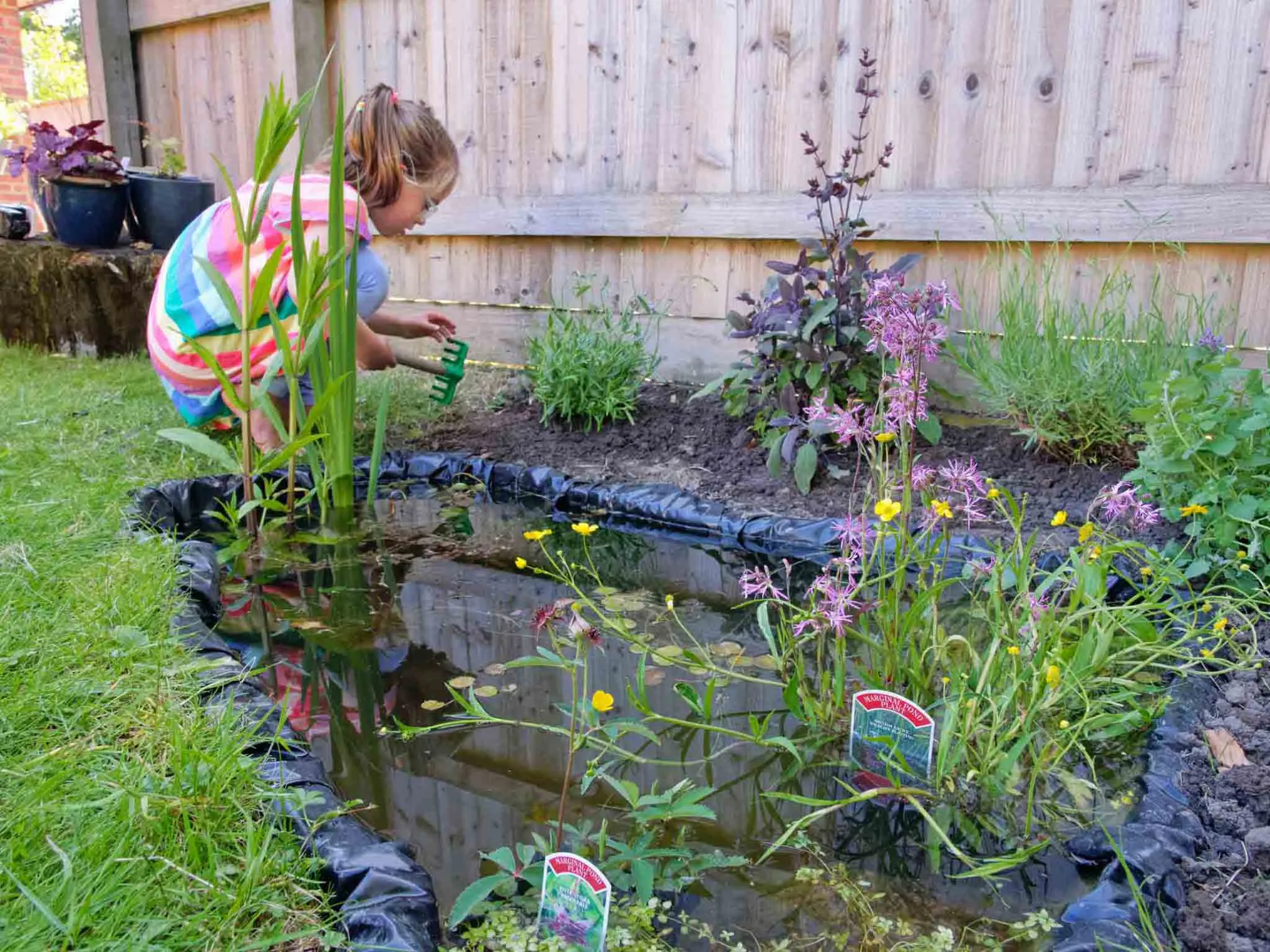
Water can help bring your garden to life. Not only will it be calming for you and your human visitors, it’s a sure fire way to help wildlife too.
There are a few simple steps you can take now to provide food and shelter for birds this season, and for years to come.
First, don’t feel you have to deadhead and clear everything away in autumn. Even if plants don’t have an obvious larder of seeds, they may still be full of insects and other invertebrates seeking refuge for winter. These are, of course, marvellous in their own right, but are also food for insect-eating birds such as Wrens. Where you can, leave leaves where they lie on the ground. Flicking through leaf litter is a natural foraging technique for many of these birds as they search for insects, woodlice, spiders and other various types of invertebrates.
Log and stick piles are also good feeding spots for those birds that prefer live food. Form stacks of sticks or logs in sheltered corners or, if you have enough space, you could form a ‘dead hedge’ with the offcuts and prunings of larger woody plants. A dead hedge is simply a long row of twigs and branches piled or woven round each other creating a mini habitat for wildlife. Robins will love it!
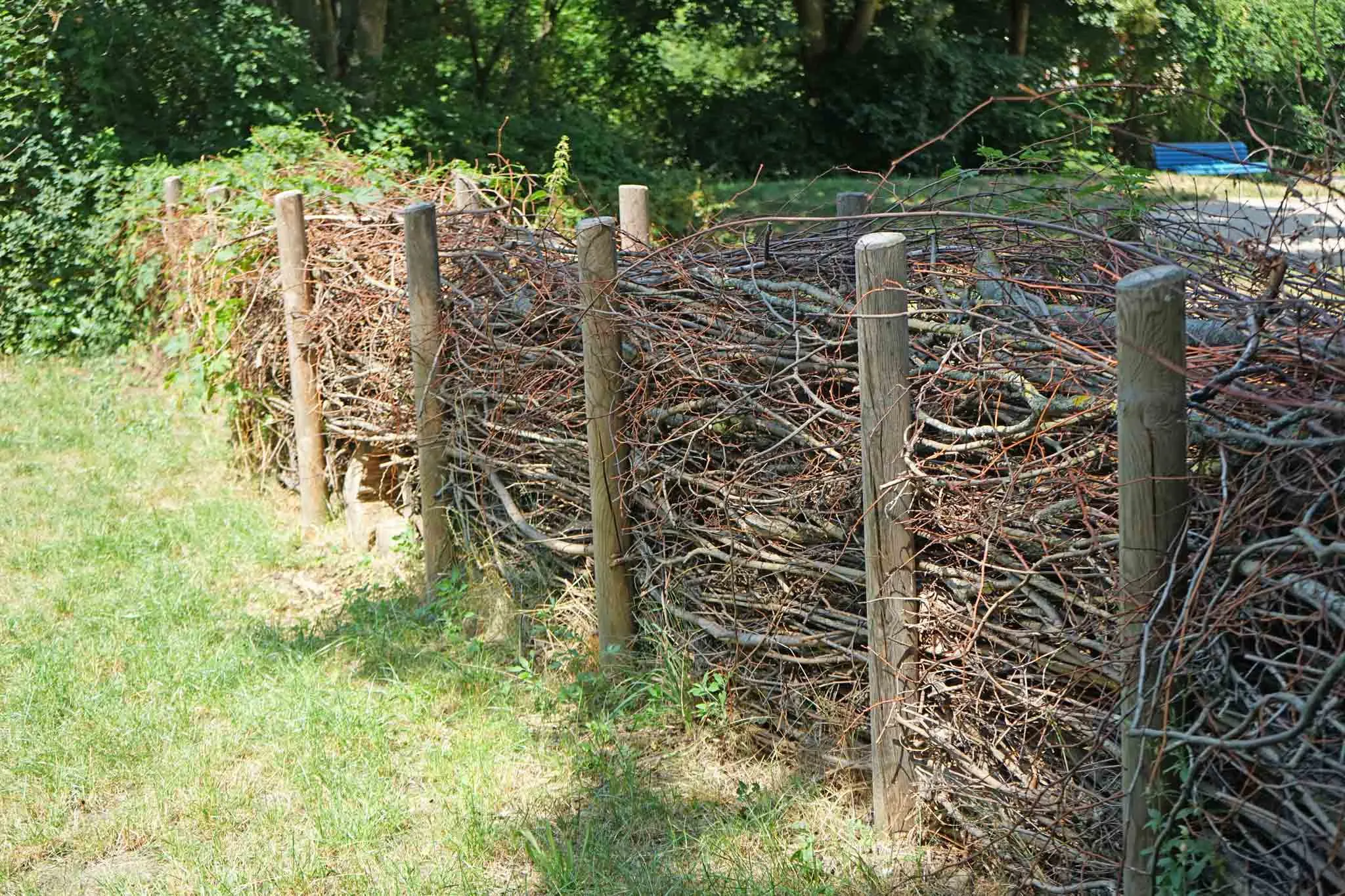
It might sound like an oxymoron, but a dead hedge is a wonderful habitat that’s full of life. Dead hedges provide hiding places and nesting habitats for all sorts of creatures, as well as food for insects.
Planting for birds really is worth the effort, and can make your garden look fabulous.
This article was originally published in The RSPB Magazine, our regular magazine for members. You can receive digital or print copies of the magazine by joining the RSPB. Plus, you’ll be helping to protect our most vulnerable wildlife and the precious places where they live.


