Opinion

At RSPB Hope Farm it’s teeming with life

Farm Manager Georgie Bray shares the latest in her diary from a nature-friendly farmer.

Mullein Moth Catperillar feeding on Great Mullein RSPB Hope Farm, Cambridgeshire, June 2023
On this page

It’s great to be writing from a sunny Hope Farm here in Cambridgeshire in April. The dew on the ground was still frozen this morning, but it’s now burnt through to a beautiful clear day. Growing season is in full swing, and the farm is doing well despite the low rainfall this spring.

It has been wonderful to see the return of our migrant birds with Swallows, Whitethroats, and Lesser Whitethroats back on the farm. Recently Yellow Wagtails have been heard calling too. Most fields are looking good, and I look forward to sharing a few more details about what has been happening through spring, with plans for the summer. 

Caring for crops

On the cropping side of things, spring drilling of our barley (which will mostly go to malting) is done. Seed beds are all prepped for our winter bird seed mix areas to be planted later in the year after a flush of weeds. We're also hoping for a bit more rain to help the plants establish. 

The crops that were already planted in the autumn (wheat and beans) are looking fantastic, with the bean flowers just starting to come through. The smell of beans in flower is wonderful, and it’s always worth having a look in this crop as it is one of best in the rotation at providing a home for insects.  

Aerial view of hope farm.

Aphids may be something to keep an eye on later on in the year, but that is great news for our ladybird army, parasitic wasps, and all our beneficial insects who like to feast on them! I’m hoping that we’ll see a return of Yellow Wagtail as a territory holding species this year, as beans can be a preferred crop for them to nest in.  

As our crops are growing quickly, they need feeding with specific nutrient recipes depending on where deficiencies lie, and whilst nitrogen is a key addition, we’re also testing the crops by sending samples off to the lab, to see what other nutrients may be lacking. This can inform our work in this growing season, but also what we might need to do to feed the soil for the following year.  

Agroforestry trial

Our Agroforestry trial keeps growing, and we are very grateful for the help of the farm’s volunteers, who are supporting efforts to monitor the impacts of these trees in our arable field, and help in supporting the maintenance.  

Agroforestry means trees within a farming system, and this trial is now five years old where we are testing the impact of integrating a fruit and nut tree production system, with one of our arable fields. The volunteers help us with anything from pruning, weeding, mulching and watering, and we cannot say enough that the trees and the farm team are very grateful!

Volunteers planting trees at Hope Farm.

Wildlife monitoring

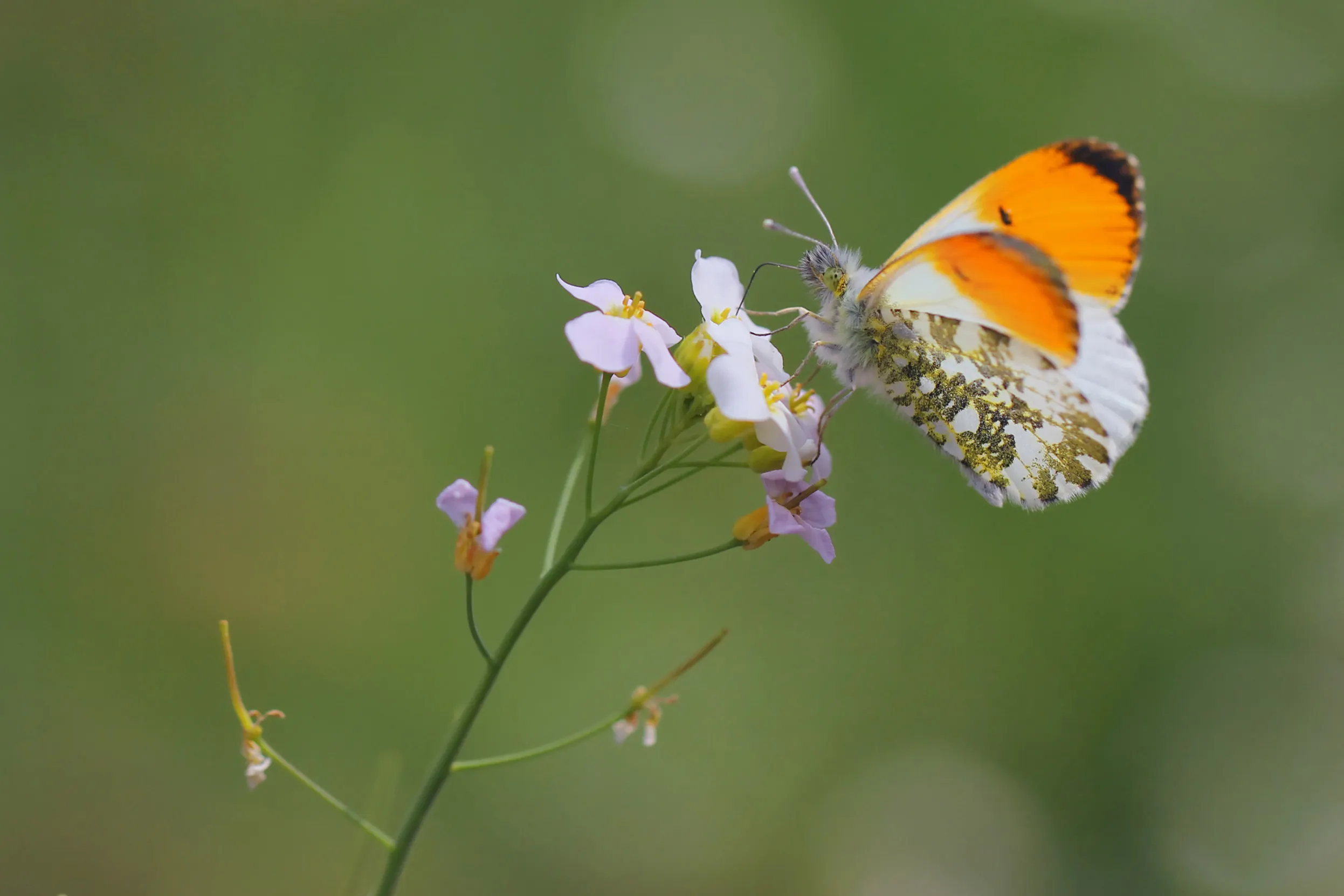
Summer monitoring is now well underway with our first set of Starling monitoring completed on the day of writing this in April. Butterflies and the breeding bird territory monitoring is also in full swing with Orange Tip butterflies coming out to lay their eggs on the Garlic Mustard for another year. 

Looking back at our winter monitoring, thanks to the analysis undertaken by our on-site ecologist, Duerden Cormack, we are pleased to say that the farm is still doing an amazing job at supporting  the Farmland Bird Species that are so reliant on the work from nature-friendly farmers to survive. Corn Buntings and Yellowhammers using our unharvested headlands were a highlight for me, but the integrity of the scientific monitoring database is essential to allow us to better understand the implications of our management on farmland birds. 

An Orange-tip Butterfly perched on top of a flower.

Open Farm Sunday

By the time you’re reading this, we will be in final preparations for or have finished Open Farm Sunday for 2026. It’s our largest event of the year by a county mile, taking up a fair amount of staff and volunteer effort to pull off. However, the benefit that we see for the thousand people walking through the farm gate as members of public wanting to know more about the farm makes it all worth it.  

We do everything we can to showcase nature-friendly farming and have everyone visiting from those who have never set foot on a farm, to long term supporters of the Hope Farm project. I hope if you are reading this and managed to get a ticket (free for all attendees, though tickets do go quickly!) we hope you enjoyed it too.

Tractor rides at Open Farm Sunday event, RSPB Hope Farm, Cambridgeshire, June 2023

Groundswell Festival 2026

We will be attending Groundswell Festival 2026 in Hertfordshire in July. This two-day event brings together farmers, growers, or anyone interested in food production and the environment to learn about the theory and practical applications of regenerative farming systems – farming that aims to work in balance with nature, above and below the ground. 

It’s an ideal opportunity to share our learnings around nature-friendly farming and learn from other practitioners too. We will be holding an early morning bird walk to help farmers identify birds on their farm, and see what sort of habitats farmland birds thrive in. On day two, we will host an informal breakfast on the RSPB stand to showcase nature-friendly produce and celebrate farmers who support nature on their farm.

A group of people walking across a field in early morning light.

Looking forward to harvest

Finally, to look beyond spring and into late summer, our contracting team, MT Lines & Partners, will be harvesting the crops we’ve worked so hard to grow and help to flourish this year. I’ll also be working closely with the team, using what knowledge we have to plan operations and cropping rotation for harvest 2027.  

Sophie Mott, our Assistant Manager will be running our summer monitoring program on our agroforestry trial (counting everything from bugs and beetles to plants and yield). Finally, Duerden will be busy looking back at the data from our farmland breeding bird season, and we’ll be getting into perhaps the most exciting time of year for butterflies. 

By this time, Charlie Johnson – our placement student at the farm – will be finishing up after helping us for eight months as part of his placement year as a Zoology student from Anglia Ruskin University. A massive thank you to Charlie who has been an incredible part of the team. We hope to still see plenty of you in the future and wish you the best with the rest of your degree.  

Georgie Bray
Georgie Bray

I manage Hope Farm in Cambridgeshire with our contractors, MT Lines & Partners to grow arable crops, alongside conservation habitats and some sheep-grazing. Our remit is to farm profitably whilst helping nature. Meanwhile, thanks to research undertaken by our science team, we are able to share evidence-backed practical lessons about how farming can work for nature. 

Share this article