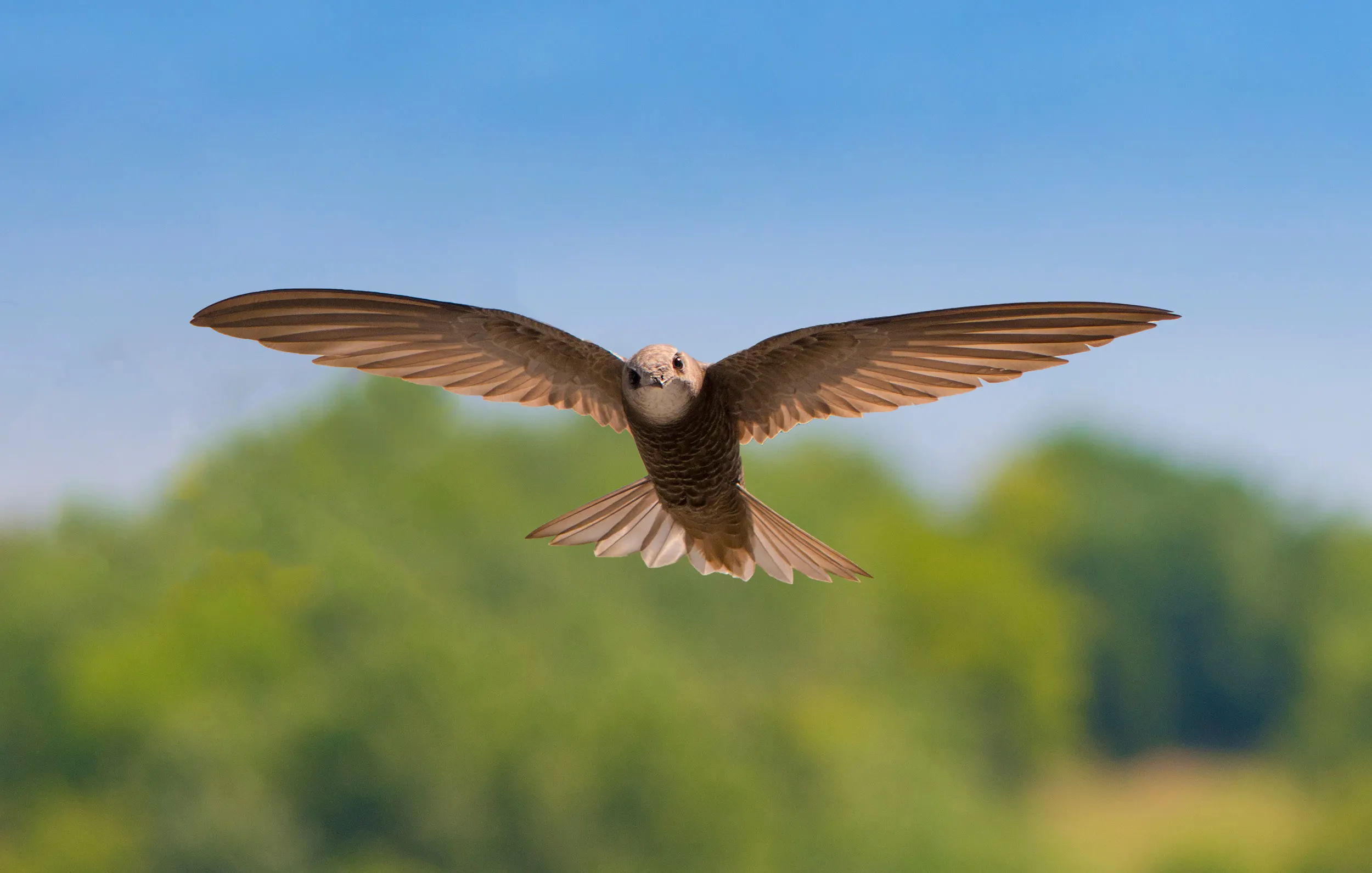
How we’re helping to save sensational Swifts
Visit 'Priority Spotlight: Swifts' to learn more about these incredible birds, the possible causes of their decline and our efforts to help their populations soar once again.
Swifts are in trouble – here's our top tips for how you can help save our special ‘devil birds’.

What isn’t!? Swifts are a herald of summer in the UK. They can fly more than 7,000 miles from central and eastern Africa to our shores every year, arriving between late April and May. Some of these pint-sized powerhouses might even fly up to two million miles in their lifetime. That's like flying to the moon and back at least three times – quite a feat when you weigh just 34-45g!
Impressed? Brace your beak – we've only just begun. Swifts spend most of their lives on the wing (in flight). They feed, drink, sleep and even mate in the air, and usually only land at nest sites. What’s more, with recorded speeds of up to 69mph, Swifts are the fastest bird in the world in level flight. Safe to say, Swifts truly are one of a kind!
Track one Swift’s incredible migration in the short video below.

In the UK, the awesome sight and sound of screaming Swifts’ aerial acrobatics used to be common. However, sadly, this natural wonder is becoming increasingly rare.
Data from the British Trust for Ornithology (BTO), Joint Nature Conservation Committee (JNCC) and RSPB’s Breeding Bird Survey show Swift numbers have plummeted by 70% in the last three decades. For every ten Swifts racing across our skies in 1995, only 3 remain today.
In 2021, the species was added to the UK’s Red list of Birds of Conservation Concern and Near Threatened on the International Union for Conservation of Nature (IUCN) European Red List. That means Swifts are officially at risk of extinction in the UK and Europe.
But it’s not all bad news! If each of us does our bit, we can help Swifts to come screaming back. So, let’s take a Swift glance at what you can do to support this sensational species. Ready. Steady. Swift!
Visit 'Priority Spotlight: Swifts' to learn more about these incredible birds, the possible causes of their decline and our efforts to help their populations soar once again.
Start small. Dream big. Save Swifts. Simple!
Spotted Swifts racing around at roof height or swooping into holes in buildings? Record your sightings on Swift Mapper. It’s free, it’s easy and by mapping where Swifts are flying low or nesting, you’re helping conservation groups to protect existing nest sites and provide new ones where they’re needed.
Evidence suggests that a significant factor in the Swifts’ decline in the UK is the loss of suitable nest sites. Swifts prefer to nest in the nooks, crannies and eaves of old buildings and once they have found a nesting spot, they almost invariably return to the same site every year.
However, as we modernise properties, we often remove these nesting opportunities, and new builds rarely provide alternatives. Essentially, Swifts are having their own housing crisis. Therefore, simply installing a Swift nest box or ‘Swift brick’ (a brick containing a built-in nest box) can make a huge difference!
Visit Action for Swifts to find out more about Swift bricks. Alternatively, you can buy a ready-made nest box from us or if you’re a devil-bird for DIY, build your own! Designs are available from Swift Conservation, Action for Swifts and us too.

Buy a ready-made nest box from the RSPB Shop.
If you or someone you know is planning building work and nesting Swifts are present, be mindful that the work must not damage, block, or prevent the birds from accessing the nest site(s). As well as the building work itself, any scaffolding involved must also be constructed with the birds in mind.
Swifts need at least five metres of clearance from any obstructions below and in front to enter and leave their nests. Scaffolding placed without due consideration can delay parents accessing their nests to feed young or even prevent them from entering entirely.
In England and Wales, it’s not against the law to erect scaffolding on a building where Swifts are actively nesting. However, it is illegal to intentionally damage or destroy an active nest. Any obstacles, such as poles or platforms, could result in nest failure and destroy the nest, which is prohibited under the Wildlife and Countryside Act 1981.

Find out more about the legal dos and don’ts around Swifts and other threatened birds on our dedicated webpage.
It’s time to open that beak wide and sing! Lots of people don’t even know that Swifts live alongside them and even fewer are aware that the birds are in trouble. The more we can spread the word about Swifts, the more people will take action.
Why not get involved with your local Swift Awareness Week event and help your local Swift conservation group arrange a Swift walk or talk? The possibilities are endless!
So, you’ve recorded your sightings, put up a nest box and got involved with a local Swift event. Time to spread your wings...
From May to July, regular Swift surveys are an excellent way of making your Swift Mapper sightings work as hard as possible for local Swift conservation efforts.
Not sure how? Never fear – Oxford Swift City and Edinburgh Swift City have made lots of helpful videos that are full of advice.

Swift Conservation has also produced a brilliant leaflet explaining exactly how to conduct a Swift survey.
There are lots of ways to engage your local community in the fight to save Swifts. If you’re stuck for ideas, church groups and schools are a fantastic place to start. Traditional churches are ideal for high-flying nest boxes and school children could help to build them!
You could even set up a ‘Swift Street’ by installing lots of Swift nest boxes along a road that has lots of Swift activity. Read about the fantastic community-led Swinton Swift Street in Greater Manchester to find out more.
It’s not all about suitable nesting sites. Like many birds, Swifts rely on insects for food, so helping boost insect numbers is a ‘no-regrets’ measure that will benefit lots of wildlife. Therefore, one of the best things we can do is grow plants and create habitats like ponds that support a wide range of insects.
You could also take part in No Mow May and let your lawn grow wild or ask your local authority to plant more wildflowers! These simple things can make a huge difference to Swifts and lots of other species too!

A wildflower meadow will provide insects, birds and other small animals with places to feed and shelter.
Moving Swiftly on, it’s time to think big and take flight!
If your Swift Street and community engagement proves to be a hit, why not take things to a new height? By encouraging your local authority to support Swifts, you could create a Swift Town or City dedicated to helping Swifts bounce back.
Need inspiration? The Edinburgh Swift Local Group’s ‘Edinburgh Swift Cities project’ is a great place to start. Get inspired!
‘Swift bricks’ are specially designed nest boxes that can be easily incorporated into standard wall construction types. They can be built into the walls of new builds, extensions or even retrofitted into existing buildings.
Try joining forces with your RSPB Local Group to encourage your local councils and developers to include Swift bricks in their projects around your town or city. Action for Swifts also has lots of information to help get your Swift brick journey off the ground.

To discover more about Swift bricks and to see the different designs, read 'Facts about Swift bricks.'
On the topic of speaking to your local council... to help save Swifts in local urban environments, it’s vital to engage and encourage local councils and their planning departments to consider Swifts in their plans. Don’t know where to start? Our Planning for Nature toolkit is designed to help you every step of the way.
It can take a little while for Swifts to find new nest boxes and sites, so don’t be discouraged – it will be worth the wait! Playing Swift calls can help attract young birds prospecting for their first nest sites, but it can still take time. Buy a Swift caller here.
Swift boxes and bricks can also be popular with other birds, like House Sparrows, Blue and Great Tits, and sometimes even House Martins. Sparrows and House Martins are struggling and need nests too, so don’t worry if yours aren’t used by Swifts yet – you’re still helping nature.
.jpg)
Not sure you’ve spotted a Swift? Visit 'House Martin, Swift or Swallow? How to Tell the Difference' to sharpen your skills.
Saving our threatened birds and other wildlife takes a team effort and we’d like to thank Action for Swifts and Swift Conservation for their ongoing collaboration and expertise as we work to help our Swifts. Together, we can save these spectacular birds.
Together we fly.