RSPB - giving nature a home
Search
Close
Skip to content
Shop | Community
Log in
  • About the RSPB
      About us
    • Our history
    • Our mission
    • How the RSPB is run
    • RSPB Media Centre
    • RSPB job vacancies
    • Get in touch
    • Contact us
    • RSPB offices
    • At home & abroad
    • International
    • England
    • Northern Ireland
    • Scotland
    • Wales
    • Our activities
    • Let Nature Sing hits #18 in the charts! What do the birds say?

      Let Nature Sing hits #18 in the charts! What do the birds say?

      An amazing achievement in spring 2019!

    • Monopoly: the bird board game set to soar

      Monopoly: the bird board game set to soar

      The family favourite game Monopoly has had a wildlife makeover by the RSPB.

    • Restrain the urge to ‘rescue’ little chicks tottering towards independence, says RSPB

      Restrain the urge to ‘rescue’ little chicks tottering towards independence, says RSPB

      The plaintive cries of tiny, delicate baby birds finding their feet are heartrending.

  • Our work
      Nature conservation
    • Conservation and sustainability
    • Projects
    • Landscape scale conservation
    • Centre for Conservation Science
    • Satellite tracking birds
    • RSPB News
    • RSPB News
    • 'Our work' blog
    • Our positions and casework
    • Our positions
    • Casework
    • State of Nature report
      Featured news
    • EDF announces new public consultation on Sizewell C

      EDF announces new public consultation on Sizewell C

      EDF have today launched a fourth public consultation on Sizewell C.

    • Climate change and nature are interconnected

      Climate change and nature are interconnected

      We are in a climate and nature emergency.

    • Rewild your morning: Free Birdsong Radio app from the RSPB celebrates glorious UK birdlife

      Rewild your morning: Free Birdsong Radio app from the RSPB celebrates glorious UK birdlife

      Free radio app will transmit continuous loop of ambient birdsong, featuring red-listed species.

  • Birds & wildlife
      Wildlife guides
    • Identify a bird
    • Bird A-Z
    • Other garden wildlife
    • Guide to birdwatching
    • UK conservation status explained
    • Nature's Home magazine
    • About Nature's Home magazine
    • Birds and wildlife articles
    • RSPB Podcasts
    • Nature's Home blog
    • Advice
    • How you can help birds
    • Gardening for wildlife
    • Ask an expert
    • Wildlife and the law
    • How to report crimes against wild birds
    • Bird songs - make some noise
      Most popular bird guides this month
    • Brent Goose

      Brent Goose

      A small, dark goose - the same size as a mallard. It has a black head and neck and grey-brown back.

    • Nightjar

      Nightjar

      A nocturnal bird that can be seen hawking for food at dusk and dawn.

    • Ring Ouzel

      Ring Ouzel

      male ring ouzels are particularly distinctive with their black plumage with a pale wing panel and striking white breast band.

  • Get involved
      Activities
    • Big Garden Birdwatch
    • Give nature a home in your garden
    • RSPB Competitions
    • Dolphinwatch
    • Community & advice
    • Join our local groups
    • Green living
    • RSPB Community
    • Get involved blog
    • Volunteering & fundraising
    • Volunteer
    • Fundraise
    • Campaigning
    • Climate change effects on nature and wildlife
    • Protecting wildlife sites
    • Campaign with us
    • Let nature sing
    • Top activities to do
    • Let Nature Sing Takeover

      Let Nature Sing Takeover

      Help us bring bird song to 5 million people on 17 October!

    • Tools for effective campaigning

      Tools for effective campaigning

      Our guides will help you get your voice heard.

    • Volunteer

      Volunteer

      Explore these pages to find an opportunity that suits you.

  • Reserves & events
      Reserves A-Z Events, dates & inspiration
    • Events
    • Dates with nature
    • Places to visit blog
    • #ThanksToYou
    • Find a reserve
      Top reserve this month
    • Minsmere

      Minsmere

      There's so much to see and hear at Minsmere, from rare birds and otters to stunning woodland and coastal scenery.

    • Coombes Valley

      Coombes Valley

      This is a delightful oak woodland to walk through – especially in spring and early summer.

    • Arne

      Arne

      Heathland home to more than 2565 species.

  • Fun & Learning
      For teachers
    • Supporting resources
    • Wild Challenge
    • School outreach visits
    • Big Schools Birdwatch
    • Sign up for the newsletter
    • School trip ideas
    • For families
    • Big Wild Sleepout
    • Wild Challenge
    • Nature reserves for families
    • For kids
    • Facts about nature
    • Games and activities
    • Kids stories
    • RSPB kids competitions
    • Latest kids' activities
    • Wild Challenge

      Wild Challenge

      Nature is an adventure waiting to be had. Get out, get busy and get wild!

    • Pond dipping

      Pond dipping

      Pond dipping is something we can all do and it's loads of fun!

    • Rock pooling

      Rock pooling

      Explore the little pools of amazing sea life that are left by the tide on the rocks around our coast.

  • Join & Donate
      Join us
    • Choose a membership
    • Gift membership
    • RSPB Life Fellow Membership
    • Renew your membership
    • Donate
    • Our appeals
    • Make a one-off donation
    • Make a regular donation
    • Memorial donations
    • Plant a memorial tree
    • Leave a gift in your Will
    • Other people's gifts
    • Legacy donation FAQs
    • Legacy administration
    • Other ways to help
    • Gift Aid
    • Support us when you shop
    • RSPB Images
    • RSPB second-hand binocular scheme
    • Win with the RSPB
    • Payroll Giving
    • Stamp out albatross deaths
  • Login to your account
  • Shop
  • Community
  • Home
  • Birds & wildlife
  • Wildlife guides
  • Bird A-Z
  • Bearded tit

Bearded tit

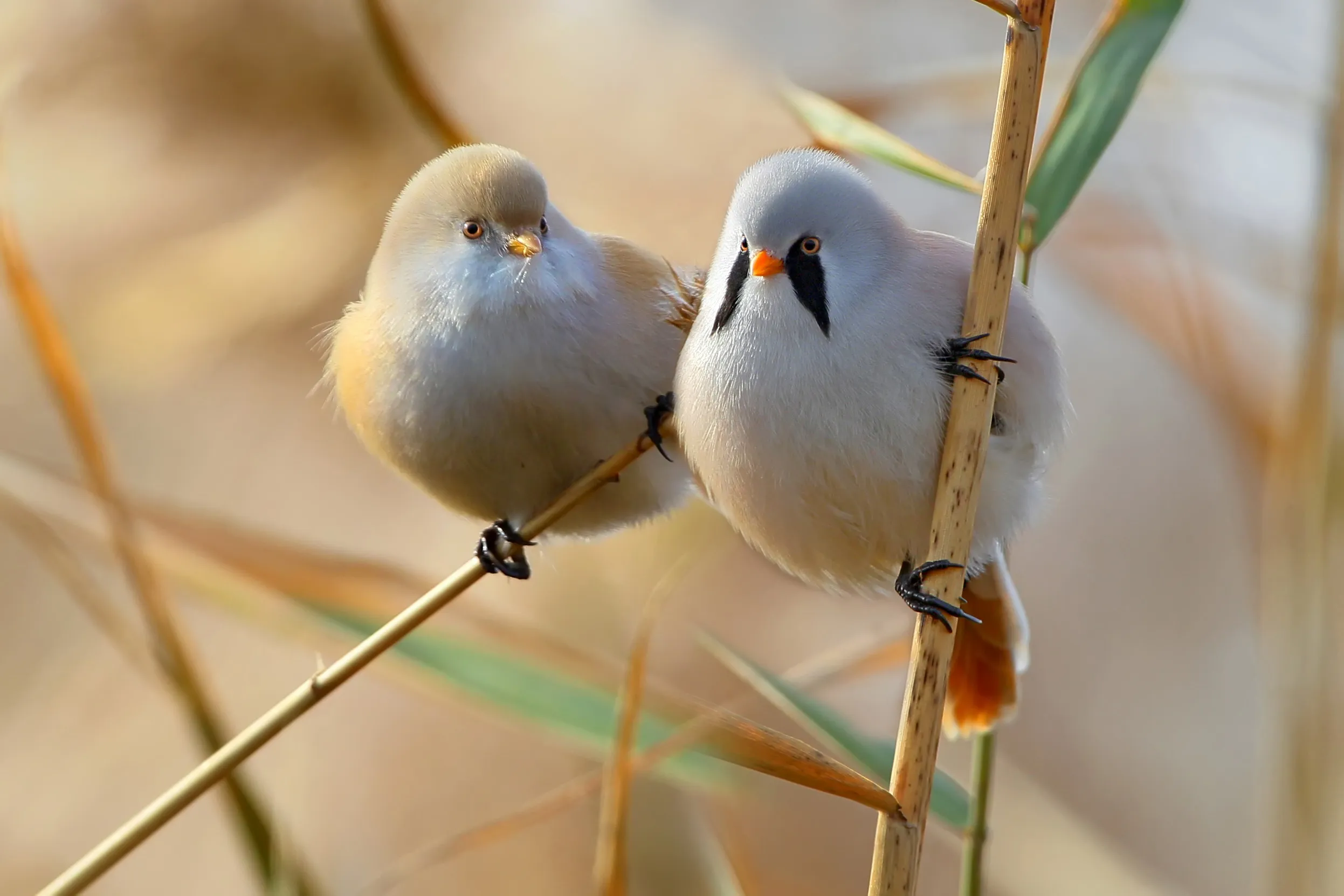
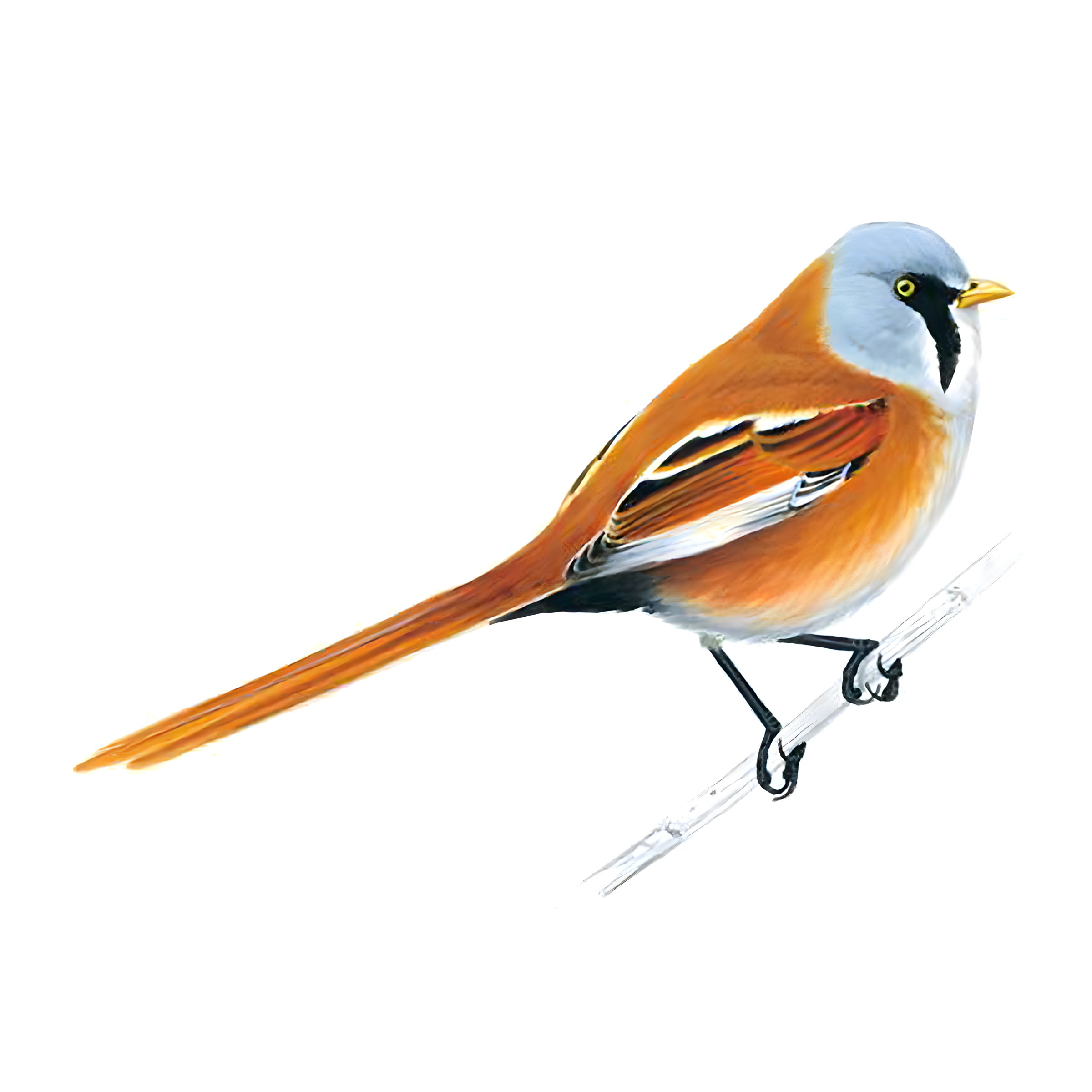
Bearded tit (male)
Bearded tit (male)
Bearded tit (female/juvenile)
  • Scientific name: Panurus biarmicus
  • Bird family: Bearded tit
  • UK conservation status: Green
  • Protected by The Wildlife and Countryside Act 1981

Bearded tit call

Your browser does not support this audio feature.

Niels Krabbe, Xeno-canto

Key information

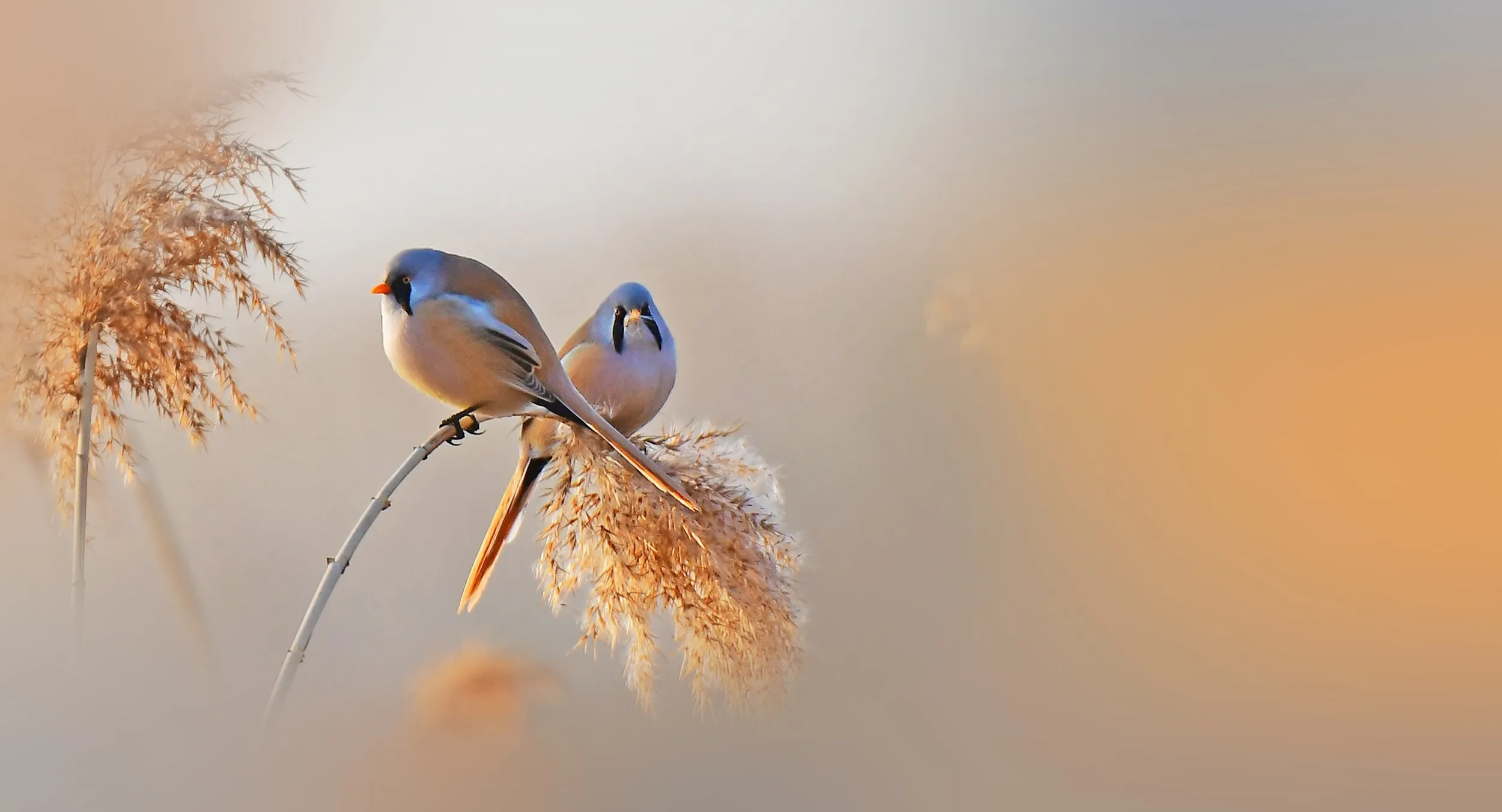
The bearded tit is a Schedule 1 species. They are brown, long-tailed birds, usually seen flying rapidly across the top of a reedbed. Males have black 'moustaches' rather than 'beards'.

They are sociable and noisy, their 'ping' calls often being the first clue to their presence.

What they eat:

Insects, insect larvae, spiders and seeds.

Measurements:

Length:
12.5cm
Wingspan:
16-18cm
Weight:
12-18g

Population:

UK breeding is the number of pairs breeding annually. UK wintering is the number of individuals present from October to March. UK passage is the number of individuals passing through on migration in spring and/or autumn.
UK breeding:
630 pairs
Europe:
232 - 437,000 birds

Identifying features:

This bird species has different identifying features depending on sex/age/season.

Bearded tit (male)

Bearded tit male
Feather colour: Black Blue Brown Cream/buff Grey Orange White
Beak: Black Brown Yellow Short Medium thickness
Natural habitats: Wetland

Bearded tit (female/juvenile)

Bearded tit female
Feather colour: Black Brown Cream/buff Orange White
Beak: Black Brown Short Medium thickness
Natural habitats: Wetland

Where and when to see them

The bearded tit is found only in reedbeds but small numbers may be found away from breeding areas in winter.

* This map is intended as a guide. It shows general distribution rather than detailed, localised populations.
  • Resident
  • Passage
  • Summer
  • Winter
Bearded tit distribution map

Bearded tits can be seen all year round.

  • jan
  • feb
  • mar
  • apr
  • may
  • jun
  • jul
  • aug
  • sep
  • oct
  • nov
  • dec

RSPB reserves

  • RSPB Tay Reedbeds
  • RSPB Vange Marsh
  • RSPB Newport Wetlands
  • RSPB Ouse Fen
  • RSPB Ham Wall
  • RSPB Lakenheath Fen
  • RSPB Lodmoor
  • RSPB Blacktoft Sands
  • RSPB Titchwell Marsh
  • RSPB Bowers Marsh
  • RSPB Langford Lowfields
  • RSPB Leighton Moss
  • RSPB Minsmere
  • RSPB Old Hall Marshes
  • RSPB Radipole Lake

Video

Watch a bearded tit in its natural habitat.

Watch a bearded tit in its natural habitat.

Play video
Bearded tit video screenshot

Share this

  • Facebook Facebook Created with Sketch.
  • Twitter
  • Pinterest

You might also be interested in

The reedy fringe of Elney Lake, at Fen Drayton RSPB reserve, Cambridgeshire, England. February 2007.

Bringing reedbeds to life

The RSPB is bringing reedbeds to life across the UK - every buzzing, crawling, slithering, fluttering part of them.
Dunnock, Prunella modularis, foraging in grass in garden. Co. Durham

How birds find food and feed

Finding food isn't just about having specially adapted legs and beaks. It's also about the technique the bird uses.
RSPB Giving Nature a Home Campaign

Homes for Nature Fund 2017

You can give nature the space it needs to survive and thrive...

We spend 90% of net income on conservation, public education and advocacy

Quick links

  • Contact us
  • Online Community
  • Vacancies
  • Media centre

Information for

  • Teachers
  • Policy makers
  • Farmers & landowners
  • Scientists

Our work in

  • England
  • Scotland
  • Wales
  • Northern Ireland
  • International

Follow us

  • Facebook
  • Twitter
  • Pinterest
  • Instagram

Partnering with

BirdLife_logo

The RSPB is a member of BirdLife International. Find out more about the partnership

Fundraising Regulator logo OSCR logo

© The Royal Society for the Protection of Birds (RSPB) is a registered charity: England and Wales no. 207076, Scotland no. SC037654

  • Terms & conditions
  • Cookie and privacy policy
  • Charter and statutes
  • About our site

We use cookies on our website to help give you the best online experience. Tell me more