How to identify

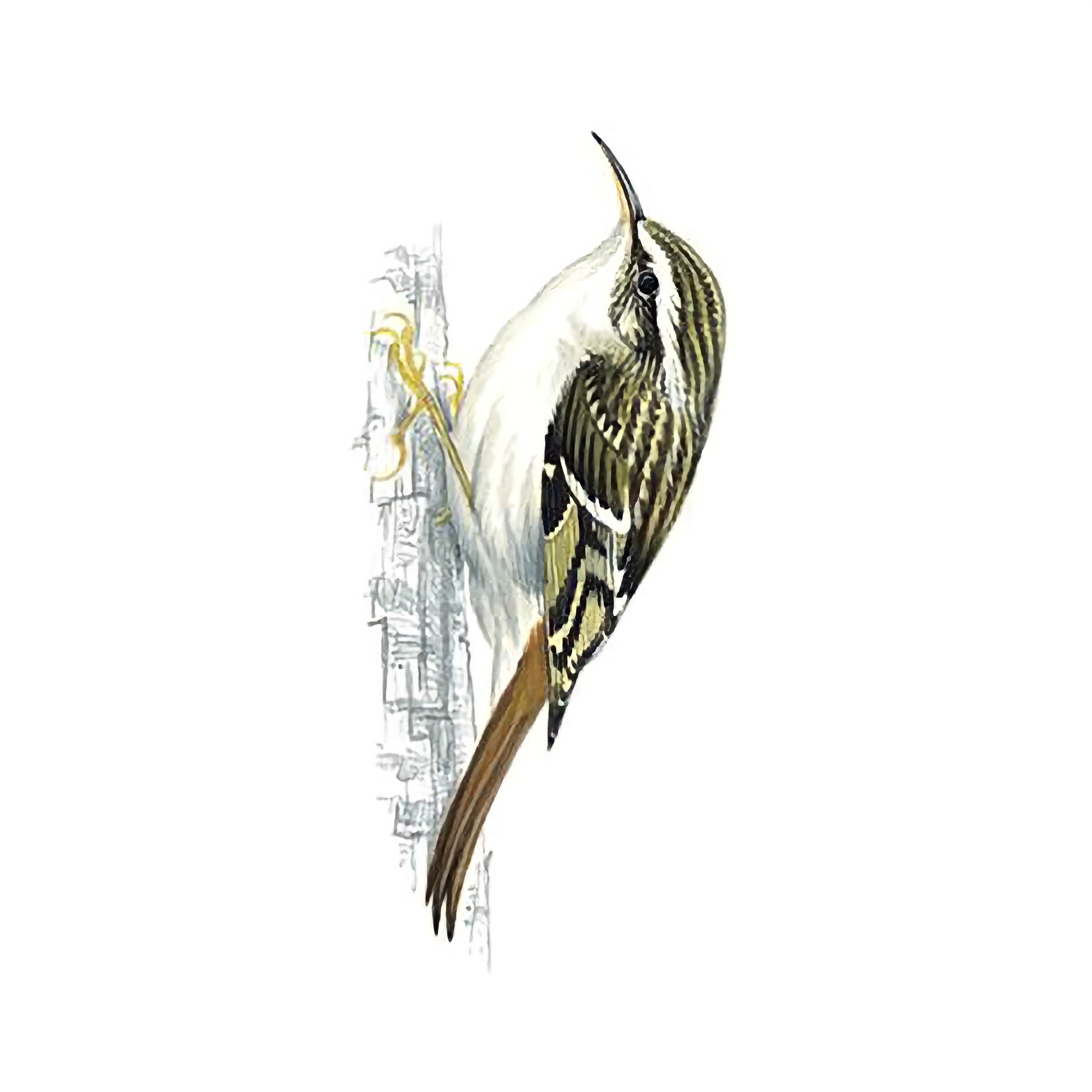
The Treecreeper is a small, very active bird that lives in trees. It has a long, slender, downcurved bill, which it uses to pluck insects from underneath bark. It's speckly brown above and mainly white below. It breeds in the UK and is resident here. Birds leave their breeding territories in autumn but most range no further than 20km. Its population is mainly stable.

Call

Treecreeper

Volker Arnold / xeno-canto

Key features to look out for

  • A small, mouse-like, very active bird
  • It has a long, slender, downcurved bill, which it uses to pluck insects from underneath bark
  • It's speckly brown above and mainly white below, with it looking pale overall
  • Spirals up tree trunks, before flying down to the bottom of another

Conservation status

With over 200,000 territories in the UK, these birds are on the green list of Birds of Conservation Concern, meaning they need the least help. However, general management of our woodland nature reserves ensures they can thrive there.

Where and when to see them

In woodland across the UK.

Difficulty rating - Moderate

There are plenty there, but they are quite secretive and often go unnoticed.

Key

  1. Resident
  2. Passage
  3. Summer
  4. Winter
* This map is intended as a guide. It shows general distribution rather than detailed, localised populations.
  1. Jan
  2. Feb
  3. Mar
  4. Apr
  5. May
  6. Jun
  7. Jul
  8. Aug
  9. Sep
  10. Oct
  11. Nov
  12. Dec

Behaviour

Stealthy and often overlooked, once you have tuned in to Treecreepers, you might be surprised how many are around.

The characteristic view of a Treecreeper is watching it climb a tree trunk, spiralling around the outside as it finds insects in the bark. Unlike the Nuthatch, it can’t climb downwards, so once it reaches the top of the trunk, it will fly down to the bottom of another tree.

Treecreeper, adult climbing up tree with food to feed to chicks nesting in gap under bark
Treecreeper
Birds of the month

Head outside and discover fascinating birds each month. Read on for top ID tips, what to listen for, and where to see them.

Key facts