
Advice
Wing Tips: what to see in November
The leaves have fallen and winter grows near, but there’s fireworks to see at this time of year.
From sunbathing songbirds to ducks in disguise, discover our pick of August’s best bits.

Whether your idea of a perfect summer’s day involves a trip to the beach, lounging in the garden, or messing about on the river, there's plenty of wildlife action to catch your eye this August.
So grab your binoculars, slap on some suncream and head out in search of our top five nature highlights.
When the sun comes out, we’re not the only ones who enjoy soaking up a few rays. Keep an eye on gardens and parks this summer and you might spot a bird lying with its wings outstretched, feathers fluffed and tail fanned out. Some even tilt their head and stare dreamily into the distance, as though they’re enjoying a relaxing spa day.
Despite appearances, they’re not topping up their tan. Instead, birds like Robins and Blackbirds are thought to bask in the sunshine to keep their feathers in tip-top condition. The warmth of the sun helps spread preen oil – a natural feather conditioner produced by a gland near the tail – through their plumage. A spell in the hot sun might also help birds send pesky feather parasites packing.
You might notice birds panting like a dog while they’re basking in the sun, but don’t worry. Although it looks a bit alarming, it’s perfectly normal behaviour and simply helps them keep cool.

Sunny, open areas, particularly in gardens and parks. You might even spot one striking a pose in the middle of your lawn!
Medium – lots of common garden birds are known to sunbathe, but you’ll have to be in the right place at the right time to catch them at it.
Visit your local pond, lake or wetland in August and you might notice something odd – all the male Mallards seem to have disappeared!
In fact, they will still be paddling around, but in disguise.
Males lose their breeding plumage, including their showy green head feathers, and grow new brownish feathers (called their eclipse plumage) once the breeding season is over, making them resemble females. Look closely though and you can tell the difference: males still have their greenish-yellow beak, while females have a brownish-orange beak.
So why do these usually dapper ducks bother with this drab disguise? It’s all down to the way they moult. Unlike most birds, ducks lose all of their wing feathers in one go, which means that they’re temporarily unable to fly until the feathers grow back. This quite literally makes them sitting ducks for predators, and so it pays to swap their eye-catching plumage for something a little more understated that will help them blend in.
By autumn, Mallards will be back looking their best, with males sporting shiny new emerald head feathers.


The classic duck’s ‘quack’ is made by female Mallards. Males make quieter rasping calls or short whistles.

Look for them on almost any pond, lake, river or canal. In August, when they’re unable to fly, they tend to stick to deeper water, out of reach of predators. When they do venture onto land, they stay close to the water’s edge, so they can quickly paddle away from danger.
Easy – Mallards are one of the UK’s commonest ducks, so you probably won’t have to travel far to find them.
Although still common, Mallard numbers have declined, earning them a spot on the Amber List of Birds of Conservation Concern.
With their dazzling blue backs and fiery orange bellies, Kingfishers are undoubtedly one of the UK’s best dressed birds. But despite their flashy feathers, they’re surprisingly hard to spot.
In fact, you're far more likely to hear one before you see it. Listen out for a sharp, high-pitched whistle, then keep your eyes peeled for a streak of blue zipping low over the water. Blink, and you'll probably miss it!
If you've always wanted to see a Kingfisher, August is a great time to try. Young birds will be leaving home in search of territories of their own, so there are more Kingfishers out and about than usual.
Your best bet is to find a quiet spot beside a river, canal or lake and let them come to you. With a bit of patience (and a lot of luck), you might spot one perching on a branch before plunging headfirst into the water in pursuit of a fish. To help them keep sight of their target as they hit the water, Kingfishers have a transparent third eyelid that acts a bit like a pair of built-in swimming goggles!

A sharp, high pitched whistle.

You can find them on most rivers, canals and lakes across the UK, apart from in northern Scotland. Sometimes they’ll even visit garden ponds. They particularly like places where the water is clear or slow flowing, so that they can easily spot their next meal.
Hard – spotting a Kingfisher can feel a bit like winning the wildlife lottery, but the good news is you’ll have some of the best odds in August.
Kingfishers are green-listed, which means they’re not of conservation concern.
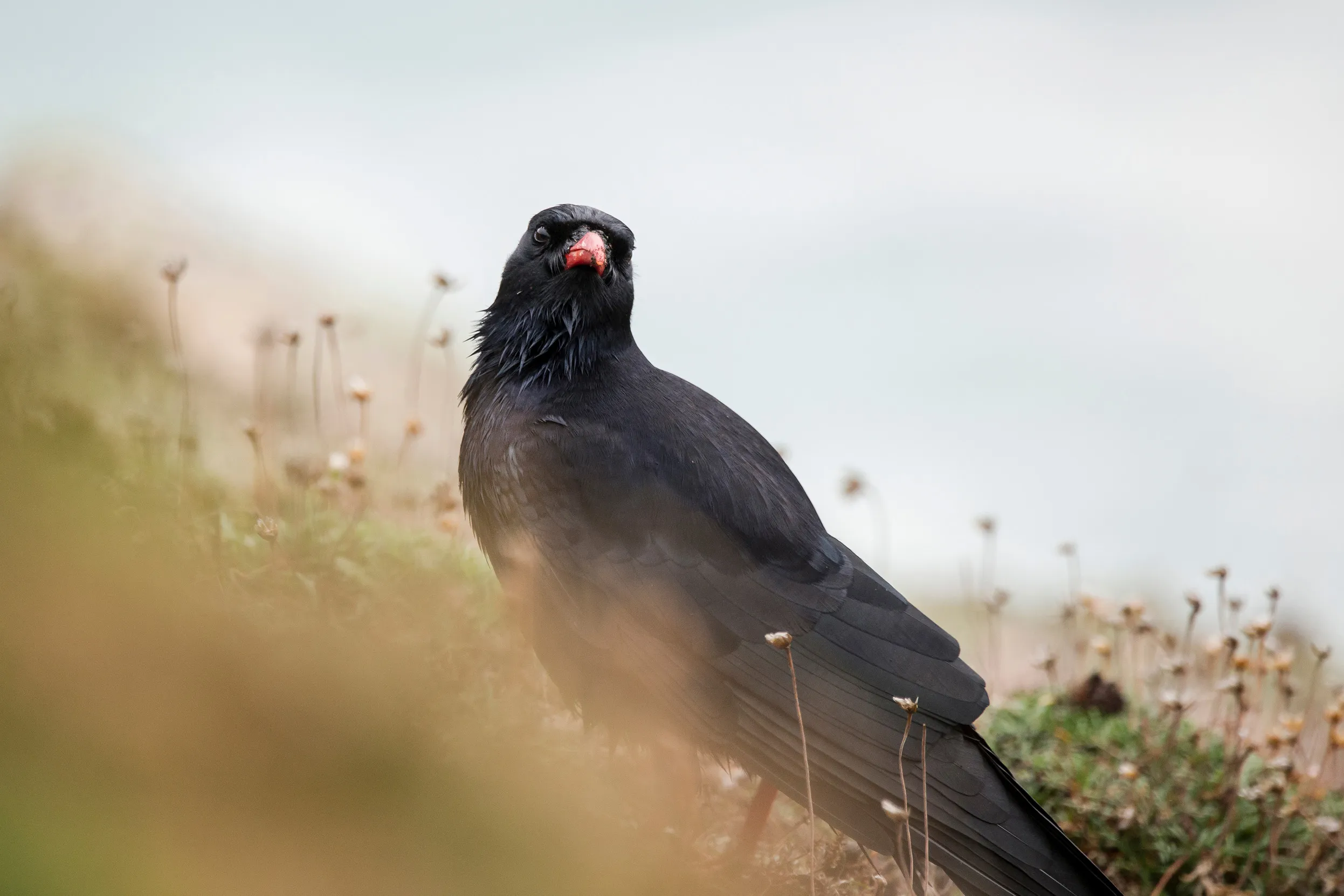
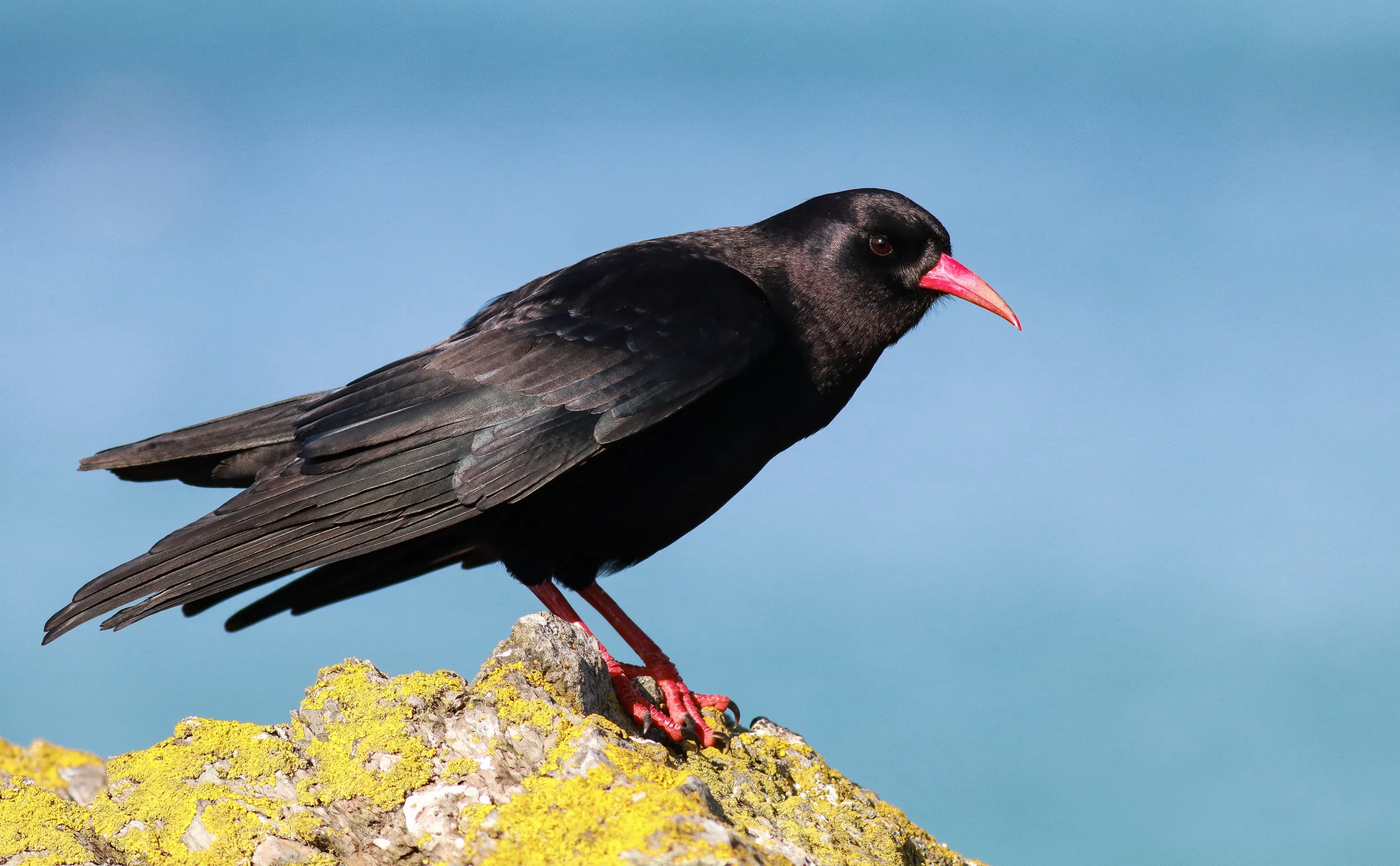
Take a stroll along a coastal clifftop this August and you might be treated to a spectacular avian airshow courtesy of the UK’s rarest member of the crow family – the Chough. With their glossy black feathers, bright red beaks and matching red legs, they’re unmistakeable – especially when they’re busting out twists, turns, tumbles and rolls that would make the Red Arrows jealous.
Late summer is a great time to see them. Family groups often stick together after the breeding season and young Choughs will be honing their flying skills, chasing each other through the air and perfecting their swooping and looping as they ride the updraughts rising from the cliffs.
Once they’ve finished showing off, you might spot them back on solid ground, probing the soil – or animal poo – for invertebrates with their long, curved beak. Rather them than us!

A cheerful ‘Chow! Chow!’

Choughs are found along some of the UK’s wildest coastlines, including parts of Cornwall, Wales, Northern Ireland and western Scotland, and also on the Isle of Man. Look for them around cliffs and coastal grasslands, especially on breezy days.
Medium – you’ll need to head to the right stretch of coastline, but once you’re in Chough country, you’ve got a great chance of spotting them. If you do, we bet you’ll be chough-ed to bits (sorry, couldn’t resist).
Green-listed, despite their small population. At RSPB nature reserves like South Stack and Ramsey Island, we protect Chough nest sites and make sure the coastal grassland is in good condition, with lots of tasty minibeasts for them to tuck into.
If there’s a bird that’s become synonymous with the seaside, it has to be the Herring Gull. Often seen patrolling piers in search of a tasty snack, these cheeky characters don’t have the best reputation. But spend a few minutes watching them and you’ll soon discover that there’s more to them than the occasional chip-related crime.
Herring Gulls, are clever, adaptable birds. They’re quick learners, expert problem-solvers and always on the lookout for an opportunity. Whether they’re dropping shellfish onto rocks to crack them open, or eyeing up unattended picnics, they’re constantly finding ingenious ways to keep their bellies full and their chicks fed. You might even see them ‘tap dancing’ – rapidly stamping their feet in the avian equivalent of the Riverdance – to create vibrations that mimic rainfall. This tricks worms into wriggling to the surface, right into the beak of a waiting gull. Clever, huh?
So next time you’re by the sea, take a moment to look beyond the chip-thief stereotype. You might just find yourself developing a newfound respect for these misunderstood birds.


.jpg)
The quintessential sound of the seaside!
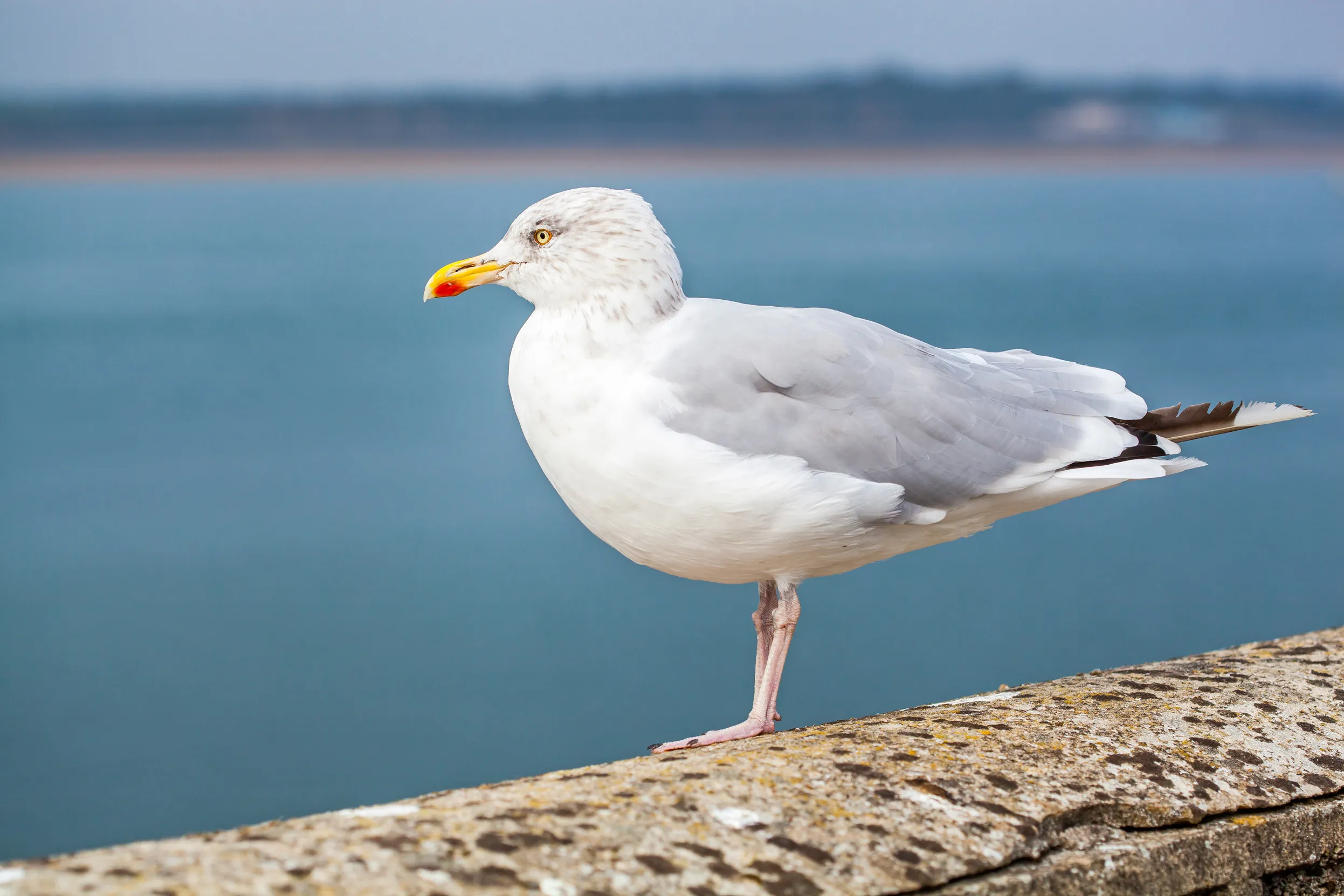
Pretty much anywhere. Herring Gulls are common around the coast, especially on beaches, cliffs, harbours and estuaries, but they’ve begun nesting inland too, swapping cliffside ledges for urban rooftops.
Easy
Although Herring Gulls are a familiar sight, they're actually not doing as well as you might think. Their numbers have fallen significantly in recent decades, which is why they're now on the UK Red List of Birds of Conservation Concern.
We hope you feel inspired to try and see some of these birds this month. We’d love to hear how you get on. You can share your photos with us at NotesonNature@rspb.org.uk We’ll share some of the best in a future issue of Notes on Nature.
Please be mindful when taking photos not to disturb wildlife or habitats. Further guidance can be found in The Nature Photographer's Code of Practice.


