
Advice
Feeding birds near you
If you want to attract birds to your garden, you’ve come to the right place.
As summer blends into autumn, here are five fabulous things to see and hear in September.

There's a changing of the guard happening overhead this month. While some summer visitors are packing their bags for far away skies, others are just arriving to spend the winter here. Our hedgerows are filling up with seeds and berries too, providing a tasty banquet that supports the UK's over-wintering birds through to spring.
Meanwhile, House Martins still zip low over rooftops before their long flight south, and Common Terns gather on the coast ahead of their own journey. Plus, somewhere in a German garden, a Blackcap is preparing to swap a Deutschland summer for a UK winter.
So, without feather ado, here are our top five sights to catch before autumn takes hold.
Keep a keen eye out for hasty House Martins whizzing around rooftops this month, as these little dynamos won't be here much longer. Their glossy blue-black flash and white rump have been a familiar sight all summer as they chase insects overhead. However, by September and October, most have zipped away back to Africa.
Don't be surprised if you do still spot a House Martin this month though. The species often squeezes in two or three broods a year, so a late nest filled with chicks is more common than you'd think in September. When they're finally ready to leave, you might catch them flocking over water or fields, filling up on food for the long journey ahead.


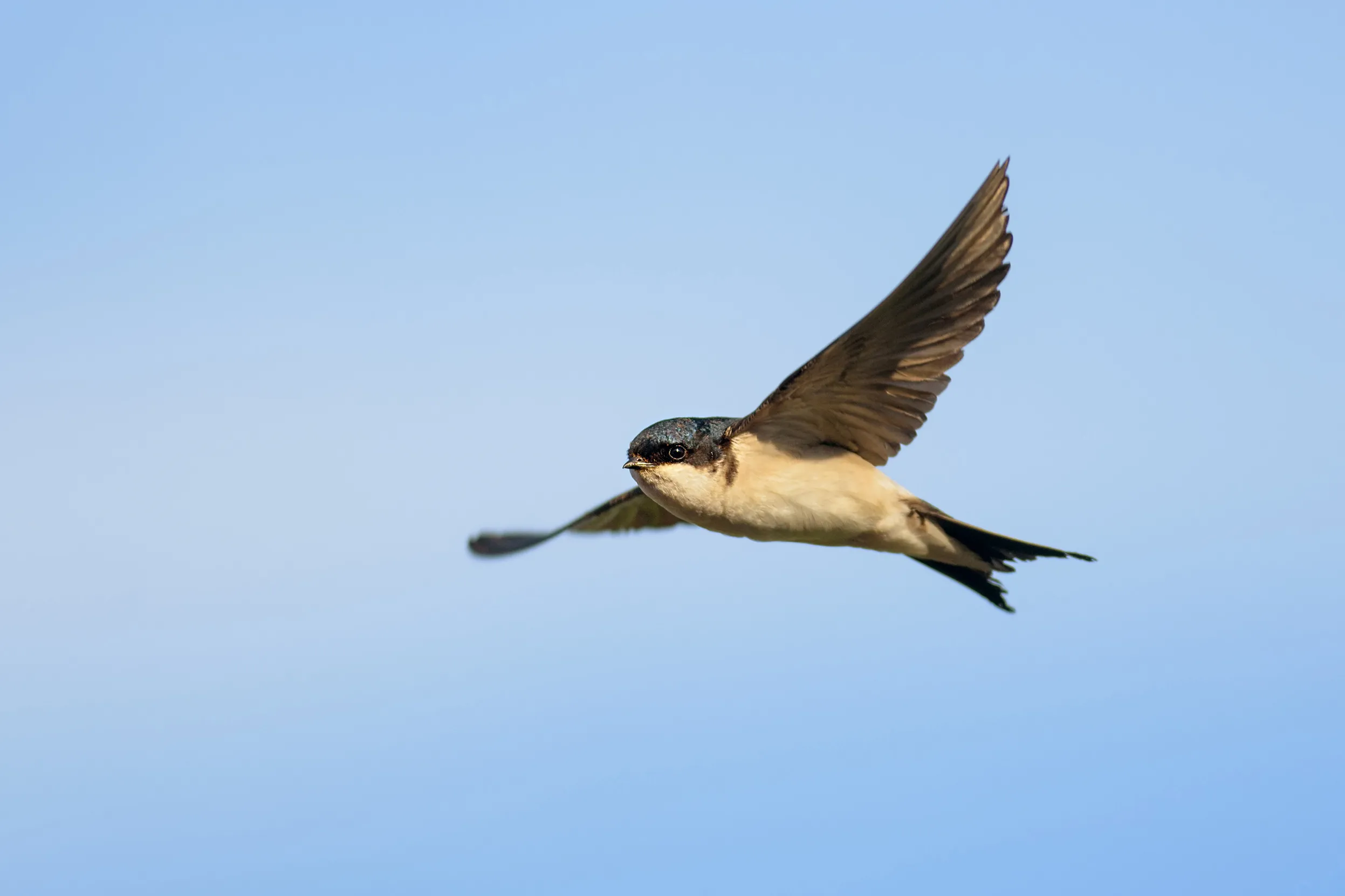
A rapid, chattering call, especially around nest sites.
Towns and villages, especially near water where insects are plentiful. Look up at eaves and rooflines too.
Easy. Look up and look quickly before they go.
House Martins are Red-listed after recent declines. If you have an old mud nest on your house – leave it there, they often return to the same one the following year.
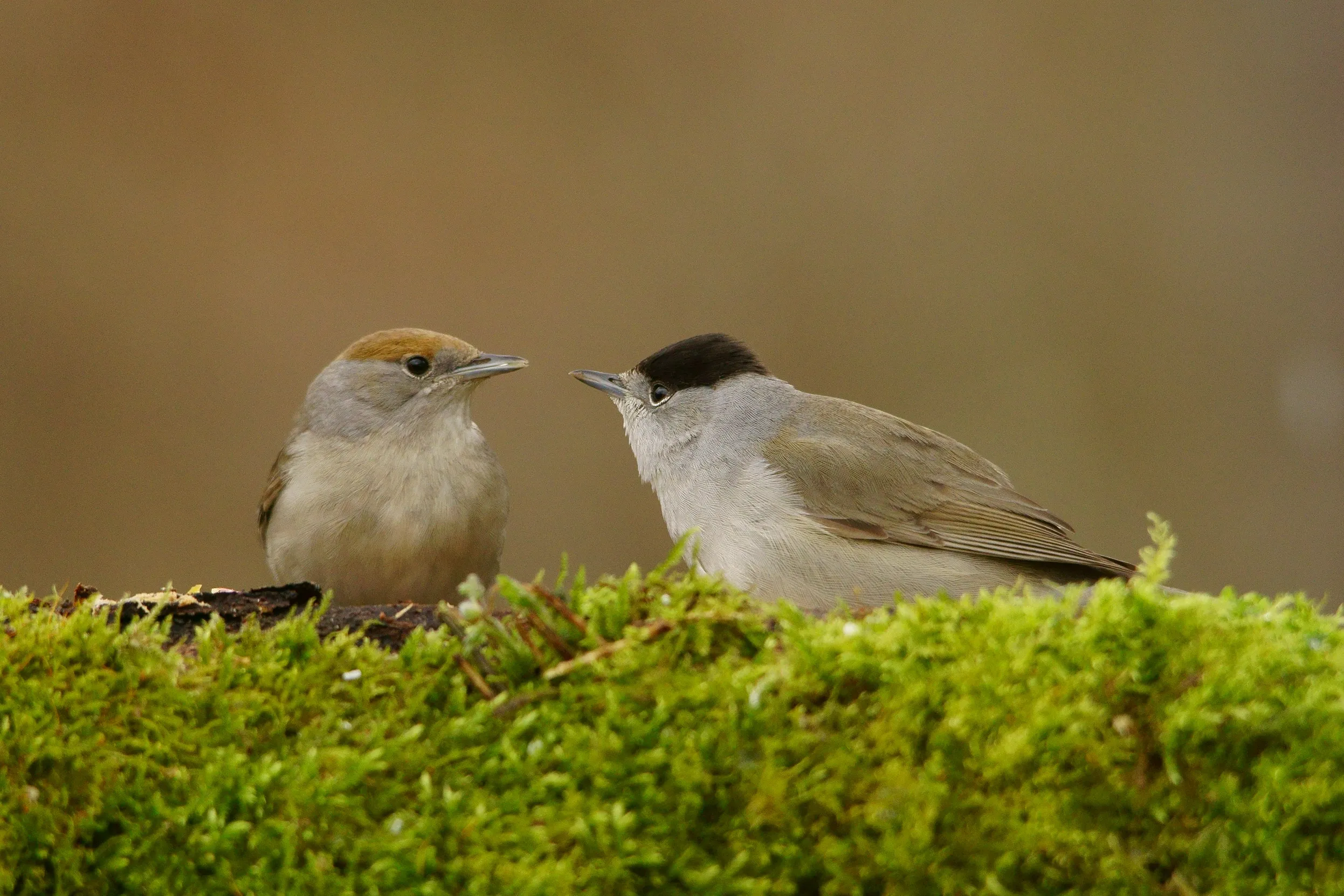
As winter approaches, the UK’s breeding population of Blackcaps have set their sights on wintering grounds in Africa. But that isn’t the last we’ll see of the species this year. As the breeding birds leave, they’re replaced by others arriving from Germany and north-east Europe.
It’s thought these European visitors are probably drawn in by the easy pickings offered by our bird-friendly, late-fruiting plants like ivy and Holly. So, if you have berry-full hedgerows and late-fruiting plants in your garden, listen out for the jolly, jaunty warbler this month – you might just catch the Blackcap swap.
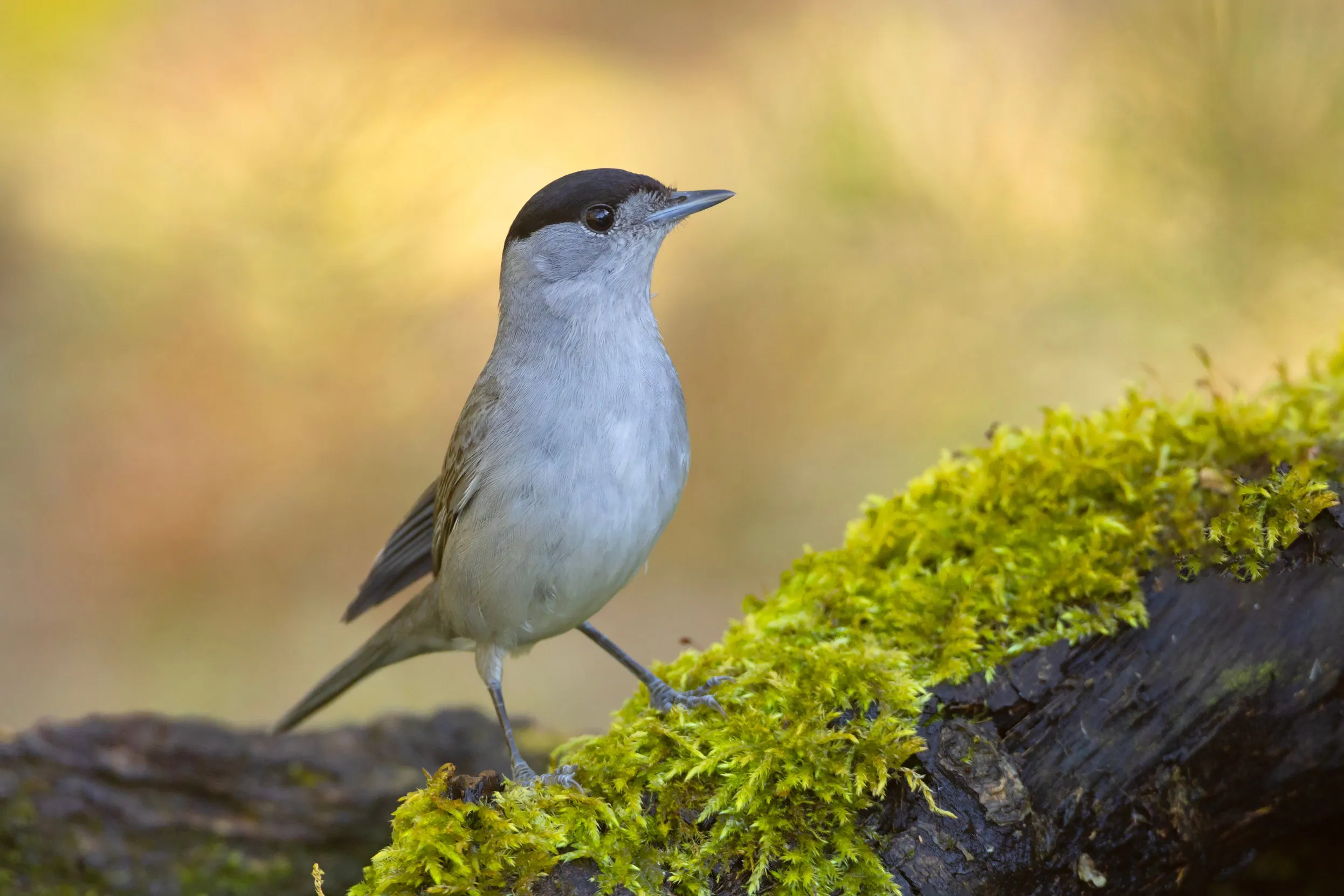
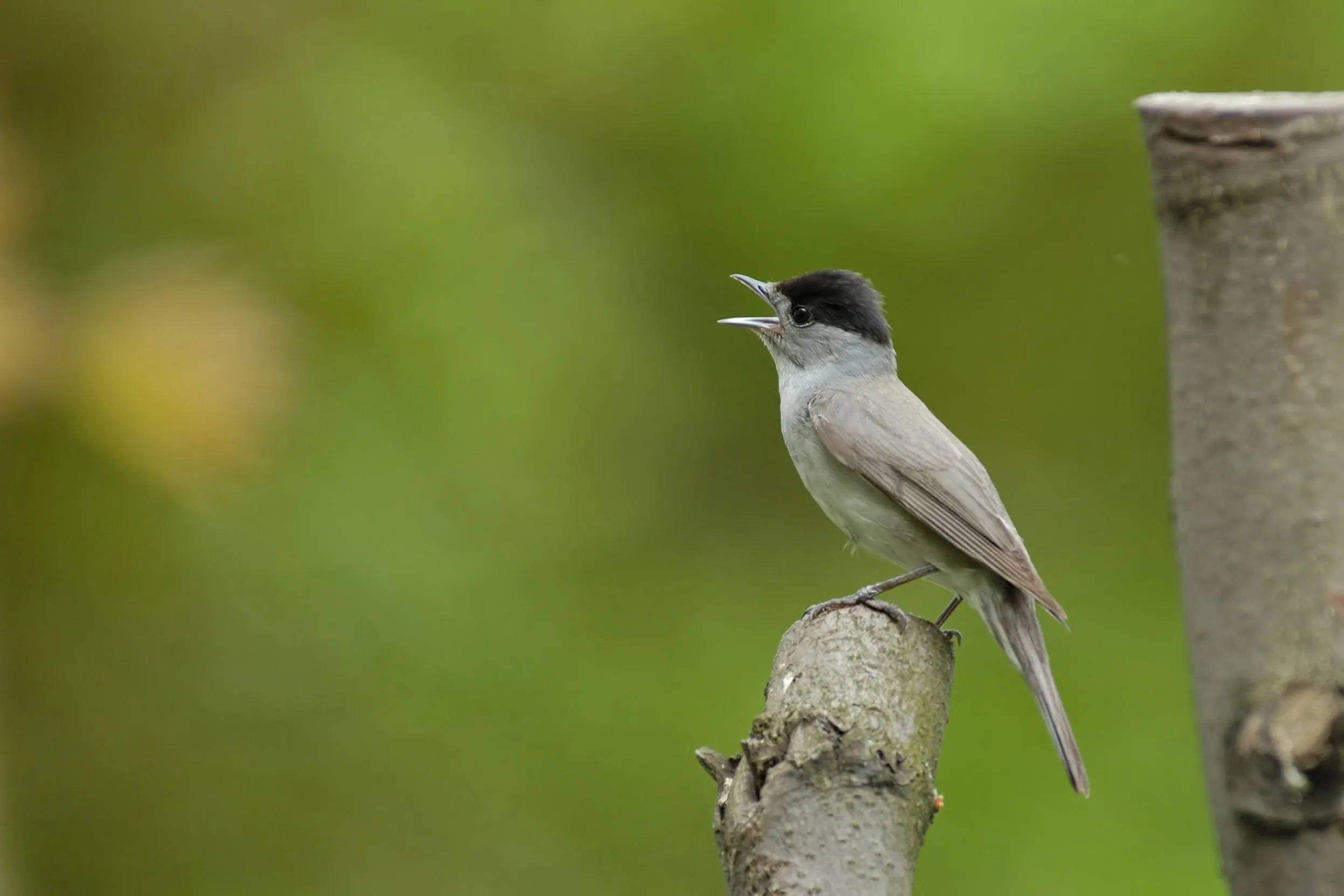

A wonderful warbling song that gives the Nightingale a run for its money.
Parks, woodland, scrub and gardens.
Medium. You may have a better chance of a sighting if you fill your garden with berry-fruiting plants.
Blackcaps are currently Green-listed, with far more around than back in the 1970s. Offering supplementary food seasonally and safely, or better still, planting late-fruiting berry plants can help this new wave of winter visitors settle in.
Head to the coast this month and you might run into a noisy crowd of Common Terns gathering before one of the longest journeys of any UK bird. Some will travel all the way to the southern tip of Africa, following fish down the Benguela Current and rubbing shoulders with albatrosses along the way.
Yet, you needn't head to the coastline to spot one. Common Terns are the tern species most often found inland, setting up shop at gravel pits, lakes and reservoirs (sometimes right in the middle of a city), as well as on pebbly coastal beaches.
So, take a September stroll to your local lake or beach for the chance to catch a silvery-grey and white flyer gracefully hovering over the water before plunging in for fish.

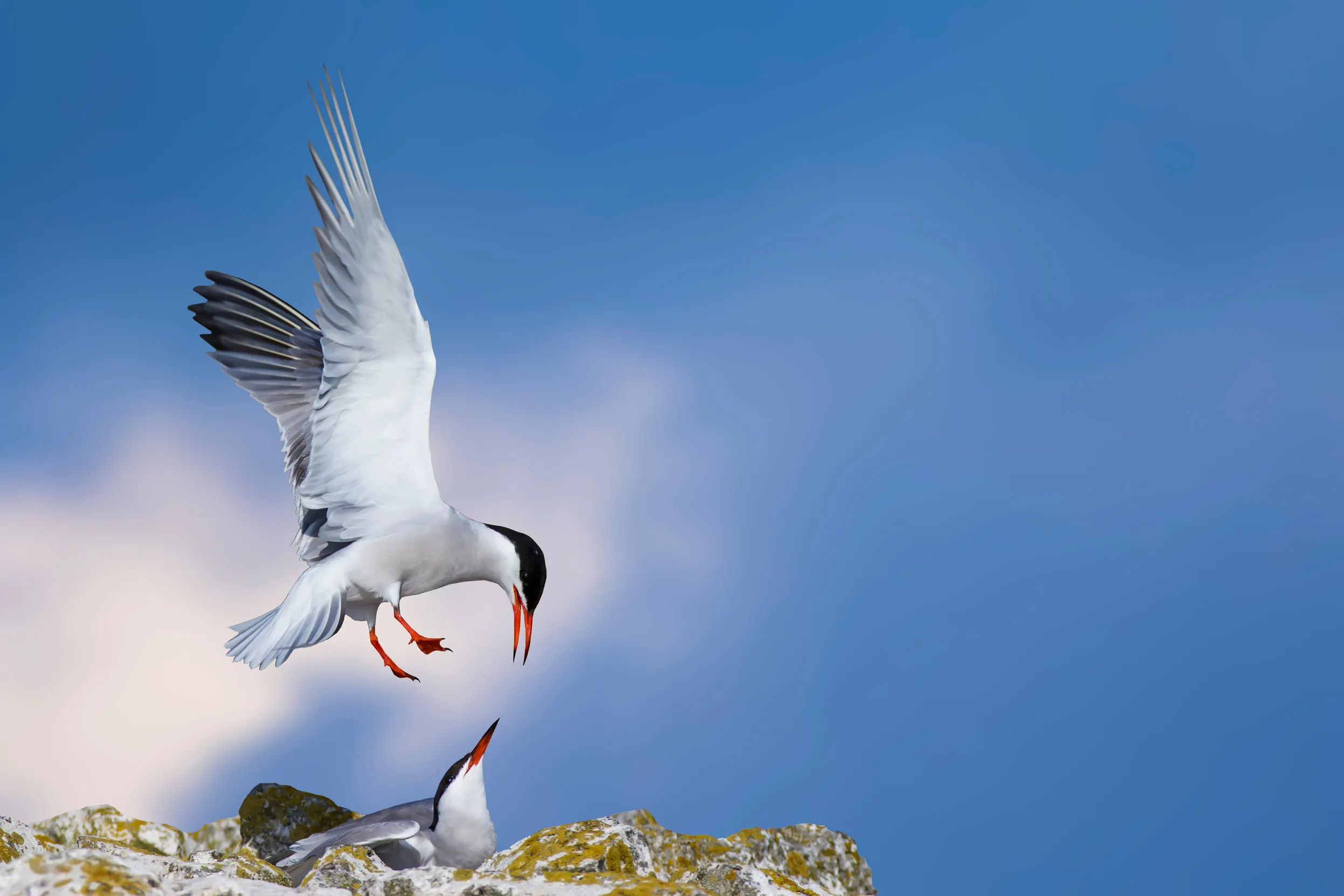

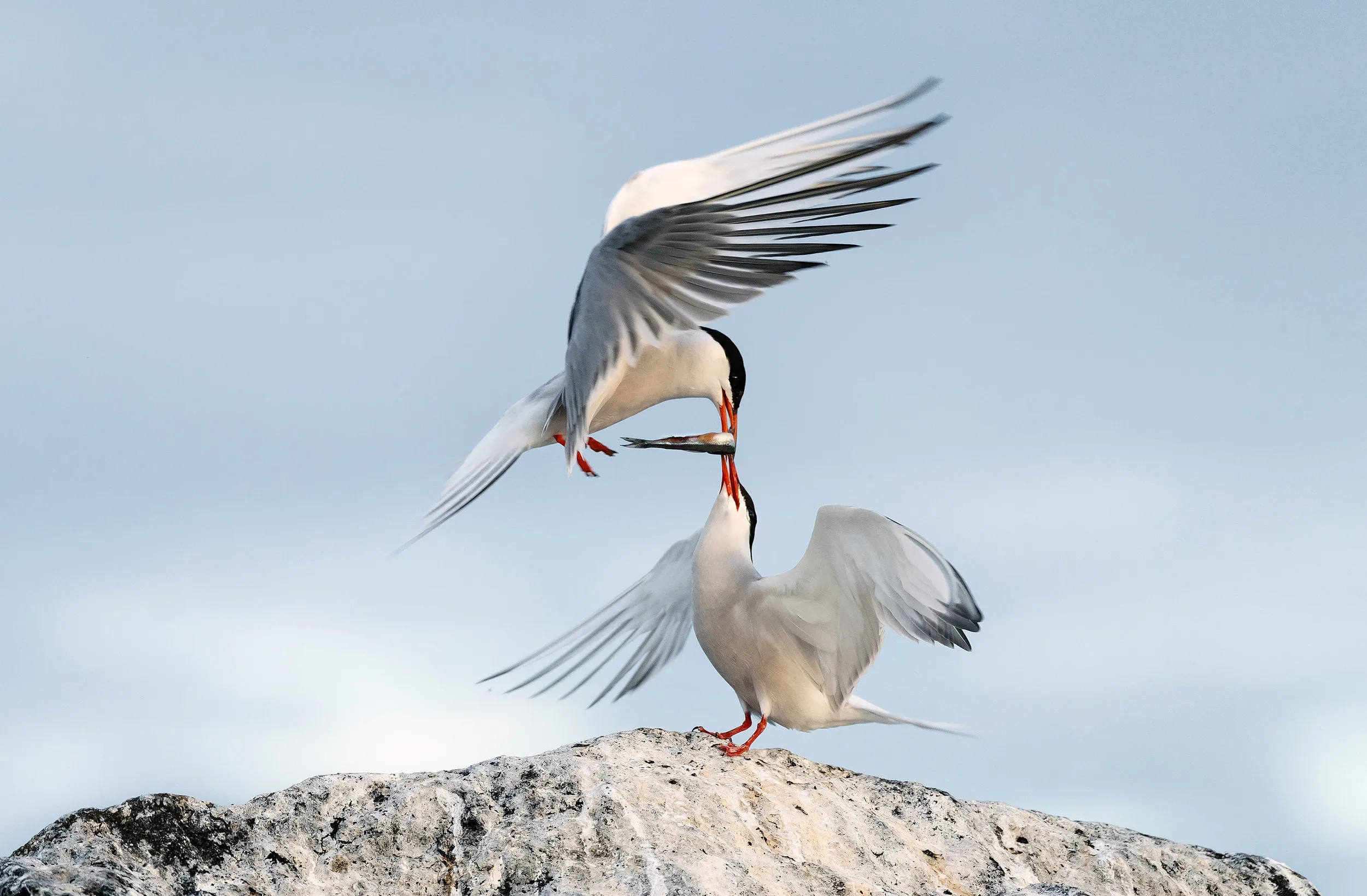
A harsh, screeching call, often heard as they take off or squabble with each other.
Pebbly coastal beaches, along with gravel pits, inland lakes and reservoirs, and even cities.
Easy. Look for the noisy groups gathering on our coasts or inland.
Common Terns are Amber-listed in the UK. Nesting out in the open leaves their eggs and chicks exposed to threats like predation and human disturbance.
Goldfinch flocks are called 'charms', and they live up to their name. September is teasel season and Goldfinches show up in style, working hard as they descend on the spiky seed heads to pick them clean, one fine bill at a time. Startle one and you startle them all.
The whole charm shoots up together, taking a lap or two, then dropping back down like nothing happened. Look carefully and you'll spot this year's juveniles, still growing into their first winter feathers. Their streaky-brown plumage is only just starting to make way for the red, black and white of the adults, looking a bit like a half-finished painting.
Growing plants such as teasels, which provide birds with a natural food source, are a great way to help birds thrive. For more suggestions, take a look at our top garden plants to grow for birds.
Though not currently affected as often, Goldfinches are one of several finch species that can be impacted by trichomonosis. This disease can spread where birds gather, such as at feeders and water baths.
To help garden birds stay healthy this September, please follow our two simple tips: feed seasonally, feed safely. This includes not offering seeds or peanuts to garden birds between 1 May and 31 October, and keeping your feeders clean.
To find our more, read our latest guidance on what and when to feed garden birds.
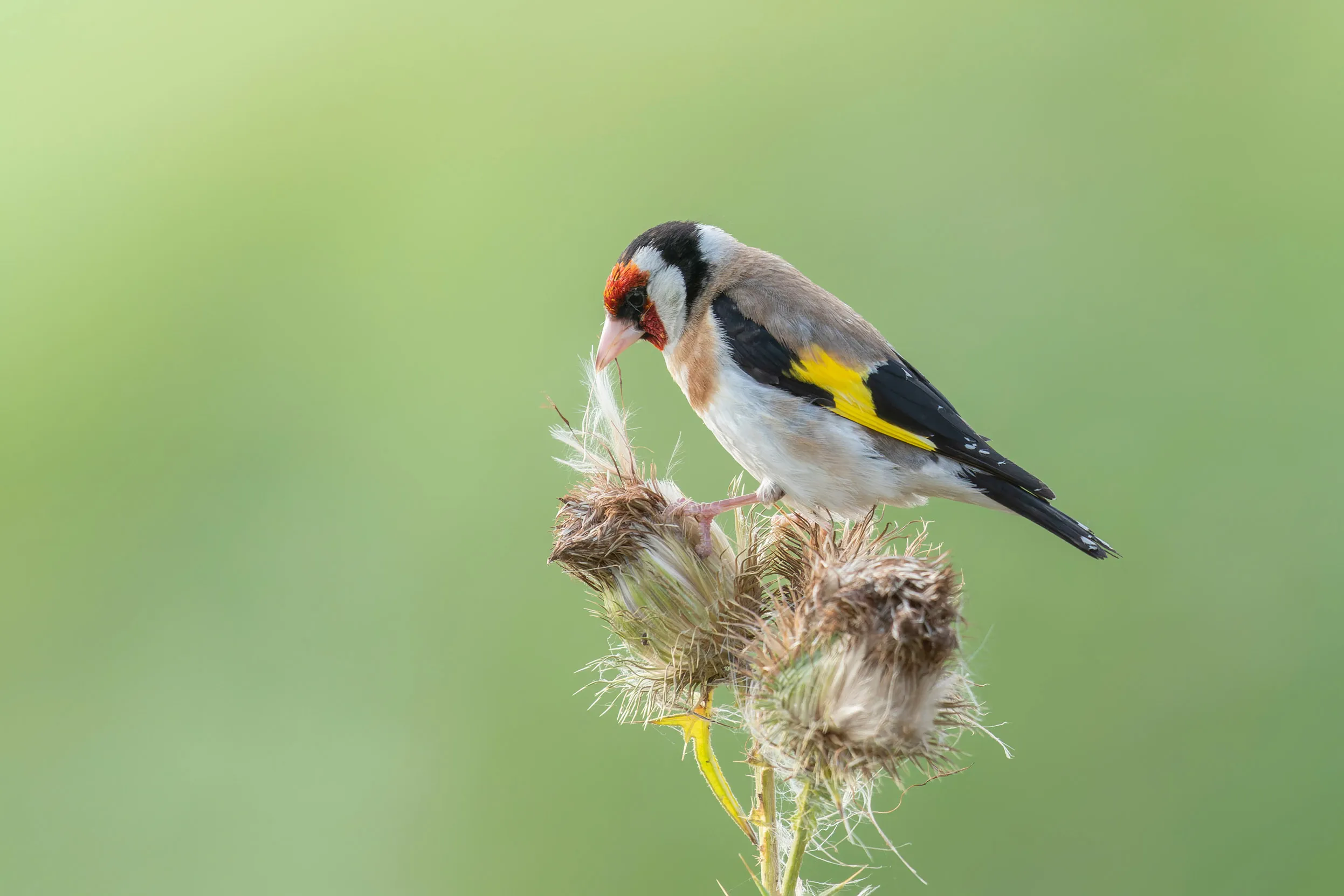

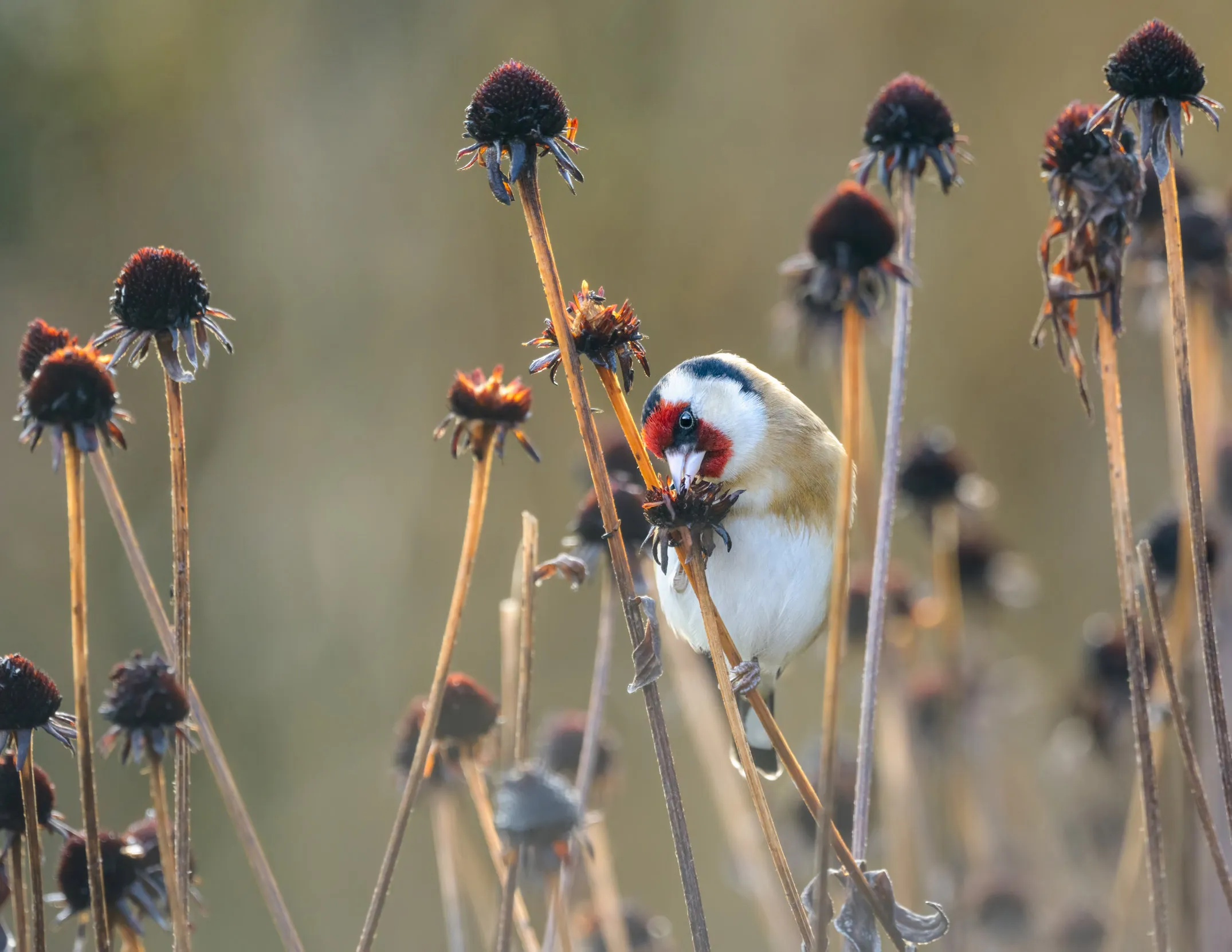

A delightful, twittering song and call.
Anywhere with thistles, scabious, knapweed or teasels, as well as areas with hanging bird feeders.
Easy. Follow the twittering calls straight to a charm feeding on seed heads.
Goldfinches are Green-listed, with many heading south to Spain for winter.
Somewhere along your local hedgerow, nature's feast has quietly started without you. Blackberry, Elderberry, Hawthorn haws, Blackthorn sloes and rosehips are all ripening, turning every hedge into an autumn buffet. Blackbirds are ready and waiting, but they're not alone.
Whitethroats and Blackcaps soon get in on the action too, and it's not just the birds who've caught wind of it. Hazel Dormice are piling on the calories before hibernation, and Pine Martens can't get enough of brambles. Head to a hedgerow near you to see who you can spot feasting on this berry banquet.


Blackbirds: black plumage on males, dark brown on females, both with a bright yellow-orange bill
Whitethroats: males have a grey head with a white throat, brown back, and beige underneath. Females and juveniles have cream/buff and brown plumage.
Blackcaps: greyish body, with males sporting a black cap and females a brown one.
The rustle and flutter of activity deep in a berry-laden hedge.
Hedgerows, especially wherever berries are growing.
Easy. Any bountiful-looking hedgerow will do.
This natural bounty is a lifeline as summer's insects and caterpillars run low, giving birds and mammals plenty to feed on before winter sets in.
We hope you feel inspired and ready to get out there this September. We'd love to hear what you find. You can share your photos with us at NotesonNature@rspb.org.uk. We'll share some of the best in a future issue of Notes on Nature.
Please be mindful when taking photos not to disturb wildlife or habitats. Further guidance can be found in The Nature Photographer's Code of Practice.

