Advice

Go beyond the birdfeeder: Top garden plants to grow for birds

Did you know you can supply a huge array of natural food? Every plant helps, but make sure you plant lots to create a thriving habitat!

Robin, adult perched in autumnal bush
On this page

Get growing in flowerbeds, patio pots and window boxes

To attract a variety of birds, you’ll need a variety of food. Some birds that feed on invertebrates and their larvae in the spring and summer, such as House Sparrows and Blue Tits, are comfortable switching to seeds in winter. Others, such as Dunnocks and Wrens, still need invertebrate food. 

It’s vital to supply a wealth of options as well as places where invertebrate life can thrive. Planting a range of different species creates different structures, and supplies wildlife with pollen, seeds or fruits throughout the year. 

Find out here what flowers and plants can feed your garden birds.

Bumblebee feeding on Purpletop vervain Verbena bonariensis, in new build garden that has been designed with nature and recreation in mind, Bedfordshire, August 2022
Bumblebee feeding
Wildlife attractor seeds

On the RSPB shop you can browse our range of wildlife attractor seeds. A selection of native wildflower seeds for bees, butterflies, bats or birds. 

Supply super seeds

Fun to grow and enjoy in the summer, Sunflowers (Helianthus annuus) are a great source of food for finches and sparrows during the colder months. Their seeds are rich in much-needed oil and protein to give birds warmth and energy. 

Teasel (Dipsacus fullonum) is an impressive biennial plant. Goldfinches are fond of the spiky seed heads, inserting their beaks inside to extract the seeds. In summer they will also seek other small seeds such as those of dandelions, thistles and Groundsel (Senecio vulgaris). 

Goldfinch feeding on teasel head

Common Knapweed (Centaurea nigra) is a purple-flowered perennial whose seeds are also eaten by Goldfinches. It’s also great for pollinators in summer. 

Greenfinches will eat the seeds found in rosehips. The cone-heads of Echinacea and Rudbeckia that flowered in summer and autumn are also packed with seeds. House Sparrows, as well as finches, will dine on these. There are numerous annual flowers whose seeds may still be present in later winter too, such as Cornflower (Centaurea cyanus) and Corn Marigold (Chrysanthemum segetum). These will also feed small birds.

Bountiful berries and fruit

Ivy (Hedera helix) is one of the best plants you can grow for wildlife. First, the flowers appear late in the year, giving pollinators such as butterflies and hoverflies a final boost. Then, the deep purpley-black berries are much loved by Woodpigeons, thrushes, Robins, Starlings and Blackcaps. These berries are richer in fat than most other berries. They also ripen later and over a longer period of time, ensuring a steady supply of vital nutrition. 

Invertebrates, including spiders, hide among the leaves and stems, providing rich pickings for Robins and Wrens. Finally, this incredible climber is crucial for cover.

A Fieldfare spots the camera whilst perched in a Hawthorn tree in autumn.

Guelder Rose (Viburnum opulus) has the most gorgeous glossy berries, which hang in tempting clusters during the autumn and winter. Thrushes, including Blackbirds, Fieldfares and Redwings, will readily eat the berries. If you’re very lucky, you may even see Privet Hawk-moth caterpillars munching away among the leaves during the warmer months. 

Finally, Crab Apple (Malus sylvestris) is another attractive larger plant whose fruit can attract hungry members of the thrush family. 

Shelter and feeding spots

There are a few simple steps you can take now to provide food and shelter for birds. 

First, don’t feel you have to deadhead and clear everything away in autumn. Even if plants don’t have an obvious larder of seeds, they may still be full of insects and other invertebrates seeking refuge for winter. Where you can, leave leaves where they lie on the ground. Flicking through leaf litter is a natural foraging technique for many of these birds as they search for insects, woodlice, spiders and other various types of invertebrates. 

Log and stick piles are also good feeding spots for those birds that prefer live food. Form stacks of sticks or logs in sheltered corners or, if you have enough space, you could form a ‘dead hedge’ with the offcuts and prunings of larger woody plants.  
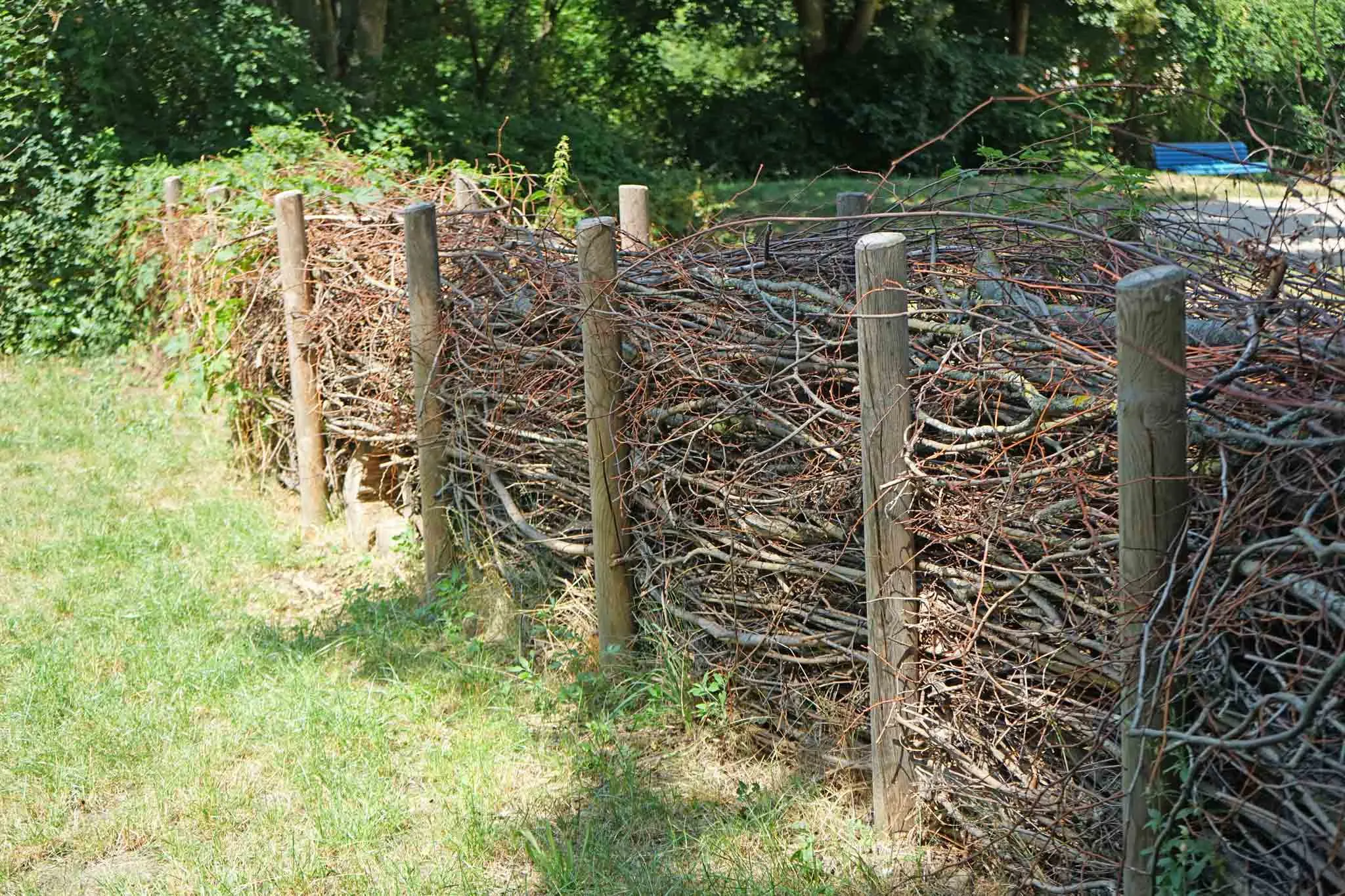
A natural barrier comprised of two lines of wooden posts, providing an outer structure which contains the layers of twigs and branches that have been sandwiched in the gap between them.
Dead hedge
Build a dead hedge for wildlife

It might sound like an oxymoron, but a dead hedge is a wonderful habitat that’s full of life. Dead hedges provide hiding places and nesting habitats for all sorts of creatures, as well as food for insects. 

Planting for birds 

Planting a range of different species that grow, flower and fruit at different times gives a varied structure. It can supply wildlife with pollen, nectar, seeds and fruits throughout the year.

This guidance has been created by RSPB wildlife experts, to provide a suggested list of plants, shrubs and trees that together provide year-round natural food for garden birds. However, it’s not an exhaustive list. You may find plants not listed here that the birds love - we would love to know about them!

Top plants and flowers for birds

Bird’s Foot Trefoil (Lotus corniculatus) for caterpillars, moths and pollinators. Perennial. 

^Cardoon (Cynara cardunculus) for finches in winter, especially Greenfinches. Perennial. 

^Chicory (Cichorium intybus) for finches in late summer and autumn. Attracts hoverflies. Perennial. 

*Common Knapweed (Centaurea nigra) for various insectivores. Seeds attract Goldfinches in autumn. Perennial. 

^Coneflower (Rudbeckia) for Goldfinches in autumn and winter. Perennial/annual. 

English Lavender (Lavandula angustifolia) for finches and sparrows in winter. Avoid Lavandula hybrids which don’t produce seeds. Perennial. 

^French Lavender (Lavandula stoechas) for finches and sparrows in winter. Avoid Lavandula hybrids which don’t produce seeds. Perennial.  

Garden Forget-me-not (Myosotis sylvatica) for pollinators in spring, and finches in summer. Perennial. 

Greater Burdock (Arctium lappa) for insects in later summer, and Goldfinches and Greenfinches during later autumn and winter. Biennial. 

Greater Knapweed (Centaurea scabiosa) for insects in late summer, and Goldfinches in the autumn. Perennial. 

Lesser Burdock (Arctium minus) for insects late summer and Goldfinches and Greenfinches in late autumn/winter. Biennial. 

Nettle-leaved Bellflower (Campanula trachelium) for insects in late summer. Perennial. 

^Purple Coneflower (Echinacea purpurea) for finches, House Sparrows and Blue Tits. Perennial. 

Red Campion (Silene dioica) for caterpillars and weevils. Perennial. 

Red Clover (Trifolium pratense) for various moths, sawflies, weevils and midges. Woodpigeons will eat the leaves. Perennial. 

^Sunflower (Helianthus annuus) for various bird species in autumn. Annual. 

Thistles (Carduus and Cirsium) eg Melancholy Thistle, Woolly Thistle and Musk Thistle for Goldfinches. Biennial. 

Teasels (Dipsacus) for Goldfinches. Biennial. 

^Verbena (Verbena bonariensis) for Sparrows and Goldfinches in autumn/ winter. Perennial. 

*Good all-rounders (either attracts various species or is beneficial for more than one reason).  

^Non-native/naturalised 

Please note: This list contains some potentially harmful plants (either to humans or pets). Check plant labels and seed packets and check out The Horticultural Trades Association (HTA) Guide to Potentially Harmful Plants for guidance.

Top trees, shrubs and climbers

For more information on planting trees and shrubs please see here. You can find more information on planting climbers here.

Alder (Alnus) for finches. 

*Birch (Betula) for a variety of insects. Catkins provide seed in winter. 

*Blackthorn (Prunus spinosa) for insects in spring and summer. Thrushes eat sloe berries in autumn, and Bullfinches will eat buds in late winter and spring. 

*Bramble (Rubus fruticosus) for insects. 

Buckthorn (Rhamnus carthartica) attracts aphids and caterpillars in summer. Produces berries in autumn. 

*Burnet Rose (Rosa pimpinellifolia) for thrushes and Greenfinches. Attracts various insects in spring and summer. 

^Common Barberry (Berberis vulgaris) provides berries for thrushes and Blackcaps. 

Crab Apple (Malus sylvestris) for insects such as caterpillars, aphids, and berries for thrushes in autumn and winter. Bullfinches will eat buds in late winter and spring. 

*Dog Rose (Rosa canina) attracts insects (bees, hoverflies, aphids, caterpillars) in spring and summer. Berries attract thrushes in autumn. 

Elm (Ulmus) attracts caterpillars and moths, and finches eat the seeds. 

*Hawthorn (Crataegus) for insects such as caterpillars and pollinators). Greenfinches eat the seed in haws in winter. Bullfinches will eat plant buds in late winter and spring. 

Hazel (Corylus avellana) for Great Tits, Great Spotted Woodpeckers, Nuthatches and Jays. 

Holly (Ilex aquifolium) for thrushes, Robins, pigeons and doves. Needs to be female to produce berries. 

*Honeysuckle (Lonicera periclymenum) for insects during spring and summer (aphids, moths, butterflies, beetles). Its berries attract pigeons and doves in the autumn. 

*Ivy (Hedera helix) for insect in late summer including hoverflies and bees. Berries in winter for thrushes, Blackcaps, and Woodpigeons.  

Kilmarnock Willow (Salix caprea) for aphids, caterpillar, beetles, sawflies. Blackcaps eat pollen in spring. 

*Good all-rounders (either attracts various species or is beneficial for more than one reason).  

^Non-native/naturalised 

Please note: This list contains some potentially harmful plants (either to humans or pets). Check plant labels and seed packets and check out The Horticultural Trades Association (HTA) Guide to Potentially Harmful Plants for guidance.

Let it grow 

As well as planting natural food plants for birds, there are also many beneficial weeds that may naturally pop up in your garden or green space that birds will eat too. So feel free to just do nothing, and let them grow – your birds will benefit! 

Broad-leaved Dock (Rumex obstusifolius) for caterpillars. Perennial. 

*Chickweed (Stellaria) for sparrows and various finches. Need to potentially control it spreading, as it can smother young plants. Annual. 

*Common Nettle (Urtica diocia) for various insects spring to autumn. Dunnocks and Bullfinches eat the seeds in autumn and winter. Perennial. 

Curled Dock (Rumex crispus) for sparrows, finches and Dunnocks. Perennial. 

*Dandelion (Senecio vulgaris) for various finches and insects. Perennial. 

Goosefoot (Chenopodium album) for insects in spring and summer, and Greenfinches, Goldfinches and Bullfinches in late summer to late autumn. Perennial/Annual. 

Groundsel (Senecio vulgaris) for Greenfinches and Goldfinches. Annual. 

*Ragwort (Senecio) for Goldfinches and Chaffinches. Attracts insects for tits, warblers and Swallows. Must be treated and controlled as a weed by those with gardens bordering grazing land. Biannial/perennial. 

Red Campion (Silene dicica) for caterpillars and weevils. Perennial. 

Red Clover (Trifolium pratense) for various moths, sawflies, weevils and midges. Perennial. 


*Good all-rounders (either attracts various species or is beneficial for more than one reason).  

^Non-native/naturalised 


Please note: This list contains some potentially harmful plants (either to humans or pets). Check plant labels and seed packets and check out The Horticultural Trades Association (HTA) Guide to Potentially Harmful Plants for guidance.

⚠ Please note: This list contains some potentially harmful plants (either to humans or pets). Check plant labels and seed packets and check out The Horticultural Trades Association (HTA) Guide to Potentially Harmful Plants for guidance. ⚠

  1. Become a member