Egrets break records and spring arrivals: highlights from West Yorkshire’s wetlands
Ready to escape the hustle and bustle of the city? Retreat to the Aire Valley to see the best of spring.

On this page
The wild, wetland wonderlands of RSPB St Aidan’s and RSPB Fairburn Ings were both once busy coal mines. Nestled on the banks of the River Aire, flooding became a regular occurrence on these industrial sites – and it didn’t take long for wildlife to move back in.
The RSPB began managing Fairburn Ings and St Adian’s in the 70s, though you can still see evidence of the nature reserves’ working past today. 'Oddball’, the giant excavator, sits at the entrance of St Aidan’s but rare Black-necked Grebes now cruise across the pools in its shadow.
In this article, the new Senior Site Manager, Lydia Tague, and Fairburn Ings Warden, Karen Swaffield, share seasonal highlights you can see on site now, along with the reserves’ recent successes:
Cattle Egrets breed at RSPB Fairburn Ings in 2024 – a Yorkshire first!
Considered a rare ‘twitch’ in northern England up until the noughties, Cattle and Great White Egrets now regularly delight visitors at RSPB nature reserves around the UK. It’s thought that this expansion could be, in part, due to climate change. Conservationists are working hard to create the right habitats across the UK for these species to thrive.
In 2024, the site team at Fairburn Ings celebrated the success of their work as Cattle Egrets nested on the reserve (and in Yorkshire!) for the first time.
Karen explains:
As winter turned to spring last year, we watched the Cattle Egrets acquiring their beautiful breeding plumage, and then we noticed the eye of one of the Cattle Egret turning red, which they do just before they breed, so we were quietly confident they would attempt to nest at Fairburn. It’s wonderful that we had two pairs of nesting Cattle Egrets, and that they successfully managed to fledge three young”.
“The arrival and successful breeding of Cattle Egrets here is a huge moment for Yorkshire,” Lydia says. “These birds, until recently seldom seen as far north as Yorkshire, are now calling Fairburn home and we’ve never seen them is such good numbers. With a bit of luck, we’re hoping they will breed again this year, and that the Great White Egrets might breed here for the first time this year too!”
Major habitat improvements are planned at Fairburn Ings in 2025 which will help improve wetland conditions for birds like the Cattle Egrets, funded by the Environment Agency

Who else is hiding in the heronry?
This winter, record numbers of Great White Egrets and Cattle Egrets spent the colder months at Fairburn Ings with peak counts of 13 birds for both species. The nature reserve team hope to see Great White Egrets join Cattle Egrets on Fairburn’s breeding bird list species this year. These waterbirds will be accompanied by another West Yorkshire success – Spoonbills.

In 2017, Spoonbills bred at Fairburn Ings for the first time and have returned every year since. This spring, 14 Spoonbills had returned to the reserve by the beginning of April and immediately showed interest in the heronry. We hope we’ll see ‘teaspoons’ fledging from Fairburn again in 2025.
It's boomin’ brilliant!
The deep, booming call of the UK’s loudest bird, the Bittern, echoes across the reedbeds at St Aidan’s and Fairburn Ings. In 1998, there were only 11 booming birds in the whole of the UK. These skulking brown herons have bounced from the brink, thanks to reedbed restoration at sites like those in the Aire Valley. So far this spring, six males are booming at St Aidan's and three at Fairburn.

This month, visitors will also have the special opportunity to join St Aidan’s warden, Andrew Tiffany, to step into the secretive world of Bitterns and feel the thrill of an encounter with these elusive birds. Event attendees will walk around the reedbeds, hear their booming calls and learn about the dedicated conservation efforts behind their survival.
Behind the scenes with Black-necked Grebes
Lydia is keen to encourage city-dwellers in Leeds, York and Castlefield to discover the precious wildlife right on their doorstep. The 12 miles of trail paths at St Aidan’s are open to visitors to enjoy cycling, walking, jogging, horse riding and dog walking. But did you know that the park is also home to one of the UK’s rarest birds?
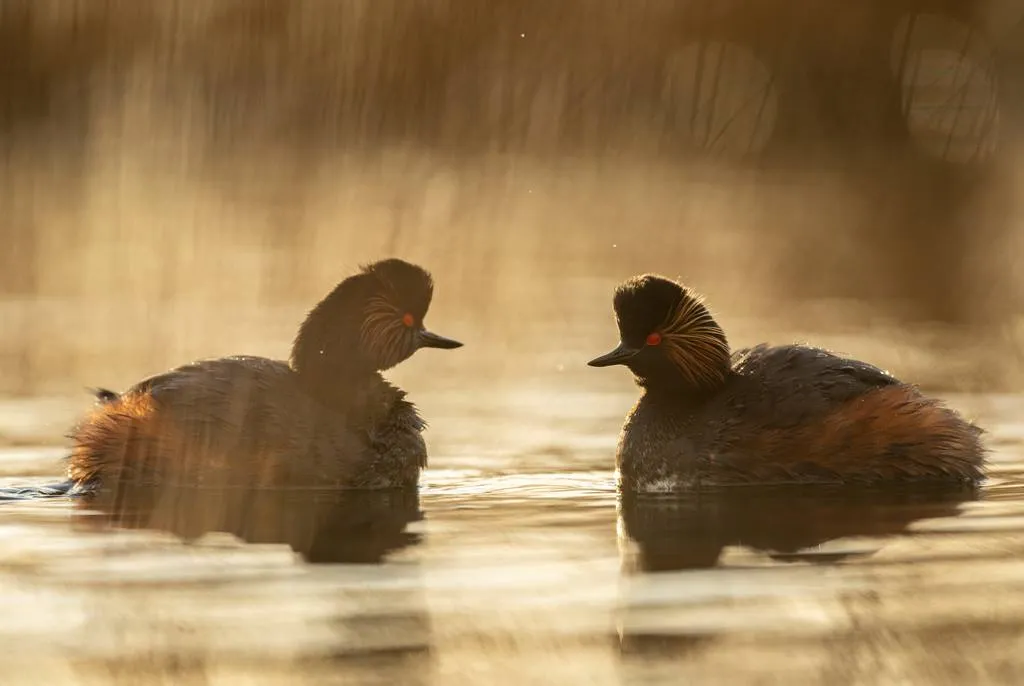
There are only an estimated 55 pairs of Black-necked Grebes in the UK, and St Aidan’s hosts nearly a third of them! Their captivating courtship dance is one of the nature reserve’s best spring spectacles. The pair mirror each other’s movements, before rising out of the water, pressed chest-to-chest.
The St Aidan’s team have added extra dates to their Black-necked Grebe tours during April and May. Visitors will be led by an expert guide to help them see picture perfect views.
Book now