
News
Transforming the RSPB for the future
Our plan to continue delivering our mission for birds, wildlife and nature.
14th Oct 2026
Lapwing, Redshank, and Oystercatcher will benefit from this land transformation thanks to the team at RSPB Lakenheath Fen near Brandon in Suffolk.
5 min read
In the UK, at least 80 per cent of our peatlands have been lost or damaged. But on the Suffolk/Norfolk border, RSPB Lakenheath Fen nature reserve is helping to reverse this trend by restoring a dried-out peatland in the Fens back to health - turning it back into a paradise for threatened wildlife.

.jpg)


The RSPB is re-wetting peatland that had previously been drained. Restoring this land by raising water levels is creating ideal conditions to help birds that once made their homes here, including species such as:
UK populations of these species are rapidly declining due to a long list of factors, which include loss of habitat to breed and feed.
And since work started to re-wet this land, wildlife is already repopulating the once barren area, with species including Lapwing, Marsh Harrier, Cattle Egret and Great Egret, Grey Heron and Little Egret all spotted on site.
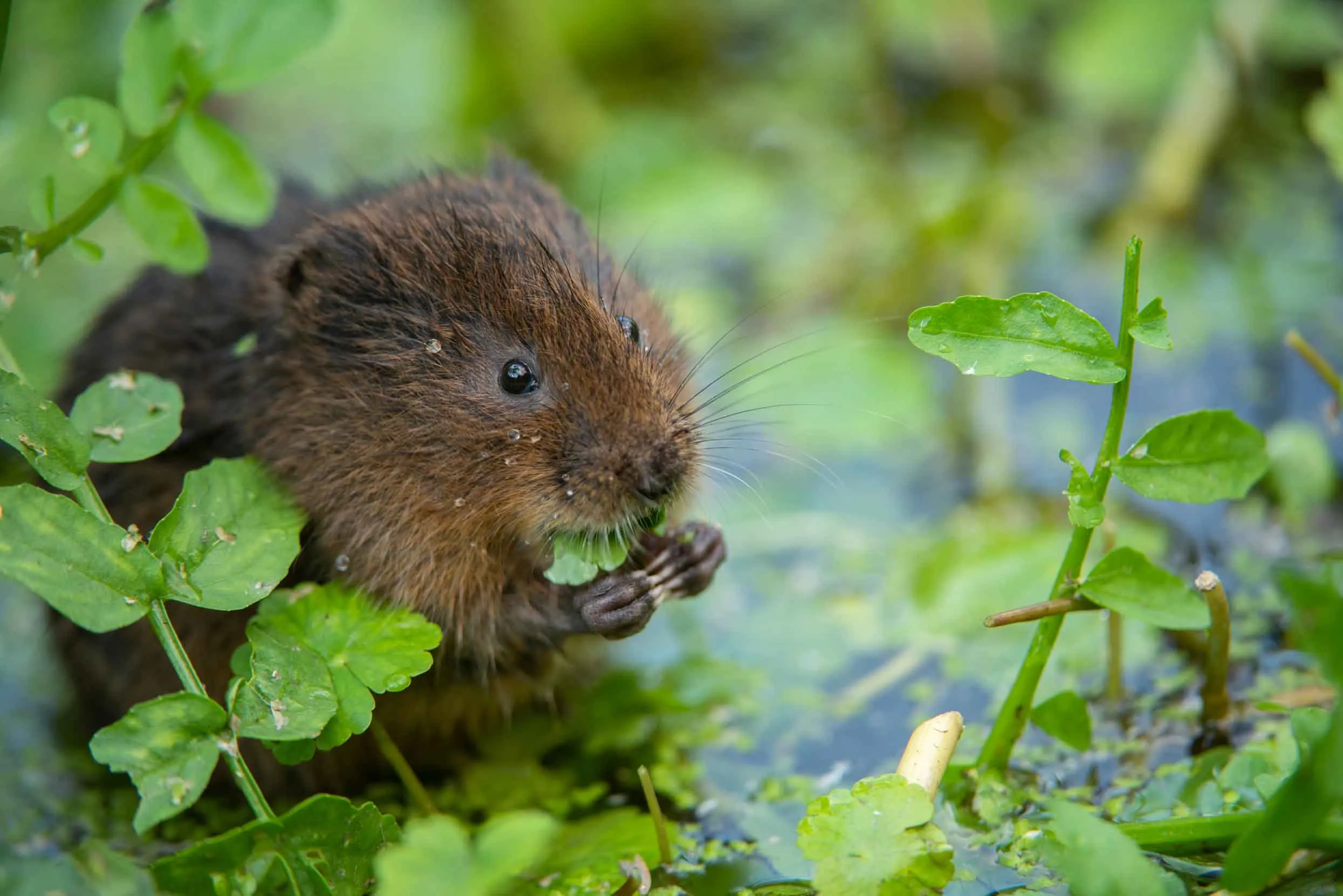
The restored land will also help Water Voles – one of the fastest declining mammal species in Britain with population numbers down by 97% since the 1970s.
The team at RSPB Lakenheath Fen near Brandon in Suffolk, have ‘re-wet’ 120 hectares, the equivalent of 168 football pitches, of peat rich, former arable farmland. This has been done by retaining rainfall, installing a clever network of dams, ditches, water-control sluices and a water pump with a winter abstraction licence to draw water from a drainage ditch which allows us to maximise water levels. This has started to create a mix of wildlife friendly habitats including fen and wet grassland. A small non-native conifer woodland is also being ‘re-wetted’, and native broadleaved trees such as willow, alder and oak that support a wide variety of insects and birds, will be planted to compliment the conifers. The conifers will be retained as they are used by egrets to roost in.
Peatlands store huge quantities of carbon but draining them for agriculture releases large amounts of this carbon in the form of carbon dioxide, a gas responsible for much of the climate crisis that we now face. However, rewetting these artificially drained peat soils stop this release of carbon dioxide, thereby benefitting the climate and us.
Nature Reserve Manager Dave Rogers said, “These peaty soils will all be lost in the Fens in the next 50 years unless we re-wet them. Their benefit to us and wildlife is huge. They are brimming with potential to help threatened wildlife and are a natural solution for storing carbon; so, it’s a win-win all round. Dave continues, “By taking this action for nature and through careful long-term management of the newly re-wetted land by our staff and volunteers, we know it’s just a matter of time until we see threatened wildlife species reappear here – and indeed the red-listed Lapwing that has already been seen on the peatland has proven that point. The reserve will work hard to boost population numbers by providing a protected a place for these species to live, feed and breed in. And we can’t wait to see it!”
This work was made possible through funding from the Esmee Fairbairn Foundation and Morgan Sindall Group, the leading UK construction and regeneration group. Funding was also secured from Natural England via their Nature for Climate Peat Restoration Grant Scheme which was delivered through Fens East Peat Partnership who provided initial funding for restoration works.
RSPB Lakenheath Fen sits within the geographical area known as the Fens. Much of the peatlands that make up the Fens were drained over the last 400 years to create farmland, with less than two per cent of the original 400,000 hectares of wetland remaining.
A dramatic, almost prehistoric looking landscape in places, The Fens came into being 10,000 years ago as sea levels rose and deposited clay and silt across low lying parts of Suffolk, Norfolk, Cambridgeshire and Lincolnshire. Over time, the deposited sediment slowed the movement of water from the area and land became flooded and boggy. This coupled with the rising sea level establishing what we now call the Fens. This wetting of the land created rich, peaty soil –an incredibly special and delicate ecosystem that is important for wildlife and the planet.
The recreation of wetland, like the re-wetted land at RSPB Lakenheath Fen, will be key in helping to ensure that rare species thrive and survive as time moves forward. It is hoped that more land can be purchased and restored in this way at RSPB Lakenheath Fen in future to benefit wildlife and continue to help in the fight against climate change.
For more information on RSPB Lakenheath Fen, including location details, visit our webpage: rspb.org.uk/lakenheathfen.
The RSPB’s work to help nature is greatly supported by RSPB members. To find out more about becoming a member please visit rspb.org.uk/membership.


