Saving seabirds globally
The RSPB is on a global mission to save seabirds, the world’s most threatened group of birds. Many, particularly albatrosses and petrels, have suffered huge population declines with some species close to extinction.
Seabirds are in trouble. BirdLife International Marine Programme is working hard to change that.

Seabirds are in trouble, and have declined by at least 70% in the last 50 years. But the BirdLife International Marine Programme is working hard to change that – from working on board ships to prevent birds from being accidentally caught in fishing gear to ensuring the most important sites are protected for seabirds.
The RSPB is the UK BirdLife partner and co-ordinates the BirdLife International Marine Programme. Seabirds are amongst the most threatened birds in the world and the action required to recover populations requires a global effort.
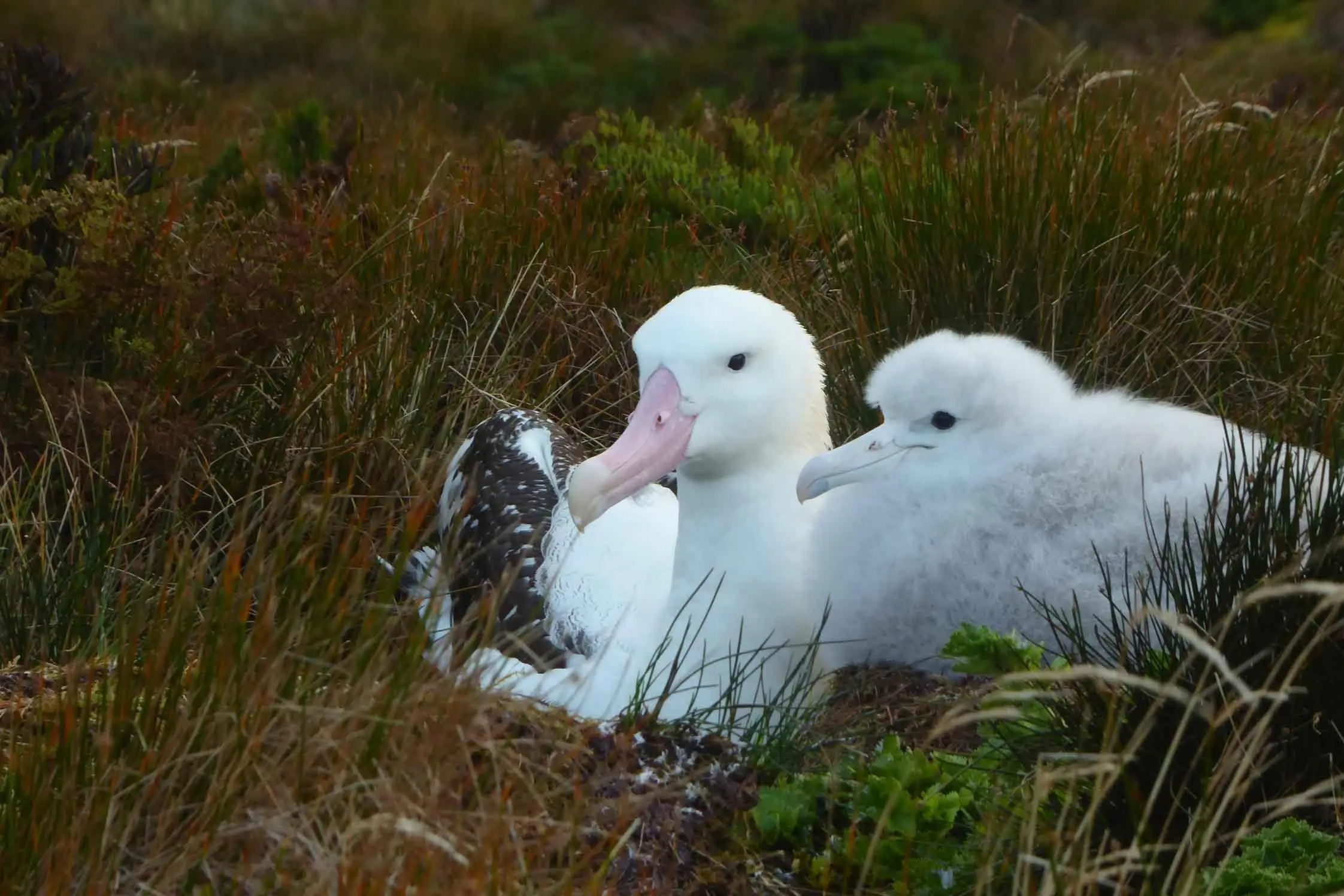
Today, nearly one third of seabirds are classified as globally threatened, including 15 of the 22 species of albatross. The aim of the International Marine Programme is to improve the conservation status of global seabird populations. We do this by using an evidence-based approach to inform local to global actions; from the delivery of grass-roots conservation to advocating for action within international environmental agreements.
Seabirds suffer a range of threats, both on land and at sea. On land, invasive species have decimated populations at seabird nesting sites on remote islands. At sea, seabirds searching for food are vulnerable to being caught and killed in fishing gear. Known as bycatch, this is the greatest threat to seabirds globally, affecting 30% of all seabird species and causing as many as a million seabird deaths every year.
The Marine Programme works with fisheries worldwide to test and implement cheap and simple measures to prevent or mitigate bycatch – called ‘bycatch mitigation measures'. This includes adding brightly-coloured streamers to the back of longline and trawl fishing boats acting like a scarecrow to stop seabirds from coming too close (known as 'bird-scaring lines); fishing at night when some seabirds are much less likely to be feeding; adding weights to longline hooks to make them sink faster away from seabirds; and hook-shielding devices which encase baited hooks as they are lowered into the sea until they reach a depth that is out of seabirds’ reach.
.jpg)
In 2004, the RSPB and BirdLife International made the first steps to create the Albatross Task Force (which was officially launched in 2006): national teams of grassroots instructors that work with fishers and governments to research and demonstrate bycatch solutions.
The good news is that these methods work. To date, we’ve worked with more than 20 fisheries across Africa and South America, achieving massive bycatch reductions including a 98% fall in seabird deaths in Namibian longliners and 99% fewer albatross deaths in South African trawlers using bird-scaring lines. Teams are driving innovation; for example, inventing the award-winning Tamini Tabla device in Argentina and co-developing the Modified Purse Seine in Chile. We have trained hundreds of fishers and government personnel, and in Argentina the team has delivered classroom learning to over 14,000 children in coastal communities, creating new generations of marine champions. This work has supported the adoption of mandatory seabird conservation measures in national fishing legislation in multiple countries.
In recent years, the teams have worked with local stakeholders, companies and governments to develop technological solutions and Artificial Intelligence to improve bycatch management.
The Albatross Task Force has inspired the expansion of grassroots conservation projects in Europe, West Africa and the Pacific through a combination of initiatives that continue to strengthen seabird conservation.
.jpg)


BirdLife International hosts the Seabird Tracking Database, which is the largest collection of seabird tracking data in the world. Working globally with seabird scientists, this is a place to store and share seabird data, and forge collaborations. To date, more than 250 scientists have contributed nearly 70 million location points, racking up over 160 species.
This powerful tool has underpinned much of the work of the Marine Programme, including identifying where seabirds are most at risk of bycatch, allowing us to better target our advocacy work. A current project is using seabird and vessel tracking data to identify bycatch risk hotpots in the Humboldt Current and nearby waters.
Tracking data have also been used to identify Key Biodiversity Areas, highlighting the most important sites for seabirds and supporting advocacy for protected areas.
Bycatch in gillnets is estimated to kill over 400,000 seabirds each year. There is no recognised best practice solution yet, so a toolbox of options is necessary. We are collaborating with partner organisations to trial deterrent devices like the looming-eyes buoy and predator-shaped kites as well as exploring alternative spatial-temporal approaches. By mapping bycatch hotspots and trialling mitigation options in high-risk locations, we are closer to identifying practical, effective solutions where they're needed most.
Bycatch is a critical issue in fisheries operating in the high seas: the vast area of ocean beyond the control of any single country, and where albatrosses spend the majority of their time. Our international advocacy has supported the adoption of seabird bycatch mitigation measures across all five tuna Regional Fishery Management Organisations – international organisations that manage fishing activities in the high seas. We continue to engage with these bodies to promote the implementation and effective monitoring of seabird safe measures that have been proven to be highly effective by our grassroots teams.
The Marine Programme also works across the supply chain, harnessing consumer power to effect change. The Marine Stewardship Council (MSC) fish label helps consumers find sustainable seafood products. When a fishery applies for MSC certification, they are assessed against certain sustainability standards. During this process, we’re able to provide evidence and advice to help ensure certified seafood truly supports seabird conservation. We’ve already engaged with 24 fisheries worldwide through this process, incentivising better fishing practices to affect change for seabirds. These include reducing albatross deaths in South Africa alongside the on-the-ground efforts of the Albatross Task Force, and initiating vital seabird bycatch research in Argentina, Iceland, and Greenland.
We also work closely with retailers and their seafood suppliers to drive improvements in fisheries management through the supply chain.

The RSPB is on a global mission to save seabirds, the world’s most threatened group of birds. Many, particularly albatrosses and petrels, have suffered huge population declines with some species close to extinction.