Feature

Our vision for the Lake District Priority Landscape

Find out how we’re restoring and re-connecting habitats in the Lake District to help iconic species like the Curlew flourish.
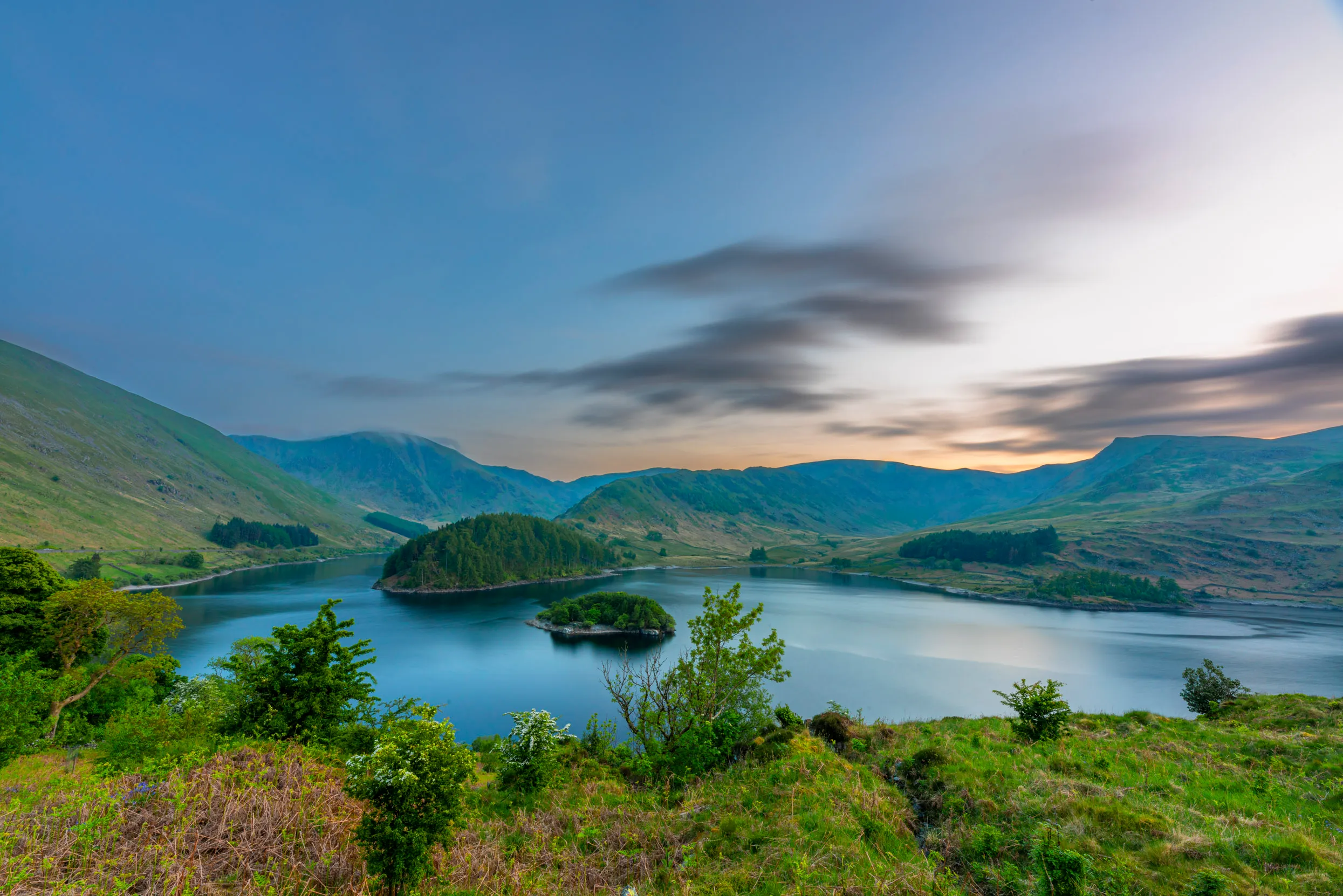
The sun setting over the main lake at Haweswater, creating a pink, orange tinge to the sky over grassy hills and islands that stand in the middle of the water.
On this page

Our vision for the Lake District Priority Landscape sees a mosaic of wildflower meadows, humming with insect life and echoing to the sound of booming Curlews. The shade of mature wood pasture dapples old leks beneath it and the Black Grouse has returned.   

Atlantic oakwood, full of Pied Flycatchers and Wood Warblers, climbs steep boulder slopes onto lush commons, and fellsides covered in Juniper and Downy Willow. The call of Ring Ouzels reverberates amongst the crags, pierced by the cry of eagles circling above. This is our vision for the Lake District Priority Landscape. 

About the Lake District Priority Landscape

The cherished Lake District Priority Landscape encompasses 300,000ha (hectares) of upland habitat, featuring the highest mountains in England. It includes the entire Lake District National Park and a portion of the Yorkshire Dales National Park. 

There is a huge opportunity to deliver much more for nature, climate and people in this landscape by working together in partnership.  

Through the RSPB’s work, we will use our experience and expertise to restore and re-connect habitats to ensure iconic species such as Black Grouse, Curlews and Ring Ouzels flourish for generations to come. 

Broad location

Key habitats and species

Key habitats

  • Shingle and dunes on the coast, wildflower meadows, wood pasture, Atlantic oakwood rainforest, montane heath, blanket bog. 
Swindale Meadows, marsh marigolds.

Key species

  • Black Grouse, Curlews, Hawfinches, Lapwings, Little Terns, Merlins, Oystercatchers, Redshanks, Ringed Plovers, Ring Ouzels, Wood Warblers, Adders, Eurasian Beavers, lobarian lichen communities, Mountain Ringlet butterflies, Natterjack Toads and Water Voles. 

Designations

The Lake District Priority Landscape encompasses 11 SACs (Special Areas of Conservation), over 80 SSSIs (Sites of Special Scientific Interest), of which over 77% are recorded as being in “unfavourable condition”, and 4 NNRs (National Nature Reserves). 

These sites include diverse habitats ranging from ancient woodlands to coastal sand dunes, limestone pavement and blanket bogs. 

Why this area is important

We need to safeguard the long-term environmental quality of this cherished upland landscape and enhance its resilience to climate change for future generations. 

By restoring and rewetting peatlands, naturalising rivers, encouraging woodland expansion and restoring healthy soils, the landscape will start to sequester large quantities of carbon, improve the quality and slow the flow of water, and reduce soil loss. 

Over time, these changes will lead to far greater habitat connectivity and an opportunity for biodiversity to thrive. 
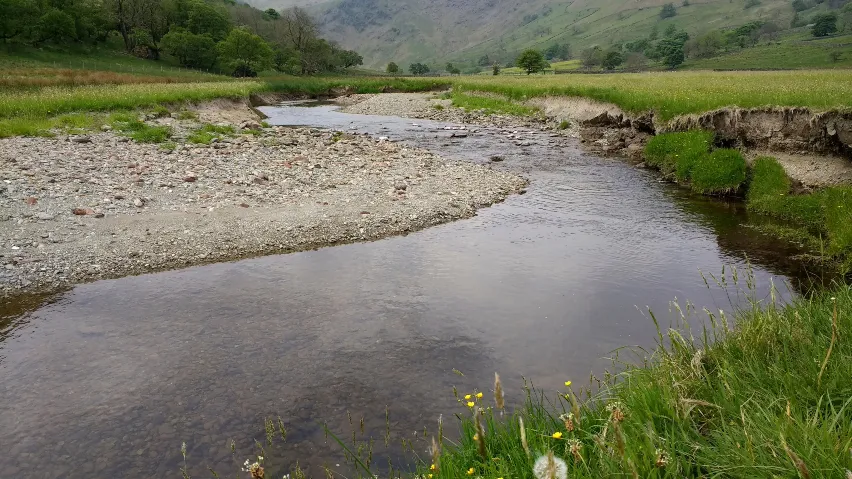
Re-wriggled river for nature at Haweswater, surrounded by grassland and a rocky bed.

Why are we prioritising this landscape?

We have an established role in the landscape through our reserves at Hodbarrow and Haweswater, and through our involvement with the Endangered Landscapes Project Cumbria Connect. 

We’re already involved in strong partnership projects and through the Priority Landscape programme, we will continue to deliver joined-up, high-quality habitat at large scale across this landscape.

What are the threats and opportunities?

Threats

  • Uncertainty over future agricultural policy. 
  • The intensification of sheep-dominated grazing (this has simplified what should be complex and vast ecosystems, particularly on upland commons). 
  • These uplands need many more native trees and scrub, but it is essential to get the right tree in the right place so species of open habitats can be conserved. 
  • Increases in extreme weather events, creating a need for greater resilience in these landscapes. 

Opportunities

  • Build strong relationships with landowners and partners to deliver a more diverse and connected upland landscape. 
  • Celebrate the contribution of nature-friendly farming and support the farming community through targeted on-the-ground advice. This will develop financially and ecologically sustainable models to deliver public goods and put nature-friendly farming on a firm footing whilst creating habitat and opportunities for greater biodiversity. 
  • RSPB Wild Haweswater and the Lake District Eastern Fells Landscape Recovery Project will continue to be an exemplar of land management working with natural processes and resilience at its heart. 
  • Damaging upland management and land use activities will be challenged. 
  • Champion for the right tree in the right place for the right reasons. 
  • Advocate for improvements in the statutory condition of priority habitats. 

What are we trying to achieve with this work?

  1. A connected, resilient, dynamic and complete mosaic of upland habitats to benefit species such as Ring Ouzels and Black Grouse. 
  2. To protect beach-birds, such as Ring Plovers, on the coast and expand their range. 
  3. Helping to restore SSSIs to favourable condition. 
A female Black Grouse, with a mix of brown feathers, strolling across grassland.

The story so far...

  • The Lake District may be a new Priority Landscape for the RSPB. However, we’ve worked at a landscape-scale here for many years, delivering conservation advice, safeguarding sites and developing strong partnerships. 
  • Since being invited to Haweswater in 1969 to monitor and protect England’s last remaining pair of Golden Eagles, the RSPB has gone on to establish a successful partnership here with the landowner, United Utilities.  
  • We now care for over 3,000ha in the Haweswater and Swindale valleys and have been at the forefront of working with natural processes and farming for nature. 
  • This influence has just been expanded by the recent success of a round one Landscape Recovery scheme led and developed by the RSPB. 
  • The RSPB is also a partner in Cumbria Connect, one of the UK’s largest landscape-scale nature recovery programmes. It covers 42,000ha of the Priority Landscape area and has served as great way to showcase nature friendly farming and landscape-scale restoration.  
  • The developing Penrith to Kendal Landscape Recovery scheme is also a direct result of the partnerships created from this programme 
  • Going forward, there are many landscape-scale projects being formulated across the Priority Landscape.  
  • The RSPB will be here to ensure that our priority species are included in these future ambitions and create even more connectivity to enable species like Black Grouse to return to the heart of the Lake District after a 50-year absence. 
Long grasses growing at the base of a steep hill

How can you help

Keep an eye on this page for updates. To support our work in Haweswater, head over to https://wildhaweswater.co.uk/support-us/. Thank you. 

Key partners

We’re working alongside Cumbria Connect, Cumbria Wildlife Trust, National Trust, United Utilities, Forestry England, The Woodland Trust, The Rivers Trusts, Cumbria Local Nature Partnership, Lake District National Park Partnership and Natural England. 

Share this article