Our vision for the Outer Hebrides priority landscape
Discover how we’re protecting and improving the wildlife-rich landscape Outer Hebrides for the benefit of people and nature.

On this page
- About the Outer Hebrides priority landscape
- Where is the Outer Hebrides priority landscape?
- Key habitats and species
- Key species
- Designations
- Why this area is important
- Why are we prioritising this landscape?
- What are the threats and opportunities?
- What are we trying to achieve with this work?
- The story so far...
- How can you help
- Key partners
- Useful resources
Our vision for the Outer Hebrides is that the landscape will continue to be internationally recognised for the richness of its machair, peatland and seabird islands.
Local people will have even greater pride in their natural heritage and through positive, innovative action, the area will integrate traditional management with modern techniques. This will showcase a means of mitigating climate change while producing high-quality food in harmony with nature.
About the Outer Hebrides priority landscape
The spectacular landscapes of the Outer Hebrides host an array of nationally and internationally important habitats and species.
These include 70% of the world’s machair, the second largest contiguous area of blanket bog in Europe and 40% of the UK’s Corncrake population. The area also supports a unique assemblage of breeding waders and a significant proportion of the UK’s breeding seabird population.

Where is the Outer Hebrides priority landscape?
The Outer Hebrides sits off the Northwest coast of Scotland. The priority landscape encompasses all the main islands, from Lewis to Barra, and the surrounding offshore islands.
Key habitats and species
Key habitats
The priority landscape area holds 70% of the world’s machair, floristically abundant and diverse grasslands and upland habitats including peatland.

Key species
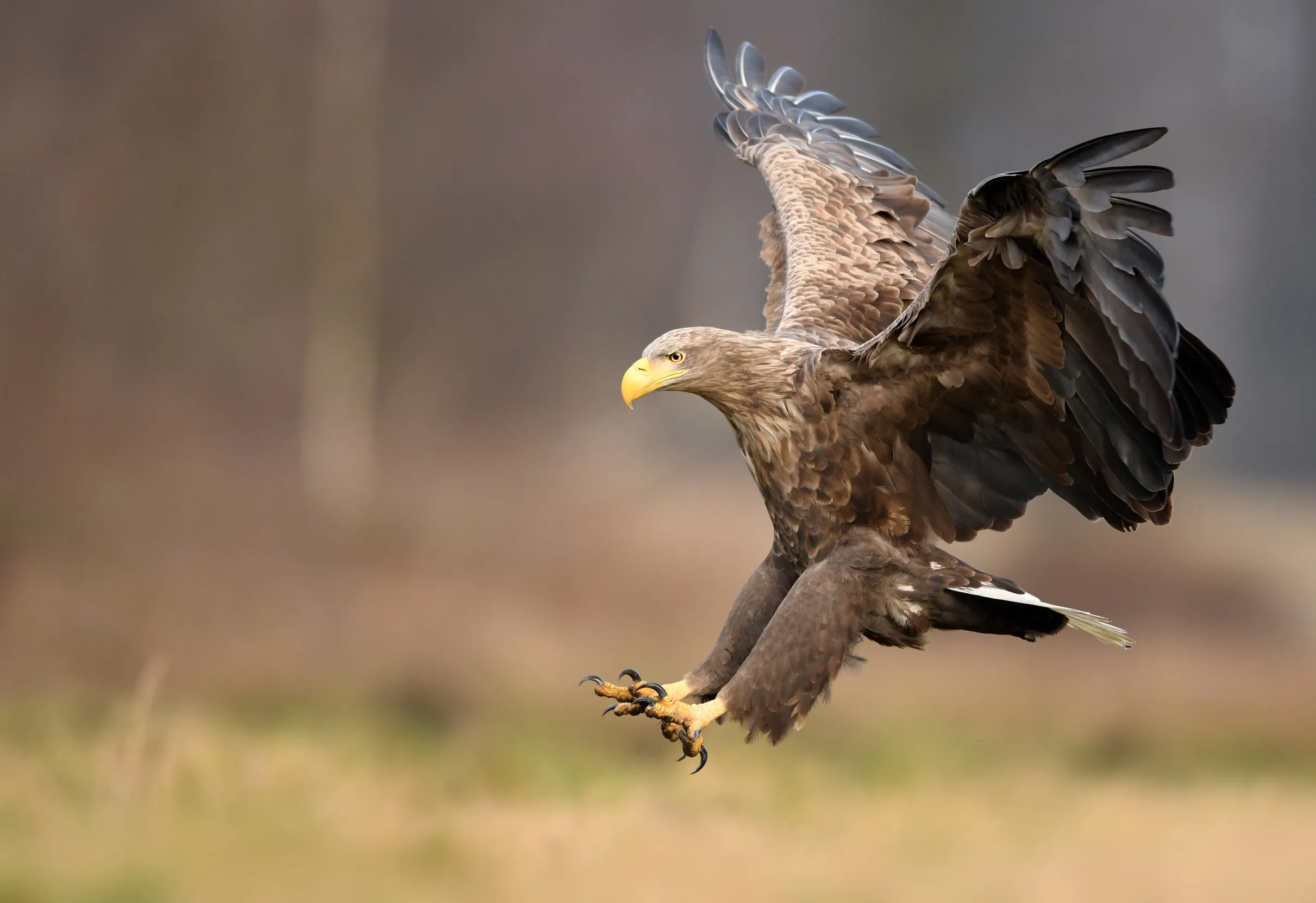
- Nearly half of the UK Corncrake population, Golden Plovers, Greenshanks, Dunlins, 20-25% of the UK’s breeding Red and Black Throated Divers, 10-30% percent of the UK’s Golden Eagles, White-tailed Eagles, Merlins, Hen Harriers and Short-eared Owls.
- The two largest Scottish Puffin colonies are also present, as is a significant proportion of the UK population of Razorbills, most of Scotland’s Leach’s Petrels, and internationally important populations of Black Guillemots, Gannets, Kittiwakes, Shags, Fulmars, and Storm Petrels. Great Yellow Bumblebees and Colletes Floralis mining bees.


Designations
Approximately 30% of the land area is designated as European Sites (SPAs and SACs) for upland, and four percent for machair; all the large offshore seabird colonies are designated as SPAs. Significant areas of the surrounding marine environment are also SACs and MPAs.
Why this area is important
As well as the large importance for biodiversity, the Outer Hebrides has significant importance for climate resilience. This is particularly true of its large areas of peat, which act as a natural carbon sink.
Why are we prioritising this landscape?
We’re prioritising the Outer Hebrides because of its vast importance to the UKs biodiversity. With 70% of the worlds machair, Europe’s second largest peat bog and six seabird island SPAs, the islands support important breeding populations of 17 priority bird species and four priority all nature species.
Local people have a critical role to play in the health of these habitats, and the RSPB is uniquely placed to work together with all groups for the benefit of nature and people.

What are the threats and opportunities?
Threats
- Changing agricultural practices
- Climate change
- Non-native invasive species
- Recreational disturbance and development
Opportunities
- If we can get the right things in place, for example proper support for crofting through agri-environment schemes, then huge areas could be improved for nature by those people who live here in a relatively short time.
What are we trying to achieve with this work?
- To improve the condition of priority habitats (machair, upland and seabird islands) and maintain or improve the conservation status of priority species within the Outer Hebrides.
- Connect local communities to the land and its wildlife more, ensuring they have the resources and knowledge to manage it sustainably for public good, and benefit from the presence of a thriving nature-based tourism sector and local food economy.
- Local actions, particularly HNV farming practices, are made more viable through improved Scottish and local policies and regulations, and significant financial and advisory support from government and external NGOs.
The story so far...
- In the absence of suitable Corncrake agri-environment options for crofters, we have expanded our Corncrake Initiative scheme. This is a payment for crofters to manage their land in a Corncrake-friendly way. In 2025, 217ha of land was entered into the scheme and it has led to abandoned crofts being brought back into condition.
- The Calling Corncrake project also developed an agreed species action plan which outlines how government can better support Corncrakes in the Outer Hebrides.
- For waders, we have supported crofters across the islands entire agri-environment by contributing to their applications.
- Starting in 2025 a new PhD supported by the RSPB will also take a closer look at breeding waders on the machair. With a focus on nest and chick survival it will add further detail as to how changing climate, invasive species and agricultural practices are impacting wader success.
- We’re maintaining biosecurity measures to keep the Shiant Isles rat-free after the success of the Black Rat eradication in 2015.
- We’re approaching the end of a development phase planning to remove invasive Hedgehogs from Benbecula through live capture and relocation to the mainland.
- We also hold an advisory role in the development of a new project led by NatureScot to remove mink from the Outer Hebrides.
- We continue to remove Rhododendron from our reserve at Loch Druidibeg.
- Since 2024 we have run a Wildlife Disturbance Campaign to improve knowledge in those enjoying outside spaces across the Outer Hebrides.
- Finally, in 2022 we launched the first Outer Hebrides Wildlife Festival aimed at providing opportunities for people to connect with nature. It has run every year since (currently being managed by Species on The Edge) and continues to grow.

How can you help
Watch this page for updates, follow us at www.facebook.com/rspbhighlands, visit the external websites listed below, or contact us by emailing outerhebrides@rspb.org.uk.
Key partners
We’re working alongside Galson Estate, SSPCA and NatureScot.
Useful resources
The following RSPB nature reserves form part of Outer Hebrides priority landscape:
-
Balranald - Balranald Hebridean Nature Reserve, North Uist, Scotland - The RSPB
-
Loch Druidibeg - Loch Druidibeg RSPB Nature Reserve - The RSPB
-
Loch na Muilne - Loch Na Muilne Reserve, Arnol, Isle of Lewis - The RSPB
-
Loch Stiapabhat - Loch Stiapabhat Nature Reserve and Observatory