
Save Scotland's Nature
The Natural Environment Bill is a once-in-a-generation chance to help Scotland’s wildlife recover.
Major new legislation for nature in Scotland is a rare opportunity - at most, it comes around once in a decade.
5 min read
We know all too well that Scotland’s nature is struggling, and urgent action is needed to save treasured species - from Puffins to vanishingly rare Scottish Wildcats and Capercaillies. We also know that globally significant habitats, from Scotland’s Rainforest to our peatlands and machairs, are deeply threatened.
But there is hope.
Last week, the Scottish Government brought forward its highly anticipated Natural Environment Bill. We now have a once-in-a-decade opportunity to kickstart the recovery of biodiversity across Scotland’s land and seas.
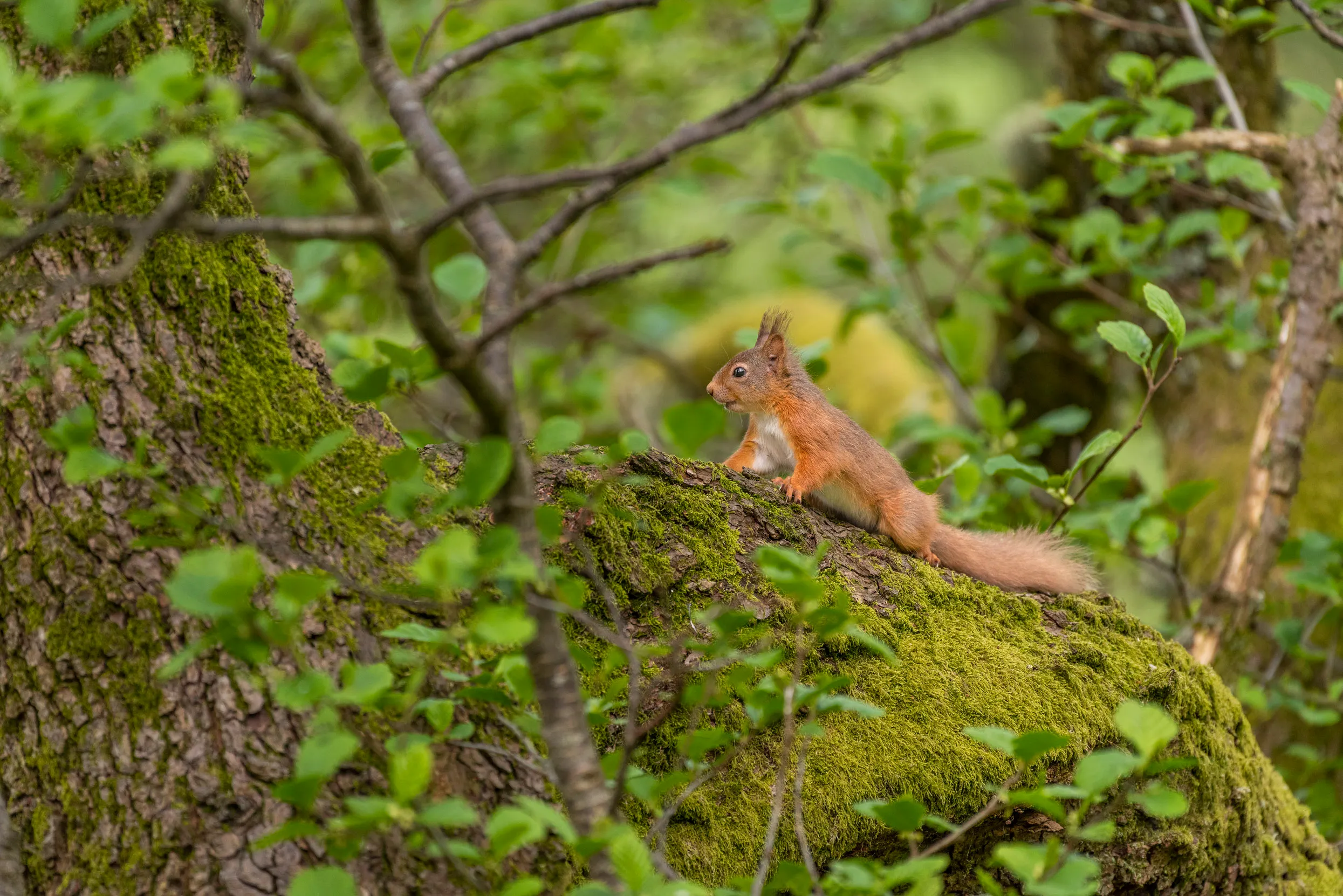
If we get the detail right, by 2030 we could be living in a country where 30% of Scotland’s land and seas are protected and effectively managed for nature. Where moorlands are filled with the cries of Curlews, pulled back from the brink of extinction. Where colonies of Gannets and Razorbills feast in our oceans and raise chicks on our coasts and islands. Where Red Squirrels are no longer a rare glimpse but a regular sight, scampering through our Ancient Woodlands.
The Natural Environment Bill is a once-in-a-generation chance to help Scotland’s wildlife recover.
In positive news for nature across Scotland, the Natural Environment Bill establishes a framework for targets to conserve and restore Scotland’s biodiversity. These targets will include the status of threatened species, the condition of habitats and the environmental conditions for nature regeneration.
The potential for these targets to drive positive change is enormous. Targets which are well designed, ambitious and broad ranging, can mainstream nature across government and beyond, steering policies and funding towards action that will reverse nature’s chronic decline and drive its recovery.
The detail of these targets will be finalised after the Bill becomes at Act in 2026 - but the way they are framed in the Bill will be the basis for success. RSPB Scotland welcomes the requirement to seek scientific advice in the development of these targets, and the role given to Environmental Standards Scotland (ESS) as independent assessor of progress against its targets. This support is subject to ESS having the appropriate resourcing to fulfil this role.
Following the extinction of Lynx and Wolves in Scotland several centuries ago, deer have had no natural predators, leading to a continued increase in their numbers. It is estimated that there are now around 1 million wild deer in Scotland – in 1990, there were just 500,000.
The Natural Environment Bill outlines a suite of welcome measures to improve the management of deer across Scotland, including new intervention powers to allow NatureScot to reduce deer numbers to prevent damage to important wildlife habitats. This is a vital step towards the recovery of native woodlands and peatlands where deer grazing and trampling pressures currently hamper restoration efforts and reduce the ability of these habitats to store carbon.
Less than 2% of Scotland’s land remains as ancient woodland and over 80% of peatlands in Scotland are degraded. RSPB Scotland welcomes the proposals outlined within this Bill which, if implemented effectively, will assist the recovery of these globally important habitats.
Even within our National Parks, nature faces pressures – and many of these areas are not actually effectively managed for wildlife. In recognition of this, the Scottish Government previously proposed that National Parks would be given an overarching purpose to lead the recovery of nature and secure a just transition to net zero.
The Natural Environment Bill proposes some positive reforms to Scotland’s National Parks, including new aims to restore biodiversity and mitigate and adapt to climate change, with a duty on government to have regard to these aims.
But the Bill does not give Scotland’s National Parks the overarching purpose to lead nature’s recovery at scale. This is a major missed opportunity to give National Parks a much bigger role in tackling the nature and climate crises, while contributing to Scottish Government role in the international target to protect and effectively manage 30% of land and seas for nature by 2030 (“30 by 30”).
RSPB Scotland is deeply concerned that the Natural Environment Bill introduces new ‘enabling powers’ to allow Scottish Ministers to make future changes to some of our most important environmental protections without full parliamentary scrutiny. Together, Environmental Impact Assessment and the Habitats Regulations provide the foundations of environmental protections in Scotland and are critical to safeguarding our most important habitats and species against damage.
Any changes to such vital environmental protections should be tightly restricted and must be made with the full scrutiny of parliament, rather than through secondary legislation as the Bill proposes.
RSPB Scotland is also concerned that there is no ‘non regression’ clause within the Bill, which would ensure that any changes to these environmental protections will only be made where there is clear evidence that protections are being strengthened as a result, rather than weakened.
New open-ended powers to change these vital protections threatens to undermine the progress towards nature’s recovery that the Natural Environment Bill will make.
RSPB Scotland will be seeking additional measures in the Bill to address key areas where current provisions need to be strengthened. These include actions to tackle invasive non-native species – one of the greatest drivers of biodiversity loss in Scotland – and improvements to our national network of protected nature sites.
It is critical that the Natural Environment Bill takes us in the right direction – towards the recovery of nature at pace and at scale across Scotland. This Bill has the potential to be truly transformative for nature across Scotland and could bring about a shift from simply protecting species and habitats as they dwindle, to restoring Scotland’s status as a country where nature thrives.
Over the next few months, the Bill will be reviewed by MSPs, who will have the opportunity to make amendments to the draft text. Following this, Parliament will decide whether to pass the Bill into law.
RSPB Scotland will be reviewing the detail and working with the Scottish Government and parliamentarians to ensure that the Natural Environment Bill is the catalyst for nature’s recovery that we so desperately need.

Sign up to our newsletter and our team will be in touch to let you know more about how you can campaign for nature with the RSPB!


