.jpg)
Saving species thanks to you
Find out more about some of the species that we’re helping, thanks to your support.
RSPB Head of Global Species Recovery Andy Evans shares some key highlights from 2025.

Nature is undeniably in crisis with thousands of species across the world in serious decline. But there is hope. I am incredibly fortunate and proud to head up our Global Species Recovery Team, whose job it is to facilitate the process of working out which species are most in need of help, what needs to be done for each and to coordinate delivery action across the RSPB.
Every year, working in partnership with many other organisations, we are making progress and nothing motivates me more than when I see populations of Curlew increasing on our nature reserves, Puffins and Manx Shearwaters flourishing on seabird islands where we have removed invasive rats, or species like the Wilkins’ Bunting found only on the remote Nightingale Island in the UK Overseas Territory of Tristan da Cunha, brought back from the very brink of global extinction.

We have 100 priority species or groups of species that our species recovery efforts are focussed on. These species are found in the UK, the UK Overseas Territories and at other selected locations across the world. They include birds, mammals, plants, invertebrates, reptiles and amphibians.
We employ a wide range of conservation techniques to help these species and the journey towards recovery is unique to each species. However, the way we keep track of this work is the same across the board – we use the Species Recovery Curve to monitor our progress.
Each species moves through four stages of the curve – first is Diagnosis where we work out why a species is in trouble, next comes Testing solutions where we trial different techniques to help the species. When we fix on a solution that works we move the species to the Recovery stage and our focus is on delivering that solution at a wide scale so that the species can recovery. Once a recovery has been secured, the species will reach the Long-term Legacy stage – in some cases the recovery is sustainable and no further input is required but for many species ongoing conservation effort is essential to maintaining the recovery.

It’s the long-term support of RSPB members and supporters that allows us to commit to helping species. Species recovery can take many years or even decades to achieve but our ambition is that by 2030 we will have helped all of our priority species to move at least one step further along the curve to recovery.
Since 2020 we’ve been able to move 42 species along the curve, meaning that their future is more secure, including Turtle Dove, Puffin, Little Tern and Spiky Yellow Woodlouse.

In 2025 we were able to celebrate a number of important steps forward for species. In all cases these simply couldn’t have happened without you, our members and supporters, so thank you for all you have helped to achieve for species. Here’s just a small selection of highlights from last year:
Little Terns fly from West Africa to nest on beaches around the UK. They lay their eggs directly on the sand or shingle which makes them vulnerable to recreational disturbance by beachgoers. Loss of suitable nesting sites (through coastal flooding exacerbated by climate change) and predation pose additional threats.
We’re helping Little Terns and other beach-nesting birds through partnerships and volunteer support to keep the birds safe where they nest by installing fencing and signage. In 2025 we saw some encouraging signs with 455 Little Terns fledging at Eccles in Norfolk, which is part of the RSPB-led Beach Nesting Birds Project. This is an increase from 319 chicks across the whole of East Norfolk in 2019 and was the highest number since Little Terns started nesting there in 2002. It’s encouraging to see the birds responding to conservation efforts at some sites, but threats remain and the picture is not yet wholly positive.
Find out more about our work to help Little Terns and news of success for the species in England.

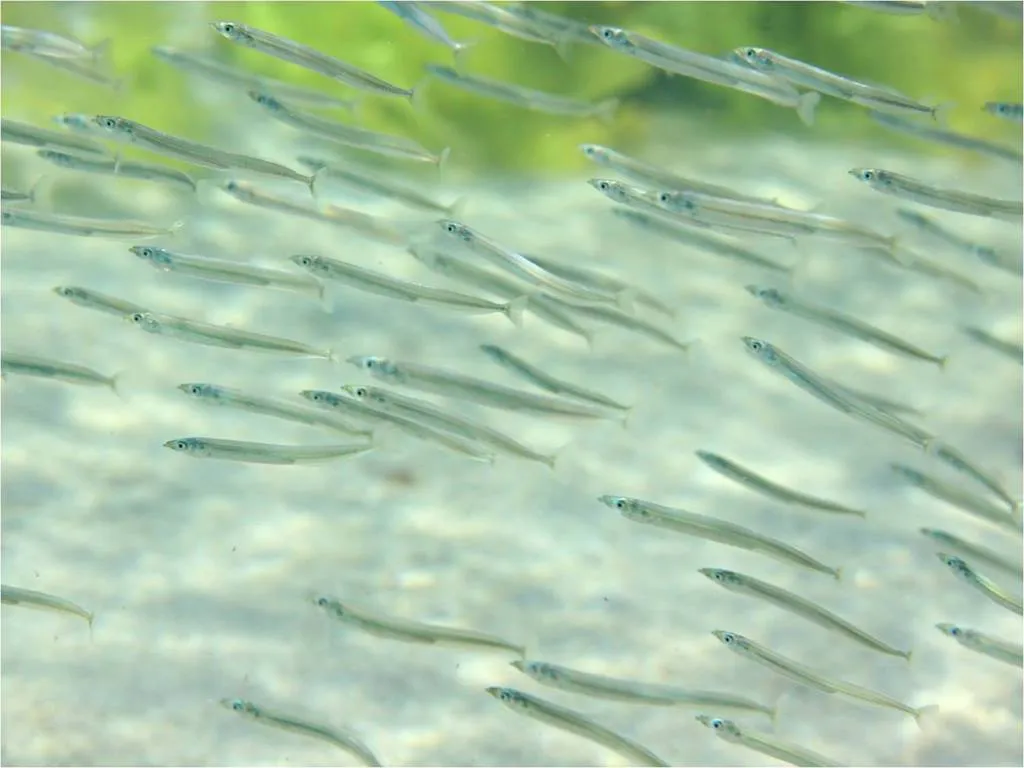
The RSPB and other environmental organisations have been campaigning for decades to end the industrial fishing of sandeels as an essential step towards protecting globally important seabird populations, such as Puffins, and wider marine biodiversity in the UK that rely on sandeels as a crucial food source.
In 2025, the closure of sandeel fisheries, implemented by the UK and Scottish governments was upheld, following a challenge by the EU. This means the UK has the right to stop this damaging fishing in its waters. We are hugely grateful to the many thousands of RSPB members, supporters and campaigners who stood with us – the closure offers renewed hope to many seabirds and other wildlife.
Providing the right breeding habitats is key to securing the Turtle Dove’s future here in the UK, particularly now that Turtle Dove hunting is under management in south-west Europe and has been since 2021.
It’s therefore fantastic that Operation Turtle Dove, a partnership between Natural England, Pensthorpe Conservation Trust, Fair to Nature and the RSPB had its most successful year ever in 2025. Funding from Tesco allowed the project’s team of advisers to grow and enabled the project to expand its work with a record 291 farm holdings and 203 non-farm holdings, creating an impressive 425 hectares (about 600 football pitches) of foraging plots for the birds and 475 active supplementary feeding sites. Over 100 volunteers have supported this work – thank you!
Working together with farmers, land managers, communities and volunteers, we’re helping to provide the habitats these summer visitors need.
Find out more about how we’re helping Turtle Doves here and to get involved, visit Operation Turtle Dove.

Millions of vultures have disappeared from the skies of South Asia and four species are now Critically Endangered. The reason for the losses? Scientists found that vultures that were consuming carcasses of cattle treated with the anti-inflammatory drug diclofenac, were dying. Removing veterinary diclofenac and other vulture-toxic drugs from the environment is a huge but important task.
The first ‘Vulture Safe Zone’ in Nepal was established in 2021, driven by awareness campaigns and the removal of toxic drugs. Building on that success, in 2025, alongside Bird Conservation Nepal (BCN) and Renewable World, we secured Darwin Initiative funding to create Nepal’s second official Vulture Safe Zone and support “cow retirement communities” – shelters where unproductive or abandoned cattle are cared for, preventing them from becoming feral as well as providing safe carcasses after they die for vultures to feed on. These represent important steps forward in helping vultures to recover. The White-rumped Vulture population in Nepal is now slowly increasing after 3 decades of global decline
Find out more about how we’re helping Asian vulture species here and the new project in Nepal.

Find out more about some of the species that we’re helping, thanks to your support.
These are just a few of the many success stories from 2025 that illustrate how we are making progress and turning the fortunes of some of the most threatened species around the world. We couldn’t do this without your support, however you give.
I am particularly proud of how our Species Volunteer Network is continuing to grow. Last year over 900 people gave up their time to be trained in skilled ‘hands-on’ conservation tasks, such as finding Stone-curlew nests and temporarily moving the eggs of chicks when farming operations take place, erecting temporary electric fences around Curlew nests, wardening Little Tern Colonies or putting up Swift nest boxes.
When I feel daunted by the size of the task ahead I think of the species such as Corncrake, Cirl Bunting, Bittern, Red Kite and White-tailed Eagle which, in all probability, you wouldn’t be able to see in the UK if it hadn’t been for the work of the RSPB and partners. Not to mention species like White-rumped Vulture, Seychelles Magpie Robin and Wilkins Bunting which you very likely wouldn’t be able to see anywhere in the world.

Andy first joined the RSPB as a Conservation Scientist in October 1988, working on the causes of the decline of the Cirl Bunting. Between 1992 and 2005 he led a team researching the effects of agricultural intensification on farmland birds. In 2005 he realised his heart lay in conservation delivery and moved sideways to lead the embryonic ‘Species Recovery Unit’ tasked with developing a strategy for species recovery. In 2018 he was appointed Head of Global Species Recovery.
