
News
The Government takes positive steps towards bird of prey protections
It has announced a call for evidence to assess the impacts of gamebird shooting.
8th Oct 2026
Learn how we work to uncover, investigate and document the illegal shooting, trapping or poisoning of birds of prey.

Despite being legally protected, birds of prey (also known as raptors) across the UK are still being illegally shot, trapped, and poisoned – often on land managed for gamebird shooting. These crimes threaten some of our rarest and most vulnerable species, like Golden Eagles and Hen Harriers.
Learn how the RSPB and our partners are challenging these crimes and fighting to protect these incredible birds.
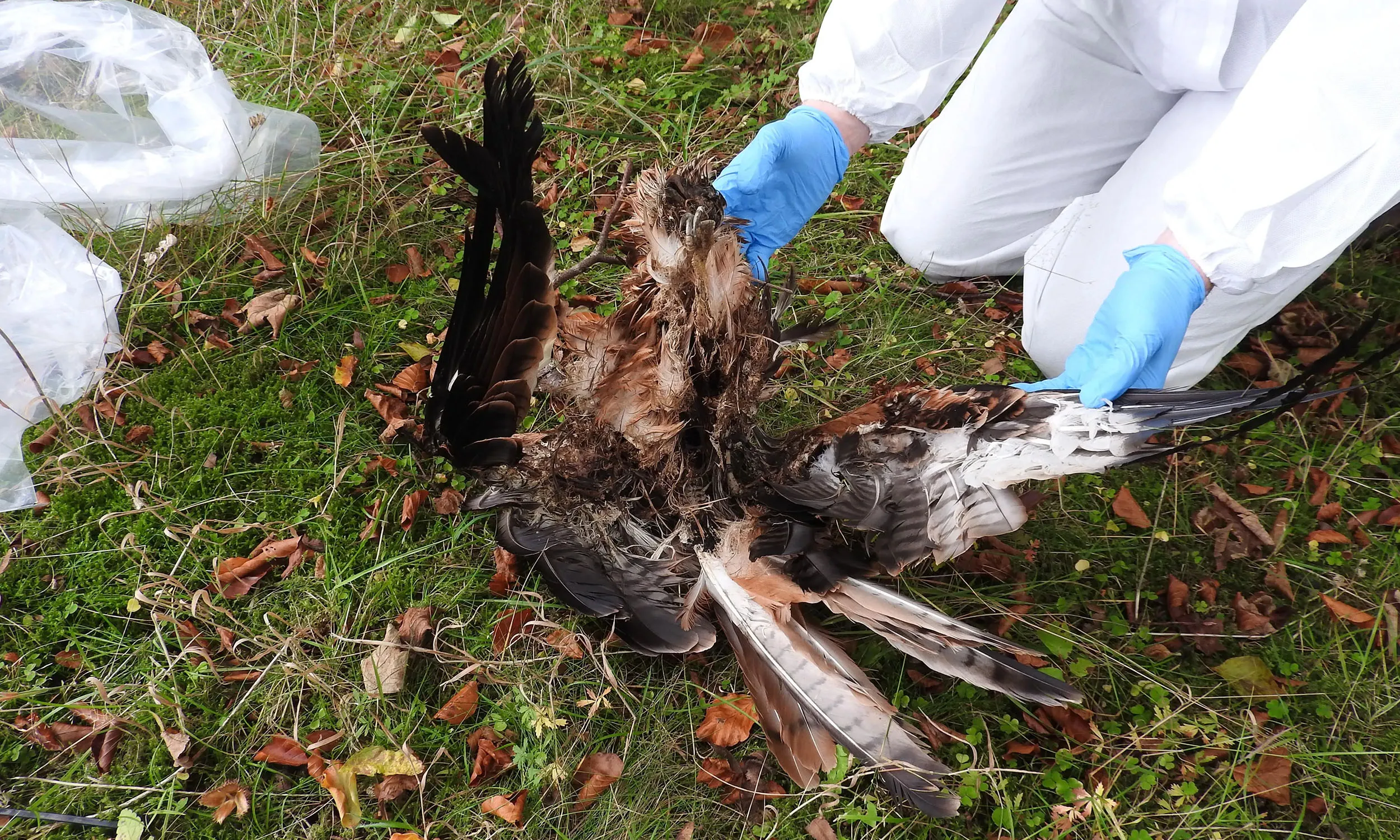
Bird of prey persecution is the illegal targeting and killing of bird of prey species and has been happening in the UK for decades. The RSPB Investigations team have recorded hundreds of shooting, trapping and poisoning incidents. These crimes often involve a variety of species from Buzzards, Peregrines and Sparrowhawks to rare and vulnerable species, like Golden Eagles, White-tailed Eagles and Hen Harriers.
The pressure of persecution is having a direct impact on many species and has resulted in some areas of the UK being devoid of birds of prey, despite having suitable habitat.
Although these figures are shocking, they represent only the tip of the iceberg. As many of these crimes are taking place in remote and inaccessible parts of the UK, the number detected represents only a small fraction of the actual number of crimes being committed. Concerningly, the true scale of bird of prey persecution is likely to be significantly higher.
The majority of these crimes are significantly linked to land managed for gamebird shooting where some individuals perceive birds of prey as a threat to their gamebird stocks. In the uplands of the UK, these crimes are predominately associated with grouse shooting and in the lowland areas, pheasant and partridge shooting.
In the case of the Hen Harrier, the illegal killing of this species has been recognised as the main threat to their recovery, supressing national population levels of this Red-listed species well below their potential.

Satellite tags have become a key conservation tool in recent decades, helping to track the movement and survival of individual birds of prey in near real time. Data from satellite tags have given previously unknown insights into the lives of some species – informing and enhancing our knowledge of birds and their ecology.
In addition to their scientific value, satellite tags have become a key tool in helping to detect bird of prey persecution incidents which would otherwise have gone unseen. They can reveal where and when a bird has died or suspiciously disappeared. In many cases, the recovered body of a satellite tagged bird of prey is found to have been the victim of illegal persecution – confirmed by postmortem analysis or toxicological testing.
However, in many cases, the satellite tagged bird’s body and tag are never found. If the bird died of natural causes, the satellite tag should continue to transmit, allowing the body and/or tag to be recovered. Therefore, when a satellite tag suddenly stops transmitting, it is highly suspected that it has been destroyed, and the bird illegally killed. In these instances, the police are notified, and land searches conducted. In the majority of these cases, the tag and the bird's body are never located.
Between 2010 and 2024, 112 satellite tagged Hen Harriers suspiciously disappeared across the UK. The majority of these birds sent their last transmission on or near land managed for grouse shooting.
As only a small proportion of the UK’s bird of prey population is satellite tagged, the true scale is likely to be significantly greater.
.jpg)
Read our reports to learn more about bird of prey persecution in the UK.
.jpg)
Using the last decade of data, this report reveals how persecution is impacting birds of prey in the UK and makes the case for the urgent legislative change needed to better protect these iconic species.
Although Hen Harriers have the highest level of protection under UK law, persecution is the main factor preventing its recovery.

Read ‘Hen Harriers in the firing line’ to find out more about this issue and how you can support our urgent call for the licensing of grouse shooting.

In 2023, the Birdcrime report revealed that over a 15-year period (2009-2023) at least 1,529 confirmed incidents – involving 1,344 birds of prey – were recorded, with the majority taking place on or near land managed for gamebird shooting.
The RSPB Investigations team is dedicated to tackling and preventing crimes against birds of prey. Catching those responsible requires persistence, dedication and determination. We work closely with the public, staff, police, National Wildlife Crime Unit and other agencies, to help detect these crimes and convict those involved.
RSPB Investigations Officers spend long hours in the field detecting and investigating these crimes, obtaining vital evidence which can be passed to the police. The team works closely with other conservation organisations, the police and the National Wildlife Crime Unit to assist in getting these cases to court.
The RSPB Raptor Persecution Map Hub is an interactive tool which allows users to explore where confirmed bird of prey persecution incidents have occurred. Visit ArcGIS Dashboards to find out more.
The RSPB Investigations and reserve staff and volunteers around the UK work around the clock to protect birds of prey, whether its monitoring persecution hotspots – where a number of crimes have taken place over several years – or protecting a nest site during the breeding season with 24-hour surveillance and field monitoring. The level of dedication and commitment given to protecting these birds and their offspring from those who would cause them harm is remarkable.
We believe that without a change to the law, birds of prey will continue to be the victim of persecution. We are calling for the introduction of licensing for all gamebird shooting across the UK, to effectively deter these crimes.
In 2024, this progressive legislation was introduced in Scotland for grouse shooting as part of the Wildlife Management and Muirburn (Scotland) Act. Under this new law, if evidence suggests that a bird of prey has been illegally killed (based on a civil burden of proof) then the estate’s licence to shoot grouse could be revoked. This measured and proportionate approach means that only those shooting estates that chose to ignore the law will be penalised.

As a charity we rely on your support, and we need it now more than ever.
Operating across all four countries of the UK, our staff work tirelessly to bring those committing these wildlife crimes to justice.
.jpg)
Birds of prey are being shot, trapped and poisoned across the UK. Give a regular gift and help keep them in our skies.
Many of the bird of prey persecution incidents which we follow up are reported to us by members of the public.
If you see something suspicious involving a bird of prey, reporting it quickly can make a huge difference. To find out more about what to report and how, follow the link below.
As a small team, we rely on members of the public to be our eyes and ears when out and about in the countryside. Many cases which reach court are the result of a quick-thinking and concerned member of the public contacting us.”
You play a major role in the fight against bird of prey persecution.
Current protective legislation is failing to prevent the illegal killing of birds of prey in the UK’s uplands. We’re calling for the introduction of a robust licensing system across the UK to put an end to these crimes.

Add your voice and support our campaign. Together, we can push for change that ensures upland landscapes work for both wildlife and people.


