.jpg)
BirdTrack
Please also report sick and dead birds to BirdTrack via the online portal or through the BirdTrack app. This helps provide data to better understand how diseases are affecting bird populations.
Knowing where to report sick or dead birds can be confusing, but it’s important you do. We’ve put together this guide to help make it a little easier.

For the latest information on avian flu, visit our dedicated Avian Flu web page. To help prevent spread please:
Finding a sick or dead bird can be very distressing but reporting it to the right organisations helps monitor outbreaks and track the spread of disease. Click below to find out when and where to report.
Public reports of sick and dead birds are a key part of tracking diseases in the UK. With the ongoing threat of avian flu and other diseases such as Trichomonosis and Usutu affecting UK birds, it’s become even more important.
Sighting reports provide crucial data on wild bird mortality and allow relevant agencies to test dead birds for diseases and other causes of death. This helps inform appropriate responses, including ways to mitigate the impacts of disease on our precious wildlife.
For avian flu, reports provide critical information on where the virus is, what species it’s affecting, how it’s changing, and the level of risk for wild birds. This allows those on the ground to be prepared and helps identify where conservation actions are needed.
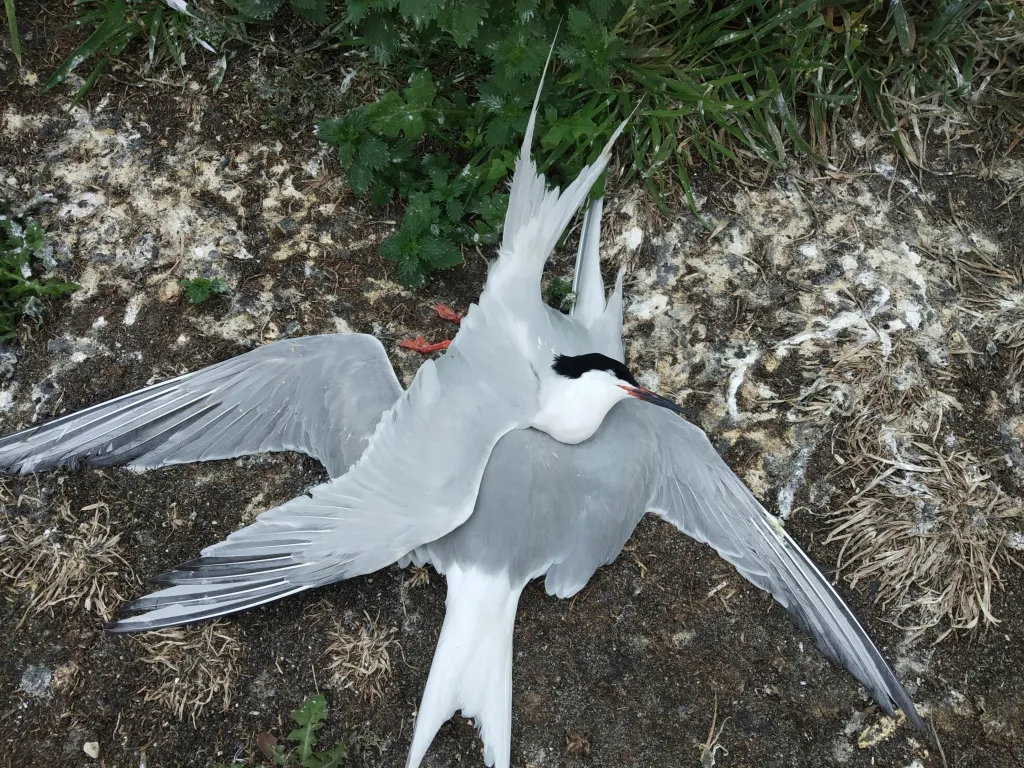
If you suspect a wildlife crime has taken place, please contact your local police. Further guidance can be found on the RSPB website here. Please also use the below steps to report the dead bird.
Do not touch dead or sick birds. Instead, please report any dead wild birds you find to the relevant Government department:
These Government departments are responsible for monitoring avian flu and other wildlife diseases in the UK and may collect birds reported for disease testing.

In addition to the above guidance, please also report any sick or dead birds you find in your garden to Garden Wildlife Health.
Garden Wildlife Health is a collaborative project between the Zoological Society of London (ZSL), the British Trust for Ornithology (BTO), Froglife and the RSPB, which monitors the health of British wildlife and identifies disease threats.
For further information and guidance on what to do if you find sick or dead birds in your garden, visit our page Top tips to help reduce disease in garden birds.
Please also report sick and dead birds to BirdTrack via the online portal or through the BirdTrack app. This helps provide data to better understand how diseases are affecting bird populations.
If the bird has a ring and you can safely view the ring details, please report this here. Further information can be found on the BTO website.
Please do not touch dead wild birds unless necessary, and always follow Government guidance. Further advice can be found below.
Please do not touch or handle dead or sick birds. If you’re concerned about sick or dead birds near paths or hides, please tell an RSPB staff member, or contact the reserve, so we can take appropriate action where needed.
There’s limited evidence that removing dead birds helps prevent the spread of avian influenza, so in most cases, we are not collecting dead birds unless there’s a significant public health risk.
Removing dead birds carries risks to both our workforce and wild birds - collecting carcasses can cause disturbance, stress and the movement of other birds, which risks spreading disease further. When we do collect dead birds, we provide all staff with personal protective equipment (PPE), but we can’t remove the risk entirely, which is why any decision to remove carcasses must be justified.
Please do not touch dead or sick birds. If you’re concerned about dead birds in public areas, please report them to your local authority. Dead birds on private land should be reported to the landowner or land manager.
Please report (to APHA in GB or DAERA in NI) if you see any of the following in wild mammals:
Sick or dead marine animals (dolphins, porpoise, whales, seals and other species such as large sharks, marine turtles) should be reported to:
You can find advice on who to call here: Found an Injured Bird? Here's What to Do.
Join us in the fight to tackle avian flu and other wildlife diseases by making a one-off donation or sign up to donate monthly.

With a regular donation, you can help us plan ahead, raise our ambitions and take even bolder steps to combat these growing threats.
Thank you for caring, and for helping us track and tackle wildlife disease.


