RSPB - giving nature a home
Search
Close
Skip to content
Shop | Community
Log in | Sign up
  • About the RSPB
      About us
    • Our History
    • What we do
    • How the RSPB is run
    • RSPB Media Centre
    • RSPB job vacancies
    • Fair Work First statement
    • At home & abroad
    • International
    • England
    • Northern Ireland
    • Scotland
    • Wales
    • Get in touch
    • Contact us
    • RSPB offices
    • Connect with us your way
      Our activities
    • Gardening for wildlife

      Gardening for wildlife

      See our ideas to keep you connected to nature during coronavirus

    • Connect with us your way

      Connect with us your way

      From our regular emails to your favourite social media, there’s more than one way to keep in touch with nature

    • Our History

      Our History

      Discover how a campaign against feathers in fashion sparked a global force to save nature with more than a million members

  • Our work
      Nature conservation
    • Conservation and sustainability
    • Projects
    • Landscape scale conservation
    • Centre for Conservation Science
    • Satellite tracking birds
    • RSPB News
    • RSPB News
    • 'Our work' blog
    • Policy and Insight
    • Policy and Insight: England and Westminster
    • Casework
      Featured news
    • Mindful mornings

      Mindful mornings

      If you can’t get outside, why not bring the outside in by downloading our bird song radio app?

    • How nature can help protect our homes

      How nature can help protect our homes

      Following the floods this winter, watch how one area is using nature as a natural protector.

    • Casework

      Casework

      Catch up with the RSPB’s own nature detectives on the case as they look to save some very special places.

  • Birds and wildlife
      Wildlife guides
    • Identify a bird
    • Bird A-Z
    • Other garden wildlife
    • Guide to birdwatching
    • What is the Red List for UK birds?
    • Nature's Calendar
    • Nature's Home magazine
    • The RSPB Magazine
    • Birds and wildlife articles
    • RSPB Podcasts
    • Nature's Home blog
    • Birds and Wildlife Advice
    • How you can help birds
    • Gardening for wildlife
    • Ask an expert
    • Wildlife and the law
    • How to report crimes against wild birds
    • Wild Isles
      Most popular bird guides this month
    • Bird migration

      Bird migration

      Migrating birds have travelled thousands of miles just to get here. Find out why.

    • Who to contact if you spot an injured or baby bird

      Who to contact if you spot an injured or baby bird

      Read more advice about what to do if you find a bird that needs help

    • In for a duck

      In for a duck

      It’s nesting season for our waterfowl too but what are the rules you need to follow for ducks, geese or swans?

  • Get Involved
      Activities
    • Big Garden Birdwatch
    • Nature on Your Doorstep
    • RSPB Competitions
    • Dolphinwatch
    • There are so many ways to save nature
    • Community & advice
    • RSPB Youth Groups
    • Join our local groups
    • How green are you?
    • RSPB Community
    • Get involved blog
    • Volunteering & fundraising
    • Volunteer
    • Fundraise
    • Help nature thrive as a corporate partner
    • Our grant funders
    • Conservation investment
    • Campaigning
    • Campaigning in Scotland
    • Campaigning in Wales
    • Campaigning in England
    • Campaigning in Northern Ireland
    • The nature and climate emergency
    • Protecting wildlife sites
    • Campaign with us
    • Action for Nature Toolkit
    • Save Our Wild Isles
    • Top activities to do
    • Nature on Your Doorstep

      Nature on Your Doorstep

      Great ideas on how your garden, or even a small backyard or balcony, can become a mini nature reserve

    • How green are you?

      How green are you?

      See some of the ways you can get into green living.

    • Campaigning

      Campaigning

  • Reserves & events
      Reserves A-Z
    • Consall Woods
    • Fore Wood
    • Haweswater
    • Langford Lowfields
    • Loch Spynie
    • Oronsay
    • Otmoor
    • Loch Druidibeg
    • Events, dates & inspiration
    • Events
    • COVID-19 information
    • Places to visit blog
    • #ThanksToYou
    • Experience the Wild with us
    • Explore great days out
    • Top reserves this month
    • Marshside

      Marshside

      This fantastic wetland site is located north of Southport town centre and has some of the best wildlife in the region.

    • Lytchett Fields

      Lytchett Fields

      The reserve has seen more than thirty species of wading birds.

    • Arne

      Arne

      Heathland home to more than 2565 species.

  • Fun & learning
      For teachers
    • Supporting resources
    • Wild Challenge
    • School outreach visits
    • Big Schools Birdwatch
    • Sign up for the newsletter
    • School trip ideas
    • For kids
    • Fun factoids for all the family
    • Games and activities
    • Kids stories
    • RSPB kids competitions
    • Local Youth Groups
    • Birdgirl’s top tips on how to beat climate anxiety
    • For families
    • Big Wild Sleepout
    • Wild Challenge
    • Nature reserves for families
    • Robin Robin is back!
    • Cameron's Cottage
    • Your Support
    • About Cameron's cottage
    • Latest kids' activities
    • Wild Challenge

      Wild Challenge

      Nature is an adventure waiting to be had. Get out, get busy and get wild!

    • Fun factoids for all the family

      Fun factoids for all the family

      Find out more about the nature and wildlife outside your window.

    • Youth membership

      Youth membership

      As well as a free gift and magazines, you’ll get loads of ideas for activities to try at home.

  • Join & Donate
      Join us
    • Family membership
    • Youth membership
    • Help save nature, for life. Please become a Life Member today
    • Renew your membership
    • Donate
    • Philanthropy & Major Gifts
    • Our appeals
    • Make a one-off donation
    • Make a regular donation
    • In Memory Donations
    • Plant a celebration tree
    • In Memory Booklet
    • Leave a gift to nature in your Will
    • Why Include a Gift to Nature in Your Will
    • How to Include us in Your Will
    • Information for executors & solicitors
    • Download your free guide
    • Other ways to help
    • Gift Aid
    • Support us when you shop
    • RSPB Images
    • RSPB second-hand binocular scheme
    • Win with the RSPB
    • Payroll Giving
    • Stamp out albatross deaths
  • Login to your account Sign up for an RSPB account
  • Shop
  • Community
  • Home
  • Birds and wildlife
  • Wildlife guides
  • Bird A-Z
  • Yellowhammer

Yellowhammer

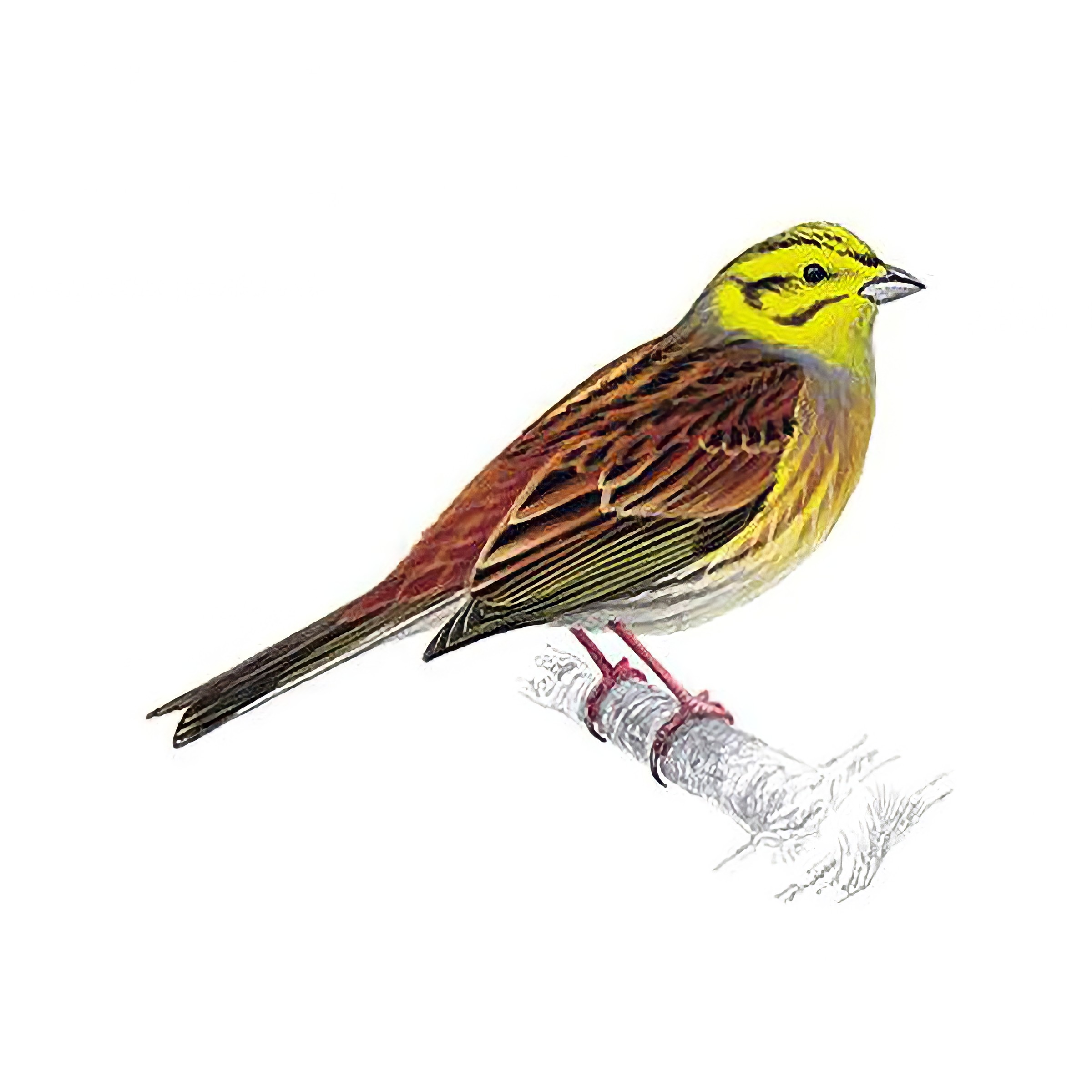
Yellowhammer (male)
Yellowhammer (male)
Yellowhammer (female)
  • Scientific name: Emberiza citrinella
  • Bird family: Buntings
  • UK conservation status: Red
  • Protected by The Wildlife and Countryside Act 1981

Yellowhammer song audio

Your browser does not support this audio feature.

Patrik Åberg, Xeno-canto

Key information

Male yellowhammers are unmistakeable with a bright yellow head and underparts, brown back streaked with black, and chestnut rump. In flight it shows white outer tail feathers. They are often seen perched on top of a hedge or bush, singing.

Its recent population decline make it a Red List species.

What they eat:

Seeds and insects.

Measurements:

Length:
16-16.5cm
Wingspan:
23-29.5cm
Weight:
25-36g

Population:

UK breeding is the number of pairs breeding annually. UK wintering is the number of individuals present from October to March. UK passage is the number of individuals passing through on migration in spring and/or autumn.
UK breeding:
700,000 territories

Identifying features:

This bird species has different identifying features depending on sex/age/season.

Yellowhammer (male)

Male yellowhammer
Feather colour: Black Brown Cream/buff Orange Yellow
Leg colour: Brown Pink
Beak: Black Brown Short Chunky
Natural habitats: Farmland Grassland Heathland Urban and suburban

Yellowhammer (female)

Female yellowhammer
Feather colour: Black Brown Cream/buff Orange Yellow
Leg colour: Brown Pink
Beak: Black Brown Short Chunky
Natural habitats: Farmland Grassland Heathland Urban and suburban

Similar birds:

Cirl bunting, male
Cirl bunting
Yellow wagtail
Yellow wagtail

Where and when to see them

Yellowhammers are found across the UK. They are least abundant in the north and west and absent from some upland areas, such as the Pennines and Highlands of Scotland, as well as some lowland areas, such as the Inner Hebrides and the Orkneys. Look in open countryside with bushes and hedgerows.

* This map is intended as a guide. It shows general distribution rather than detailed, localised populations.
  • Resident
  • Passage
  • Summer
  • Winter
Yellowhammer distribution map

You can see yellowhammers all year round.

  • jan
  • feb
  • mar
  • apr
  • may
  • jun
  • jul
  • aug
  • sep
  • oct
  • nov
  • dec

RSPB reserves

  • RSPB Aylesbeare Common
  • RSPB Winterbourne Downs
  • RSPB Gwenffrwd-Dinas
  • RSPB Budby South Forest
  • RSPB Labrador Bay

Video

A close up look at a yellowhammer.

A close up look at a yellowhammer.

Yellowhammer video screenshot
 Mute swan Cygnus olor, cygnet on adult's back seeking shelter, Langford

Save nature, donate now

  • More than 40 million birds have vanished from the UK in 50 years
  • One in ten of our wildlife is critically endangered

Within your lifetime, species such as song thrushes, cuckoos and even hedgehogs could die out altogether. As the UK’s largest nature conservation charity, the RSPB use your donations to restore habitats, protect species and save nature. Give a little today and make a big difference tomorrow. Thank you.

DONATE NOW

Share this

  • Facebook
  • Twitter
  • Pinterest

You might also be interested in

Male stonechat on bramble stem

Sounds of... heathland

Go on a sun dappled audio tour of the birds which choose to live among the trees.
Corn bunting perched on top of a branch

Top ten farmland birds

What are farmland birds?

We spend 90% of net income on conservation, public education and advocacy

Quick links

  • Contact us
  • Online Community
  • Vacancies
  • Media centre

Information for

  • Teachers
  • Policy makers
  • Farmers & landowners
  • Scientists

Our work in

  • England
  • Scotland
  • Wales
  • Northern Ireland
  • International

Follow us

  • Facebook
  • Twitter
  • Pinterest
  • Instagram
  • Email

Partnering with

The RSPB is a member of BirdLife International.

The RSPB is a member of BirdLife International. Find out more about the partnership

Fundraising Regulator logo OSCR logo

© The Royal Society for the Protection of Birds (RSPB) is a registered charity: England and Wales no. 207076, Scotland no. SC037654

  • Terms & conditions
  • Cookie policy
  • Privacy policy
  • Charter and statutes
  • About our site
  • Modern Slavery Act

Cookie Preferences

Accepting all non-essential cookies helps us to personalise your experience

Edit settings
Accept all

Essential cookies are required

These cookies are required for basic web functions

Enable analytics cookies

Allow us to collect anonymised performance data

Enable marketing cookies

Allow us to personalise your experience

Save settings
Read our cookie policy