
News
The Government takes positive steps towards bird of prey protections
It has announced a call for evidence to assess the impacts of gamebird shooting.
8th Oct 2026
RSPB is working with Harwich Haven Authority to use a natural solution to restore eroded saltmarsh.
5 min read
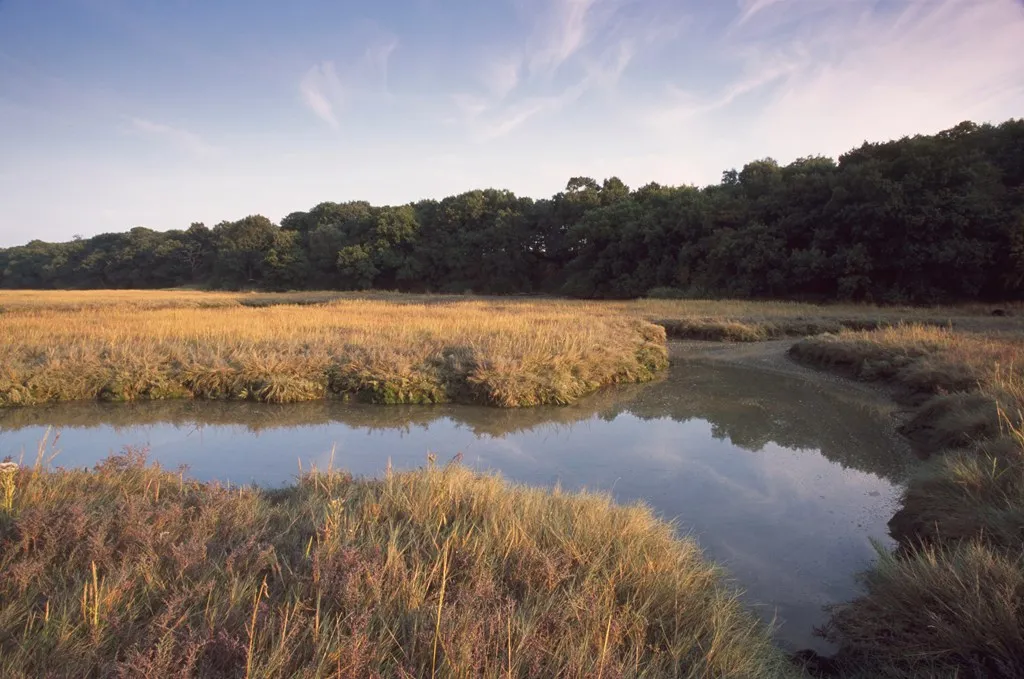
RSPB Stour Estuary on the Suffolk/Essex border, is working closely with the Harwich Haven Authority (HHA) to help restore saltmarsh habitat on the nature reserve.
The saltmarsh has succumbed to erosion, meaning this rare and special habitat which normally attracts a multitude of threatened species including Black-tailed Godwits, Redshank and Curlew, is gradually disappearing.
As part of their work, HHA needs to keep the estuary and nearby bay clear of a build up of sediment to keep a clear navigation channel. But this year sediment that is removed as part of this routine maintenance work will now be repurposed and deposited at RSPB Stour Estuary, helping to rebuild the saltmarsh habitat back to its former glory - all 76 hectares of it (the size of 107 football pitches), using a natural solution.
We look forward to welcoming even more Black-tailed Godwits, Redshank, Turnstones, Curlew, Grey Plovers, Knot, Dunlin, Wigeon, Teal, Pintail, Mallard, Shelduck and Dark-bellied Brent Geese to the restored saltmarsh over the course of the next year!
Currently in phase 1 of delivering this work, HHA and RSPB we will work together to deliver phase 2 of the saltmarsh restoration work in the latter part of this year.
.jpg)


.jpg)

Rick Vonk, Site Manager at RSPB Stour Estuary said: “Re-using dredged sediment is a clever way of using a natural solution to solve the problem of saltmarsh loss. We look forward to seeing the results of the work with HHA, and how it will help wading and wildfowl birds thrive at RSPB Stour Estuary in the future.”
This project will safeguard the Haven’s vital navigation channel while turning routine dredging into a nature-positive opportunity,” said Harwich Haven Authority’s Harbour Engineer, Jim Warner. Maintaining the Haven’s navigation channel is essential to the national economy and supports thousands of local jobs, whilst ensuring the smooth operation of one of the UK’s busiest ports. Through the initiative, we’re able to reuse the sediment from this work to help restore and protect the Haven’s vulnerable saltmarsh. This approach delivers long-term benefits for both local communities and the wildlife that depends on these coastal habitats."
Saltmarsh is a rare and special habitat in the UK that teems with wildlife, but much has been lost due to sea level rise and change of land use. Dredged sediment will help to restore eroded saltmarsh which regularly floods with seawater and creates the unique habitat found there. In time, the restored saltmarsh will repopulate with small salt tolerant plants that help to catch more mud and silt, continually growing and expanding this special habitat.
Dr Natalie Hicks, from the School of Life Sciences at the University of Essex, said: “University of Essex researchers are delighted to be involved in assessing the recovery of the saltmarsh following the addition of dredged sediment.
There is a real potential for this novel approach to enhance saltmarsh restoration and future proof our coastlines, particularly under rising sea levels due to climate change. Saltmarshes play a key role in supporting biodiversity, protecting our coasts and taking up and storing carbon, so this restoration and protection may prove pivotal in tackling climate change. This project demonstrates how industry, conservation organisations and academia can work together to protect and restore our coasts for the future.”
“This project will safeguard the Haven’s vital navigation channel while turning routine dredging into a nature-positive opportunity, said Harwich Haven Authority’s Harbour Engineer, Jim Warner.
Maintaining the Haven’s navigation channel is essential to the national economy and supports thousands of local jobs, whilst ensuring the smooth operation of one of the UK’s busiest ports. Through the this initiative, we’re able to reuse the sediment from this work to help restore and protect the Haven’s vulnerable saltmarsh. This approach delivers long-term benefits for both local communities and the wildlife that depends on these coastal habitats."


