
“My strategy is to respond to a planning application as a comment (not in opposition or supporting it) that reminds the planners of the nature crisis. This can strengthen a planner's case for including ecological benefits.”
An inspiring read about the volunteers who are making sure that Swifts have more homes to return to in spring.
.jpg)
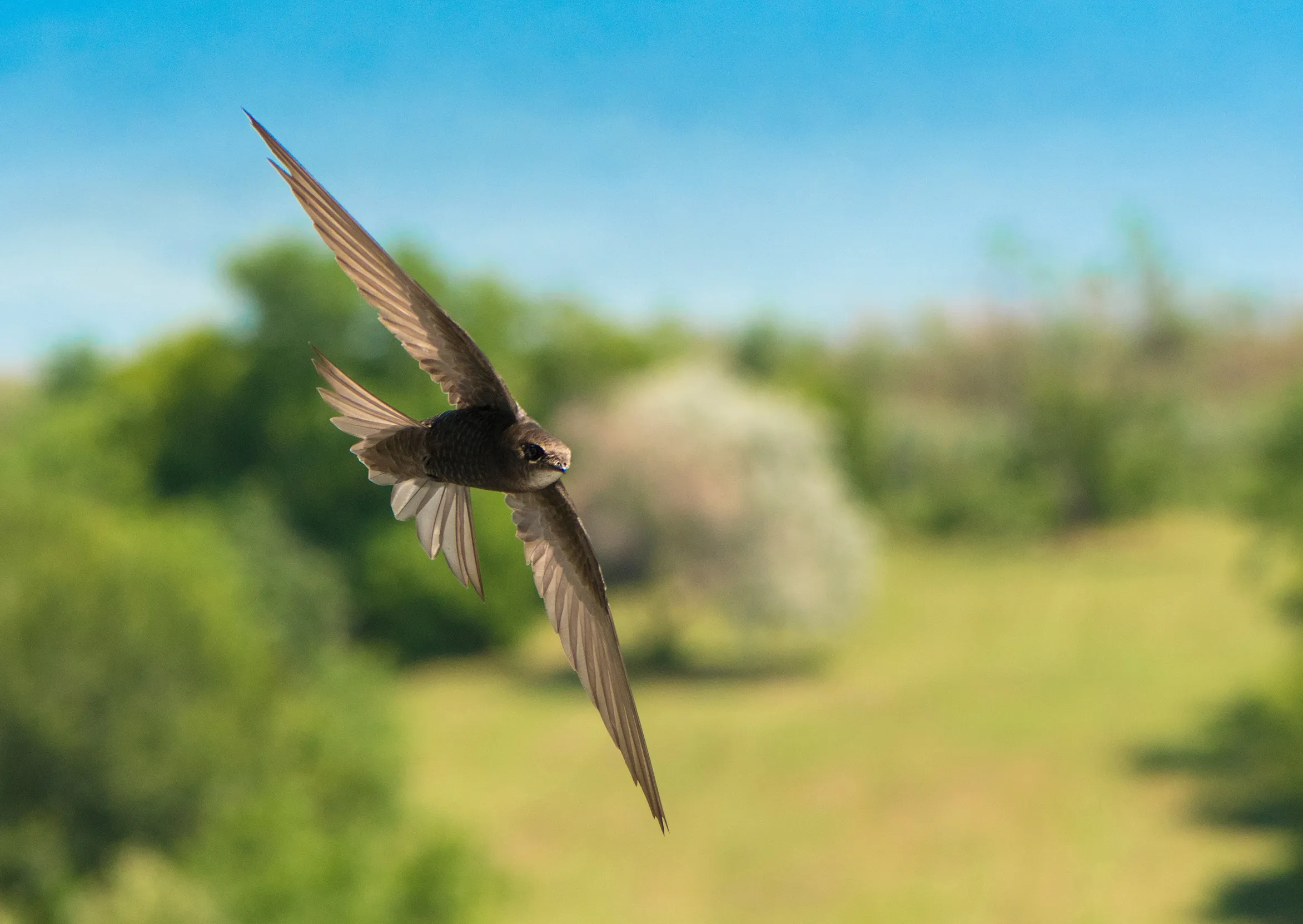
If you are lucky enough to have Swifts living in your neighbourhood, you might have noticed it has gone quiet since they have flown south to spend the winter months in African skies. They won’t return until late April or early May next year. In the brief period they are here in the UK, they have only a few months to mate and raise their young.
Historically, Swifts have made use of small gaps and holes in buildings to raise their chicks, and recent research has shown that most Swifts try to return to the same nesting site each spring. With such a short breeding season, if they return from their long migration to find their traditional nests blocked up or gone completely, their chance of successfully raising chicks is greatly reduced since it takes a lot of energy and time to find another nest site.
Changes in building methods have also left Swifts with fewer spaces for nesting, reducing the number of potential new sites available to them. And though it is illegal to intentionally disturb or destroy nests during the breeding season, protections do not apply when birds have left.
A loss of suitable nesting sites has been accompanied by a 70% plummet in Swift populations from 1995-2024, and so we believe it could be one of the main reasons for their decline in the UK.
Now that the Swifts have gone for the year, what can we do to help them? In this article, through the stories of some of our volunteers, we hope to inspire you to get involved and make sure that Swifts have homes to come back to next spring.
If you are unsure where to begin and need support, you could contact one of the many volunteer groups across the UK who work tirelessly in their communities to help Swifts. These groups are made up of passionate people who can help you find the best way to support Swifts where you live and may have access to local knowledge and resources.
Many RSPB Local Groups support local Swift conservation efforts, and there is also the well-established Swift Local Network (SLN) which is made up of independent Swift groups across the UK. The annual Swift Awareness Week was set up by the SLN groups in 2018. This year they collectively held over 100 events across the country.
In Northern Ireland, the RSPB Antrim Local Group has been very active with their ‘Homes for Swifts’ project. Over three years, first in Parkgate, then in Ballyclare and most recently the villages of Ballynure and Straid, the group have installed over 130 swift nest boxes (in pairs) with accompanying Swift calling devices, which help attract the birds to the boxes.
Michael Ingleston, Co-leader for the RSPB Antrim Local Group describes how the project works:
“Our group has worked to raise awareness of Swifts, for example through our successful 2012 campaign to name the swift ‘Bird of the Borough’, school visits and talks to community groups. While worthwhile, our ‘Our Homes for Swifts’ project has proven more effective. After a talk, people might install a nest box or protect existing nests during renovations. However, this project simplifies the process. We provide people with the boxes and callers rather than simply hoping they’ll take action. Even if they can’t install these themselves, we collaborate with BT Openreach to assist with the installation for homeowners. This removes all the barriers for people to help Swifts.”
Kate McAllister is secretary for the group and first had the idea of applying for funding from the Aviva ‘Save Our Wild Isles’ Community Fund and using it to provide Swift boxes and caller systems for people in Antrim and Newtownabbey Borough.
Kate says: “This project has given our club a public face in our community. We are known by local residents for what we do for Swifts as well as among councillors and council staff. I am constantly amazed at the enthusiasm of the participants in our project, Homes for Swifts. They may know nothing about Swifts at the start, but quickly become entranced by them, excited to help them, and believe they are doing something practical to help nature by putting up Swift boxes.”
Edward McKee, treasurer for the group, has made the Swift nest boxes for the project in his garage and also put together the caller systems from components he ordered:
”Swifts are ethereal creatures and they have so little connection with terra firma that providing them with a home is about all we can do to help their perilous state. So making Swift boxes and seeing them being used by nesting birds is a tremendous thrill.”
.JPEG)
In the first year, they ordered both boxes and callers from Action for Swifts but making everything from scratch has made their grant money go a lot further and now they can sustain the project with the income raised from monthly meetings and giving talks to other community groups.
Micheal adds: “Having a project has added a new dimension to our group and I recommend it to other groups if they are able to. It doesn’t have to be ambitious, just start with something easily manageable. We began by doing Swift surveys and entering the data on the Swift Mapper app and then built on that with Homes for Swifts.”
Every year during the breeding season, Swift enthusiasts survey their local area and record sightings on Swift Mapper, a web-based mapping system and mobile app. Information recorded includes suspected nesting sites and locations of Swift ‘screaming parties’ flying at roof height which can indicate nests nearby. If you are a keen Swift watcher, you might already know where your local birds are nesting.
By finding ‘hotspots’ of Swift nests and activity, this can help decide whether to put up a Swift brick or box on your house, or even where to start a ‘Swift Street’. Since Swifts like to nest in colonies, the closer boxes or bricks are to other Swifts, the more likely they are to be used. A bit of patience is also key; it can take a few years for Swifts to start using new nesting sites.
Creating a Swift Street can be a fantastic way to bring a community together, and volunteer Suzanne from the RSPB Manchester Local Group describes how she helped create one on her street in Swinton, Salford.
“I had messaged our community group and asked if anyone knew about our Swifts and where they were nesting. Initially we were unsuccessful in understanding where they were, but in Spring 2024 we struck gold and finally worked it out. “
“With advice and guidance from Roshni, the Manchester RSPB Community Officer at the time, we used our group to share news of the Swift Street. The local response was incredible, with so many families keen to help and more than 100 boxes requested.
"Roshni and I visited each home who had requested a Swift box, and we helped the families select where their boxes should be positioned. Roshni gathered support from a local college to make our boxes and another local volunteer Haldis made nest cups. They were installed in March 2025, with 25 going up on that first day. We have now installed more than 100 with the help of a local roofer, Ryan.”


As spring arrived this year, Suzanne and the rest of the street were delighted when more and more Swifts began to arrive.
“We were craning our necks with excitement to see the Swifts prospecting our new boxes, and each evening we were watching the numbers building up, messaging each other, in awe of their screaming parties.”
“Neighbours all had eyes to the skies with daily updates on our neighbourhood group. We counted 30 birds which is a small increase on last year, so this is super positive. We also helped with Swift surveys with lots of us recording on Swift Mapper. We also have plans to set up our own social media page as an autumn job. Watch this space!”
Funding for the Manchester Swift project was made possible thanks to the support of players of Peoples’ Postcode Lottery.
Whilst it will soon be a legal requirement in Scotland to install Swift bricks in new buildings, despite much campaigning, the rest of the UK still falls short of this simple measure. Although some developers are leading the way, without legal requirements, Swift groups and volunteers have to work with the planning system to make sure that bricks are incorporated into new buildings. As part of this they often have to demonstrate that they are minimising harm and providing benefits to wildlife.
John Davison, a volunteer with the West Midlands Swift Champions, has played a key role in the region in getting at least 700 Swift bricks required through planning conditions by local authorities since 2024. His achievements demonstrate the remarkable impact volunteers can make with just a computer, the right support, and a little time to spare.
John explains how he first got involved:
“A few years ago, a Swift group called 'Swift Friends Wyre Forest' was set up not far from me. The group raises awareness by giving talks or handing out information, whilst I was directed to respond to planning applications. I cover other local authorities and in recent years I have been a volunteer Swift Champion with the RSPB in the West Midlands. Being in a group is more enjoyable as we can compare notes and work from a pool of information about the birds.”
Planning applications for developments can be found on local council websites through a planning portal, where anyone can submit comments on active applications. The comments are reviewed by local planning case officers, who then make a decision on whether to approve an application and include the recommendations. By focusing on larger developments with lots of opportunity for Swift bricks, volunteers can make a bigger impact.
“My strategy is to respond to a planning application as a comment (not in opposition or supporting it) that reminds the planners of the nature crisis. This can strengthen a planner's case for including ecological benefits.”
“I try to go quickly through the weekly planning list, seeking out the applications for new housing developments. Life can be very busy and my philosophy is, when short of time, to be brief and unspecific rather than not responding at all. I do think that having more people respond to planning applications would make a difference. We already have too many buildings that are sealed up tight and resistant to crevice-dependent nesting birds such as Swifts.”
If you are feeling inspired by the volunteers in this article, here are some ways you can get involved: