Great news for one of the UK’s rarest birds, the Capercaillie!
Numbers of Capercaillie at our RSPB Abernethy nature reserve have increased by 50% since 2020.

On this page
We’re celebrating great news at RSPB Abernethy – numbers of Capercaillie have increased by 50% in the last five years.
A history of declines
Capercaillie are a large grouse, only found in Scotland’s Caledonian pine forests. Across Scotland, their numbers have been declining significantly for a number of years. This is due to a decline in their habitat, predation of their eggs and chicks, colliding with deer fences, and human disturbance. Sadly, the species is at serious risk of extinction. The most recent survey, in 2021–2022, estimated that just 532 Capercaillie remain – the lowest recorded numbers since records began in 1992–1994.
Capercaillie are counted by ‘lekking males’. In 2021, just 20 were counted at RSPB Abernethy, but by 2025, this number had increased to 30. Lekking describes the male’s courtship behaviour, where they perform a display of clicks, pops and ‘flutter jumps’.

Our work at Abernethy
Abernethy is one of the last remaining Capercaillie strongholds, so we’re doing all we can to secure this species. Here, we’re using a remote-controlled mower to remove the heather in difficult terrain. This encourages Blaeberry to grow, which is an important food source and hosts moth caterpillars that are an important food for Capercaillie chicks. The mower also helps create open bare areas, where the chicks can stay warm and dry after rainfall.
We’re also using virtual fence collars on cattle, in areas where fencing would be hard to install and be dangerous to flying Capercaillie. The collars are monitored via an app, and alert the cattle when they reach a certain boundary.
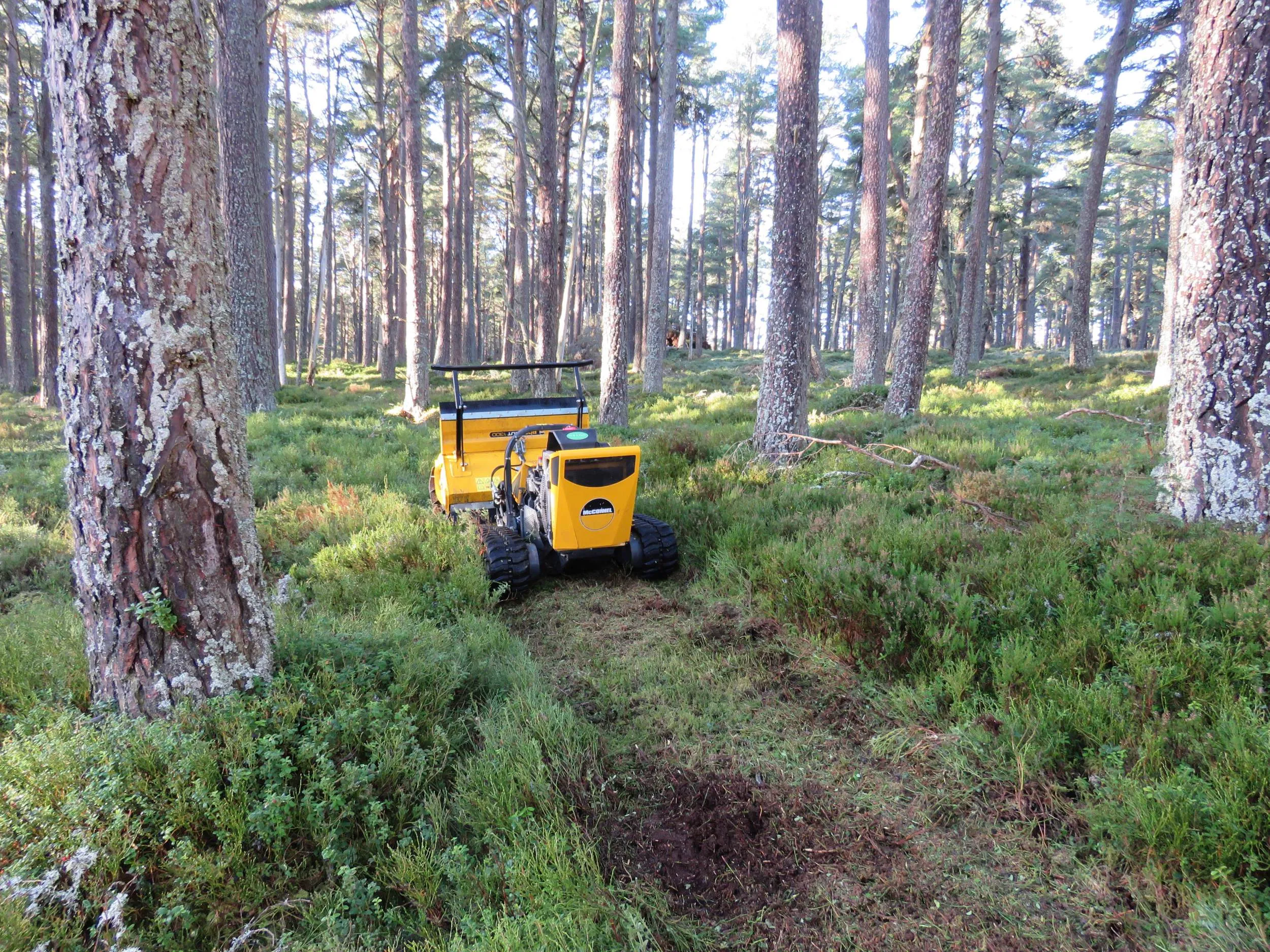
Abernethy Forest holds more than 20% of the 143 lekking males recorded this year.
RSPB Abernethy Conservation Manager, Richard Mason, said:
The increase in the number of lekking male Capercaillie is thanks to the huge amount of work we are undertaking to improve habitat quality. The combination of cutting and extensive cattle grazing has dramatically improved conditions in the forest. We are seeing many chicks reaching full size and whilst the future of Capercaillie remains in the balance, we are hopeful that these techniques can support their recovery in Scotland.”
We can’t do this alone
We work with landowners, partners and the Scottish Government across the Capercaillie range in Scotland to have the greatest impact. This includes educating the public about Capercaillie and the risk of disturbance, feeding predators in areas away from Capercaillie, restructuring forests, and restoring bog woodlands.
Through Cairngorms Connect, we work in partnership with NatureScot, Forestry and Land Scotland, Wildland Limited and Cairngorms National Park Authority to carry out this work.
