Ouse Fen
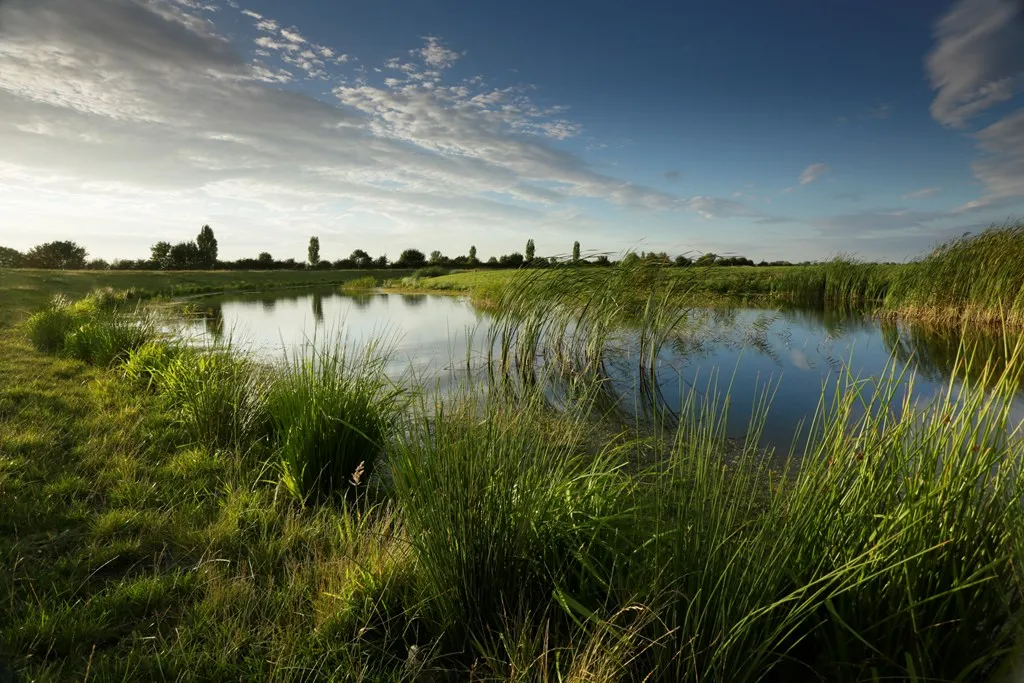
Ouse Fen is transforming from a working quarry into a vibrant nature reserve. Crunch along new trails where wildlife is already moving in.
Once extinct in Britain and Ireland as a breeding species, Bitterns are now thriving at Cambridgeshire’s RSPB Ouse Fen nature reserve .
5 min read
A rare wetland bird is now flourishing in Cambridgeshire thanks to the creation of an RSPB nature reserve from a sand and gravel quarry.
Bitterns are secretive and shy birds that spend much of their time hidden in large freshwater reedbeds and marshes - moving slowly and stealthily amongst the reeds on the hunt for food. They will stand still, as if frozen, when startled, are mottled brown in appearance providing perfect camouflage in reedbed, have a dagger like bill to catch fish and other small creatures, and have longish green legs.

Sadly, this fascinating bird became extinct as a breeding species in Britain and Ireland by 1900. It recolonised in the 1950s, increasing to 80 males - identified by their loud booming call during mating season, before declining to a perilous low of just 11 males in Britain in 1997.
Conservation research found that the main reason for the decline was a lack of management resulting in drying out of their favoured wet reedbeds. Meanwhile, most of the few reedbeds that remained suitable for them were vulnerable to coastal flooding, which makes reedbeds unsuitable for breeding Bitterns.
Concerned that this amazing species could once again be lost from the UK as a breeding bird, the RSPB began working with a quarry operator in Cambridgeshire, initially Heidelberg Materials (formerly Hanson UK); and now with Brice Aggregates. The plan is to carefully create and restore reedbed wetland from Needingworth Quarry over a number of decades – gradually creating a vast wetland at RSPB Ouse Fen nature reserve.
This was part of a wider programme of work to create reedbeds for Bitterns and other wetland wildlife in areas safe from coastal flooding, given the increasing threat to coastal reedbeds from rising sea levels.
At Brice Aggregates, we see it as our responsibility to ensure that once quarrying is complete, the land is returned in a way that brings lasting benefit. Seeing the Bittern numbers and other wildlife thrive shows just how powerful quarry restoration can be when it’s done with nature in mind. Working alongside the RSPB has been a smooth and rewarding process and we are proud to be part of one of the UK’s largest and most important reedbed habitats.
Currently, 180 hectares of Bittern friendly wetland has been created from quarried land at RSPB Ouse Fen, the equivalent of more than 250 football pitches.
It is now 20 years since the first area of wetland was created from quarried land.
This year 13 calling male Bitterns were recorded at RSPB Ouse Fen during the breeding season, the highest count ever for the reserve, nearly doubling the number of booming Bitterns since 2020. This is a significant number on one wetland as males claim and defend large territories to secure access to a mate, food and a place to nest; so, the bigger the wetland, the more Bitterns may breed on site.
Approximately 1 million tonnes of aggregates are now excavated per year to make way for the wetland which is the UK’s largest quarry to restoration project and when complete, Ouse Fen along with its neighbouring RSPB nature reserves Fen Drayton Lakes and the Ouse Washes, will form a near continuous 3,000ha wetland habitat - around half the size of Ely.

We are incredibly pleased that the initial aim behind the creation of RSPB Ouse Fen, to help support the recovery of the Bittern breeding population, has been achieved here. The reserve is now of national importance for reedbed wildlife; a delicate ecosystem supporting many threatened species of birds, mammals and fish. We look forward to continuing this work with our partner Brice Aggregates, and creating even more wildlife friendly habitat, on a sizable scale, in the years to come.
To be in with the best chance of hearing a ‘booming’ Bittern, visit between mid-March to the end of May.
They can also be seen during spring months when adults make regular flights to and from their nest with food for their young, and can occasionally be spotted in the winter when freezing conditions may force them out of the reedbed and into the open to find food.
Ouse Fen is transforming from a working quarry into a vibrant nature reserve. Crunch along new trails where wildlife is already moving in.


