Want to visit?
The following RSPB nature reserves form part of the Greater Thames priority landscape:
Discover how we’re working to conserve the Greater Thames Estuary, a world class wetland on the frontline of climate change.

Our vision for this priority landscape sees one of the best wetland landscapes in Europe, showcasing coastal adaptation in harmony with people and wildlife. It will continue to be a feeding hub for millions of wintering birds and a vital home to some of our most vulnerable breeding species.
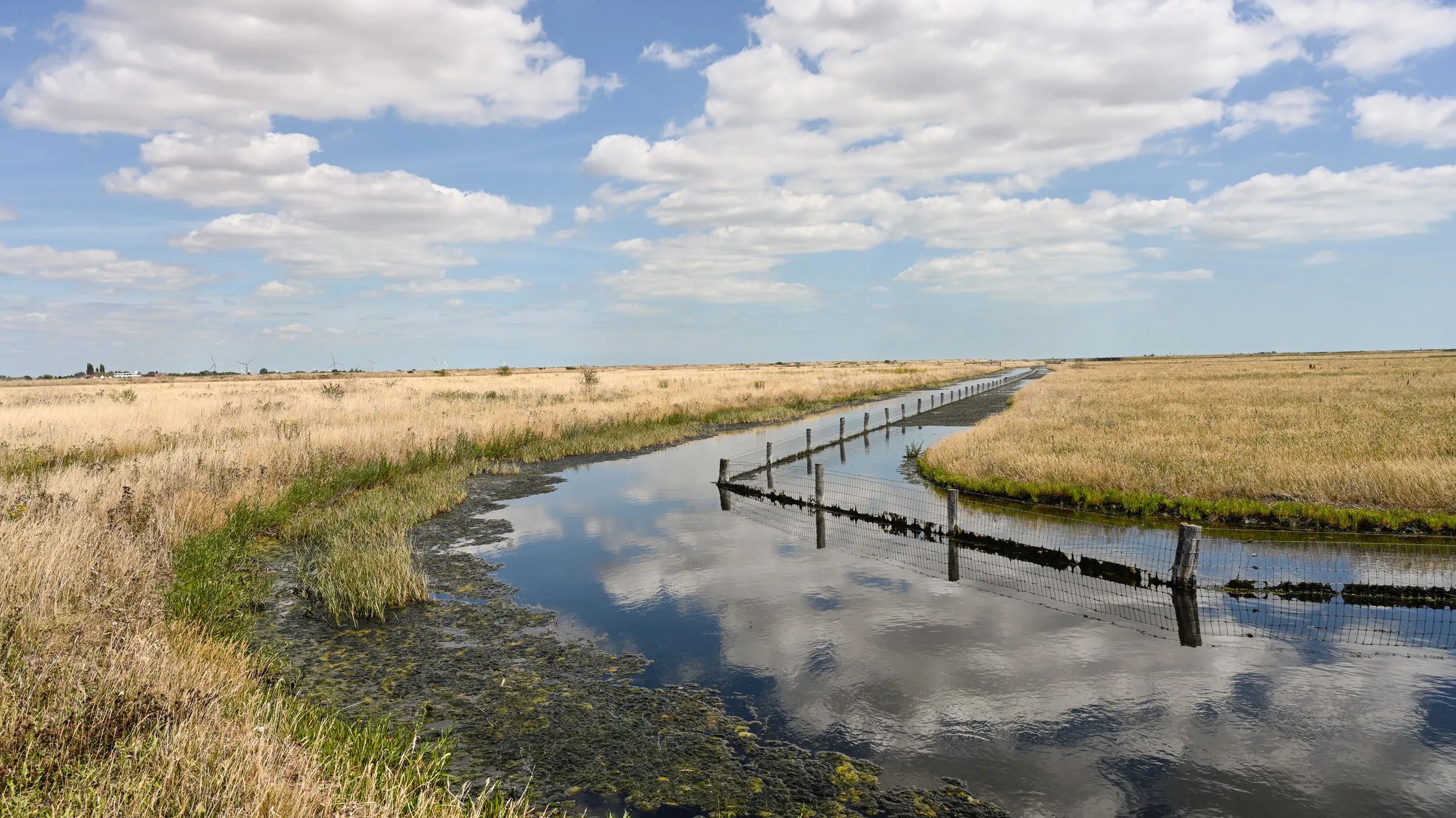
The Greater Thames Estuary is one of Europe’s most important wildlife sites and a candidate World Heritage Site. It’s a large complex of intertidal mudflats and freshwater wetlands, fringed by scrub, open mosaic and woodland habitats.
This incredible landscape is home to nationally significant numbers of breeding waders, beach nesting birds, Nightingales, Turtle Doves and rare invertebrates. It’s also a vital feeding hub on the East Atlantic Flyway, hosting the UK’s second largest gathering of wintering waterfowl that travel here from many other countries.

The Greater Thames Priority Landscape is where the River Thames meets the North Sea, the low-lying coastal region stretching between Harwich (Essex) in the North to Whitstable (Kent) in the South, extending along the River Thames to the outer edges of east London. Including the estuaries of the Crouch, Roach, Blackwater, Colne, Hamford Water and Stour in Essex and Swale and Medway in Kent.


The landscape includes 10 Special Protection Areas (SPAs) and 2 Special Areas of Conservation (SAC).
The Greater Thames is vital for wildlife. The landscape provides fantastic opportunities to connect people with nature and support resilient communities through natural flood management, coastal defences and adaptation. It also has huge potential to store carbon and enhance nature-friendly food production alongside nature recovery.
The Greater Thames is a place where internationally important wildlife lives alongside industry and some of the country’s largest and busiest communities. This unique meeting point creates both remarkable opportunities and significant challenges for nature.
As a major land manager across the Thames Estuary, operating across political boundaries, the RSPB plays a leading role in shaping the future of this landscape. With decades of experience in wetland conservation and a strong presence on the ground, we’re well placed to drive collaborative, landscape-scale action. This will protect wildlife and support resilient coastal community-scale action.

With the right engagement, communities, especially young people, can form deep connections with the Estuary and become powerful advocates for its future.
The RSPB is well placed to use its reserve network, strong relationships with farmers and landowners, and decades of large-scale habitat delivery to drive landscape-wide transformation for nature, people and place.

To design managed realignment schemes to maximise their value for waterbirds.
To use dredgings to recharge areas of eroding saltmarsh and create shingle nesting and roosting habitat and protect these from disturbance.
To maintain and increase the extent of high-quality coastal grazing marsh in areas expected to remain protected by coastal flood defences and have sufficient freshwater.
In areas expected to remain protected by coastal flood defences, but which lack freshwater, creating saline lagoons to provide breeding and high tide roosting/feeding areas near extensive areas of intertidal habitat.
In areas not expected to remain protected by coastal flood defences, and which lack sufficient water freshwater, using a phased approach to adaptation. This would involve creating mosaics of saline water bodies with the expectation they will eventually become intertidal habitat through managed (or unmanaged) realignment.
To increase the extent and connectivity of high-quality scrub habitat supporting priority species such as Turtle Doves and Nightingales.
To ensure no net loss of designated habitats in the Greater Thames landscape.
To increase the extent of invertebrate-rich habitat, particularly for Shrill Carder Bee.
To collaboratively develop an ambitious vision for the future of the Greater Thames .
To ensure that Local Nature Recovery Strategies recognise and deliver for the priority habitats and species of the Greater Thames.

We’ve delivered more than £9.7 million of habitat restoration across the Greater Thames, creating and restoring over 2,600 hectares of precious wetlands, grazing marsh and coastal habitats. This work continues through major projects such as Transforming the Thames, Whose Hoo, and the expansion of Wallasea Island.
We’ve worked with partners at key sites such as Swanscombe Peninsula SSSI, Lodge Hill SSSI and Middlewick Ranges to protect nationally important sites and safeguard some of the UK’s most significant Nightingale populations.
Our landscape-scale advisory work with farmers in North Kent and Essex has built powerful momentum, improving and expanding habitat for breeding waders and Turtle Doves.
At RSPB Wallasea, 21 new islands have been created behind the sea wall to shelter overwintering flocks of Lapwings and Golden Plovers through the colder months and protect them from rising sea levels.
We’ve joined together with Essex Wildlife Trust, Harwich Haven Authority and the Environment Agency on a pioneering £25 million programme to protect coastal communities and create vital new wildlife habitat.
We advance policy measures to protect and enhance the Estuary for wildlife, such as ensuring our priority species and habitats were included in the Kent and Essex Local Nature Recovery Strategies (LNRS).
We ensure our habitat management and creation benefits priority species such as Nightingales, Adders, and Shrill Carder Bees. This includes major plans to enhance Canvey Wick in Essex.

You can help by enjoying the Greater Thames’ amazing habitats and wildlife responsibly and spreading the word about the importance of our coastline for beach-nesting and overwintering birds. For more information, visit Share our Shores, Bird Aware Essex and Bird Wise North Kent.
If you fancy getting hands on to support nature conservation, please check out volunteer opportunities at our reserves.
If you’re worried about the threat of development on Kent wildlife, join others who share a passion for protecting your local environment. Please click here to join: https://kent-planning-network-for-nature.org.uk/
For more information, please get in touch at greater.thames@rspb.org.uk
We’re working alongside: the Environment Agency, Natural England, Port of London Authority, Kent Wildlife Trust, Essex Wildlife Trust, National Trust, Farmers and Land Owners, Port of London Authority, Medway Swale Estuary Partnership , Thames Estuary Partnership, Kent Nature Partnership, Bumblebee Conservation Trust (BBCT)/ Shrill Carder Bee (SCB) Conservation Strategy Partnership, Buglife, Campaign to Protect Rural England (CPRE), Local Authorities, Local Communities, County Ornithological Societies, Catchment Partnerships, Essex Coastal Forum and Blackwater Conservation Strategy.
Thames Estuary | Endangered Landscapes & Seascapes Programme
Species Coastal and Wetlands: More, Bigger, Better, Joined
LIFE on the Edge | Coastal habitat Creation & Restoration
Protecting beach-nesting birds | Essex Wildlife Trust
BUDS in the Blackwater Estuary - Home
The following RSPB nature reserves form part of the Greater Thames priority landscape: