
Our wetland birds need your support
Help us protect an internationally important coastal wetland on England’s East Coast that provides essential feeding and breeding grounds for millions of wetland birds.
From the rise of Little Egrets to the decline of Swifts, discover the ups and downs of the UK’s birds.
5 min read
The RSPB helps to organise several nationally important surveys which record population changes in hundreds of UK bird species. These programmes are mainly run in partnership with the BTO and JNCC. By collecting data every year for several decades, these reports enable conservationists to find out how species are doing in the long term, and identify which might need our help.
Simon Wotton, Senior Conservation Scientist in the RSPB's monitoring team, shares the results of two important surveys released this month.
The 30th annual report of the BTO/JNCC/RSPB Breeding Bird Survey (BBS) and Waterways Breeding Bird Survey (WBBS) has just been published. The report documents the population trends of widespread UK breeding birds in the long- (1994–2024) and short-term (1998–2024).
The BBS and WBBS are the main schemes for monitoring population changes in the UK’s widespread breeding birds, and they provide an important indicator of the health of the countryside. Trends are produced each year for 119 species based on BBS data, and for 28 waterway specialist species based on WBBS data. The results are used widely to set priorities and help inform conservation action.
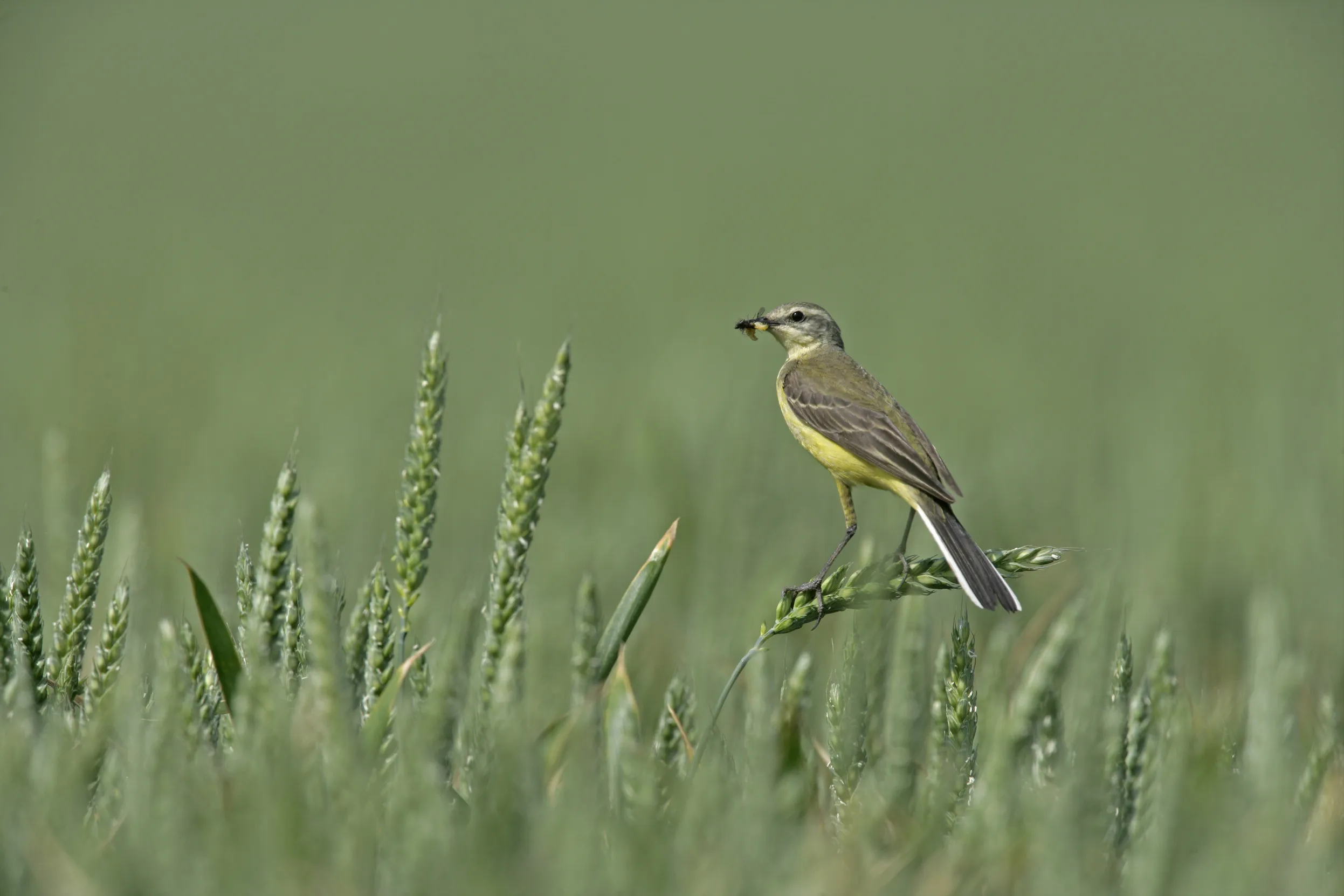
The BBS Report highlights the continuing decline of some farmland species, including Yellow Wagtails, as well as more recent declines of woodland birds, at least in England. In Scotland, there is a focus on upland birds, and BBS data show that this group has declined by 20% since 1994. In Wales, there are mixed fortunes for birds, with House Sparrows bucking the downward trend seen in England, while Curlews are in severe decline, as they are elsewhere in the UK. In Northern Ireland, some songbirds, such as Blackbirds, are doing comparatively well compared to the wider UK trend.
The report also reveals that Wrens are the most widespread birds in the UK, appearing in 94% of survey squares covered in 2024. Woodpigeons came a close second, with records in 92% of squares, followed by Blackbirds (90%), Robins (89%) and Carrion Crows (87%).

Between 1995 and 2023, 36 species showed significant long-term increases, including Blackcaps and Goldfinches, with Little Egrets showing the greatest increase of all with a huge 2,726% rise in numbers.
However, 43 species showed significant long-term declines. Turtle Doves have had the steepest decline, with numbers plummeting by 98%, closely followed by Willow Tits, which have declined by 90%.

BBS results also revealed widespread long-term declines across the UK among birds that feed on insects. These include:
Swifts – down 68%
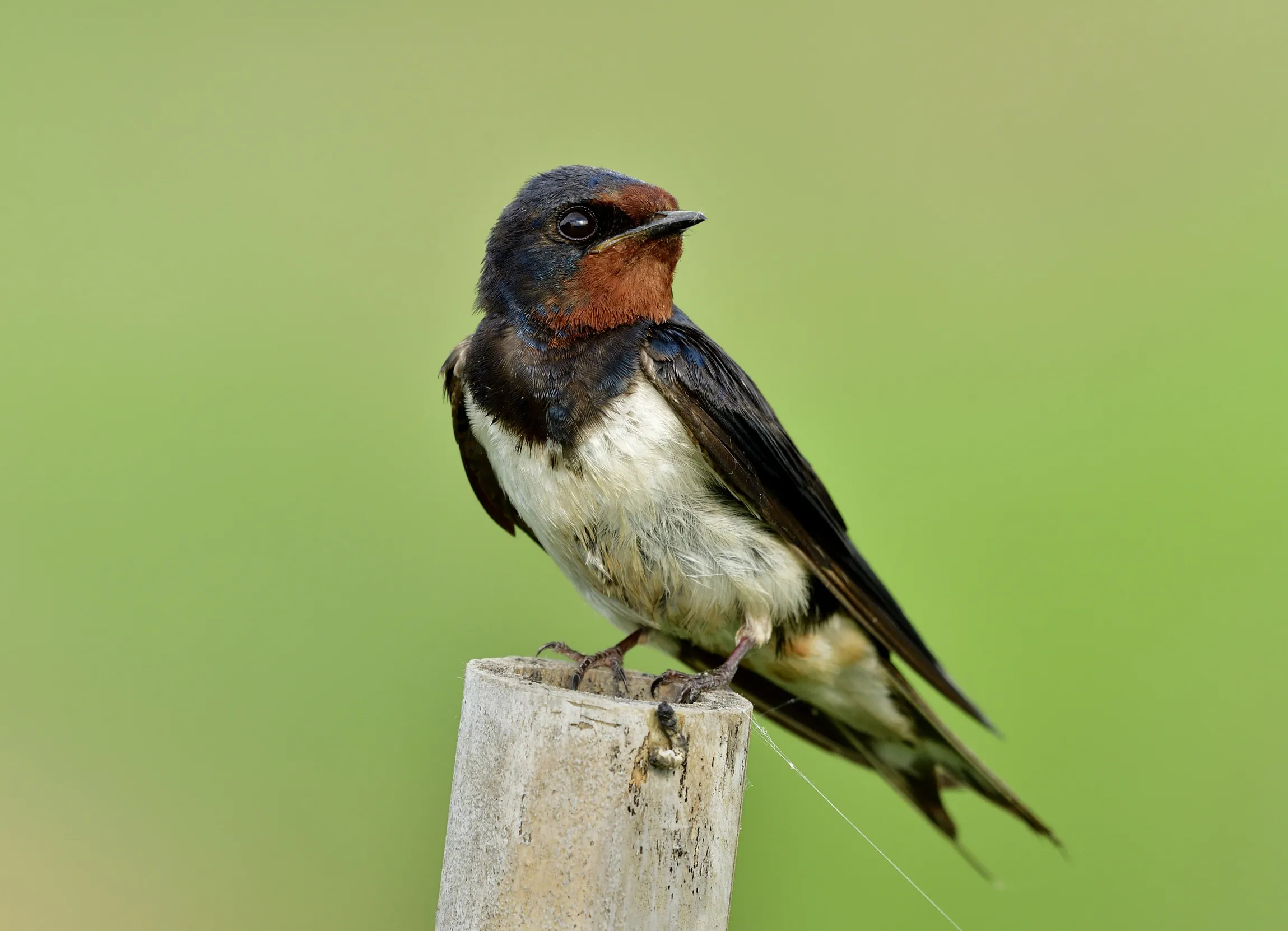
Swallows – down 25%
House Martins – down 42%
Spotted Flycatchers – down 67%
Pied Flycatchers – down 56%
Also published this month was the 42nd Wetland Bird Survey (WeBS) report, which includes results from the Goose and Swan Monitoring Programme (GSMP). WeBS aims to assess the size of non-breeding waterbird populations, determine trends in numbers and distribution, and assess the importance of individual sites for waterbirds. The GSMP monitors the abundance and breeding success of the UK’s native geese and migratory swans during the non-breeding season. WeBS is the principal scheme for monitoring the populations of the UK's wintering waterbirds, and it provides an important indicator of the status of waterbird populations and the health of wetlands.
Many of the sites monitored under WeBS are of international importance and designated as Ramsar Sites and Special Protection Areas, including the five principal WeBS sites monitored over the past five years: The Wash, Ribble Estuary, Morecambe Bay, Dee Estuary and the North Norfolk Coast.
These places support many thousands of water birds and in 2023/24 the number of sites with a five-year average in excess of 100,000 birds remained at nine, and a further 47 sites had a five-year average in excess of 20,000 birds. The RSPB East Coast Wetlands appeal is seeking to protect such key sites for our non-breeding waterbirds, including two of the five WeBS sites.

The global population of Greenland White-fronted Geese in spring 2023 comprised 5,577 individuals in Ireland and 9,420 in Britain, the lowest since coordinated counts began in 1982. Svalbard Barnacle Geese were badly impacted by avian flu (HPAI), but since then, they have had two years of higher breeding productivity, in 2022 and 2023.
Wintering Avocets and Black-tailed Godwits have continued to increase, reaching their highest numbers on record, with increases of 37% and 18% respectively, over 10 years. However, Curlews continued to decline, by 23% over 10 years and 38% over 25 years, reaching their lowest numbers since 1980/81.
It’s a worrying story for ducks, with many species in decline, including the familiar Mallard, which declined by 34% over 25 years, reaching another record low in 2023/24.
The declines of diving ducks have also continued over the past 10 years:
Eiders declined by 20%, to a new record low
Tufted Ducks are down 19%
Goldeneyes declined by 21%
Goosanders fell by 2%
Red-breasted Mergansers declined by 25%, to their lowest level since 1975/76
Scaups declined by 52%, reaching the lowest level since 1989/90
However, Shovelers continue to increase, reaching yet another record high in 2023/24. They have increased by 71% over the past 25 years.

The BBS is a partnership jointly funded by the BTO, RSPB and JNCC, with fieldwork conducted by volunteers. Nearly 3,000 skilled and dedicated volunteers gave their time to take part in BBS and WBBS in 2024.
Similarly, WeBS is a partnership between the BTO, JNCC and RSPB, with surveys carried out by volunteers. The 2023/24 WeBS report documents waterbird counts at 3,411 sites across the UK, surveyed by nearly 4,000 WeBS counters. GSMP is a partnership between the BTO, JNCC and NatureScot, with fieldwork conducted by both volunteer and professional surveyors.
We’d like to say a big thank you to everyone who took part in these vital surveys – these important reports simply wouldn’t be possible without your expertise and dedication.
If you are interested in taking part in either survey, you can find out more at:
WeBS Taking part | BTO
Help us protect an internationally important coastal wetland on England’s East Coast that provides essential feeding and breeding grounds for millions of wetland birds.
Detailed data on WeBS sites and species are available through the WeBS interactive website: WeBS Reporting
The 2024 BBS report can be downloaded here: BTO-JNCC-RSPB BBS Report 2024
The 2023/24 WeBS report can be downloaded here: https://www.bto.org/our-work/science/publications/reports/waterbirds-uk/2023-24#


