
Don’t miss out
Book your place on a Pink-footed Geese walk today!
Find out where, when and how to see Norfolk’s mighty flocks of Pink-footed Geese

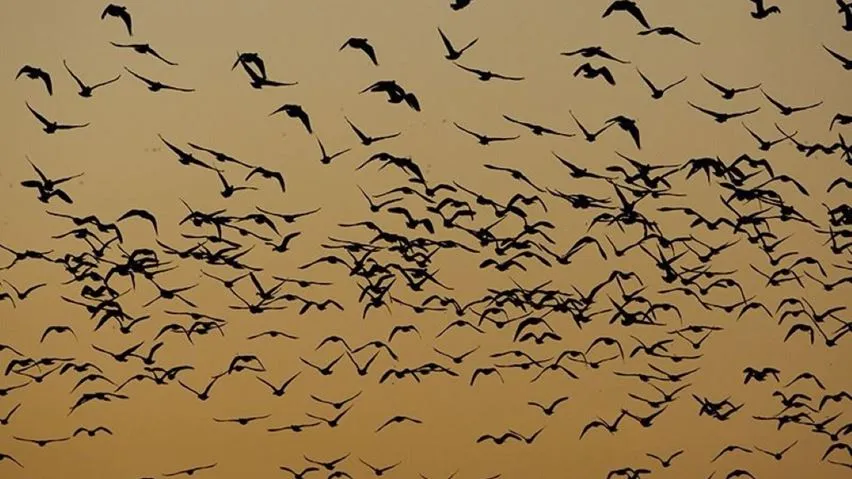
RSPB Snettisham’s Pink-footed Geese displays are magnificent natural events that frequent this Northwest Norfolk nature reserve every winter.
Entirely separate to Snettisham's Wader Spectaculars, these events occur at dawn and dusk when flocks of Pink-footed Geese flood the pastel skies above The Wash. The sight and sound of the noisy flocks, backlit by the glow of the early morning and evening sun, is simply magical.
So, here’s your guide to catching their sharp “wink-wink” cries and chattering voices as they ripple across the sunbathed sky.
You don’t need to book a parking space to attend the Pink-footed Geese displays. However, those who require an accessible parking bay do need a permit. This ensures that accessible bays are reserved for those who need them.
Parking in our standard car park is free for RSPB members, and an all-day parking fee of £4 applies for non-members. Payment can be made by cash, card, or via the PayByPhone app.
If you require an accessible parking permit, simply contact us via our email address: snettisham@rspb.org.uk. Please note that requests for accessible permits must be submitted at least five working days in advance to allow time for processing.
Due to their proximity to the mudflats, we ask that visitors using our accessible bays only use their sidelights when parking and turn them off as quickly as possible. Artificial light can fool the geese into thinking it’s daylight and cause them to leave their roost early.
Snettisham’s Pink-footed Geese displays take place in winter, when the birds have returned from their breeding grounds in the Arctic. The geese tend to arrive towards the end of October and leave by mid-January.
Unlike the Wader Spectaculars, Pink-footed Geese displays aren’t dependent on the tides. Instead, the geese simply take to the skies at dawn and return to roost at dusk. However, the cycle is unpredictable under the light of a full moon, so goose watchers should avoid visiting for three to four days either side.
Confused? Don’t worry, we’ve pulled together the best dates to see the Pink-footed Geese, below.

The best place to see the geese depends on the direction of their flight to and from roost. Naturally, this is changeable, so to increase your chances of catching their dynamic displays, it’s best to book a spot on one of our guided walks.
Our guides are experienced in interpreting the behaviour and flight patterns of the geese and can take you to the optimum viewing spot.
Book your place on a Pink-footed Geese walk today!
To avoid disturbing the geese and to stay safe during your visit, we recommend taking the following precautions:
Don’t forget to reserve your place on the Pink-footed Geese walk!
Sunset and sunrise times vary depending on the time of year. Therefore, we suggest that visitors check the dawn or dusk times on their chosen date and aim to arrive at the viewing point 20 minutes before the sun is due to rise or set.
The sea wall offers the best chance of seeing the geese and is a 1km walk from the car park. On average, this takes about 20 minutes on foot, so leave plenty of time to make your way there before dawn or dusk. If you’ve booked a guided walk (further details are provided below) the relevant information will be sent to you via email.


