
How to identify
Learn more about how to identify Redwings
and where to see them.
Hit gold this autumn. Here’s six birds you won’t want to miss.

October: it’s not all drizzle and dark! Autumn’s one of the most exciting times to head outdoors and see who you can spot. With hedgerows laden with berries and prime migration pitstops on our coastlines, October is the perfect time to see wildlife feasting on nature’s rich bounties.
Our autumn arrivals aren’t always the easiest to identify, so we’re giving out top tips on how to recognise grey wading birds on muddy river mouths and silhouetted thrushes in flight overhead. Plus, we’re sharing our recommend nature reserves so you can spot an elusive species, that puts in a star appearance this season.
These long-distance travellers migrate under the cover of darkness, their silvery ‘tseep’ calls giving their presence away. Venture outside on a crisp autumn night in October and you might hear flocks of Redwings arriving on our shores after spending summer in Scandinavia.
In the daylight, it’s easy to see that these birds got the memo for autumn styling. They’re decked out with a rich chestnut back, a speckled chest and creamy eyestripe. But their most recognisable feature is their fire-red flanks, not out of place amongst autumn leaves. They’re the smallest UK thrush, too.
Redwings are known for being nomadic; they’re not loyal to any of their wintering sites. The birds you see this winter might be in the UK for their first and last time.
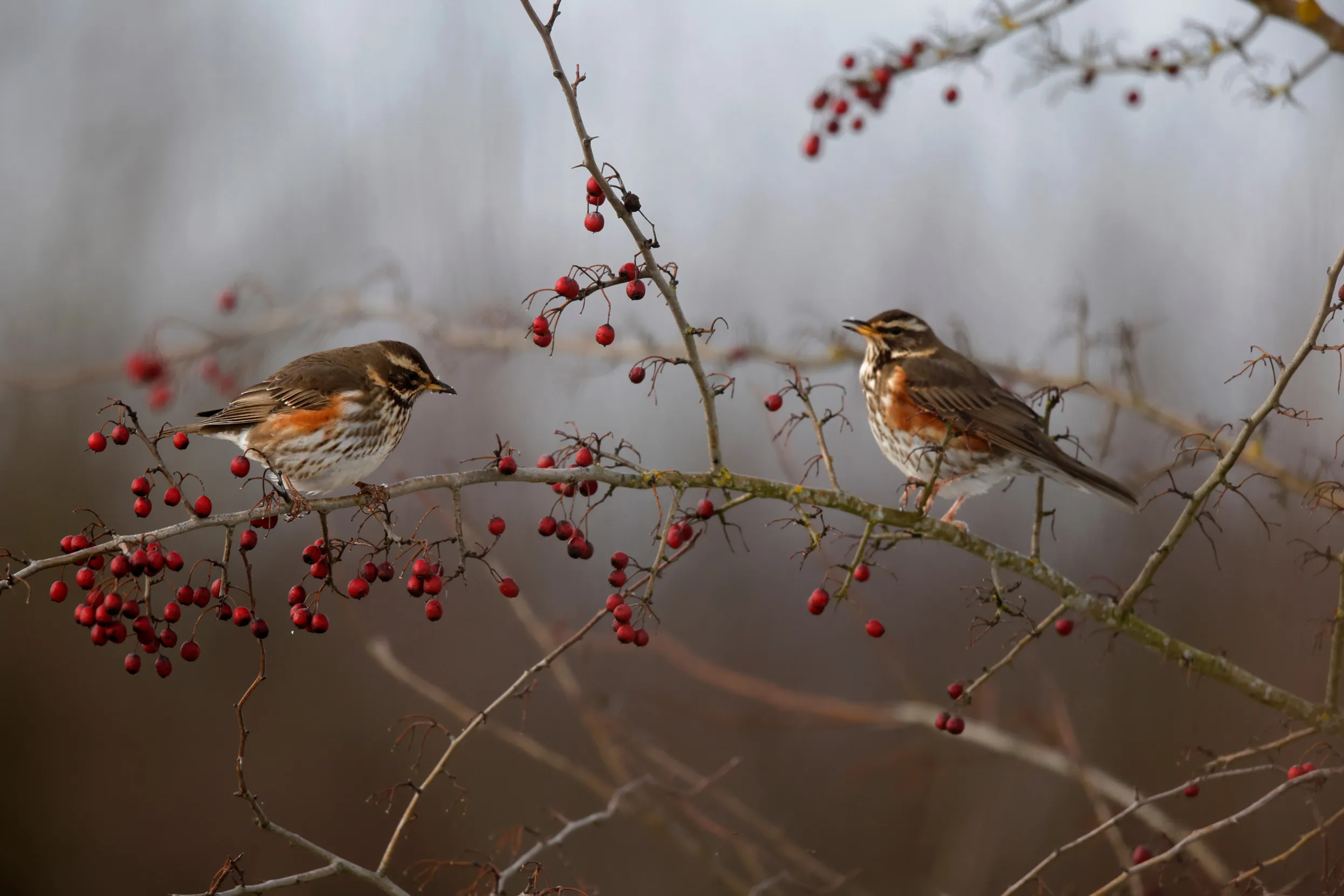


They can be seen in our countryside, parks and nature reserves, feasting on berries in our hedgerows and trees.
Easy
Amber-listed.
Learn more about how to identify Redwings
and where to see them.
Another winter thrush arriving on our shores in October, Fieldfares are known for their distinctive chuckling call in flight. Listen out for ‘chack-chack-chack’ overhead. They’re a bigger, bulkier thrush in comparison to Redwings, more similar to the size of Mistle Thrushes.
A Fieldfare’s distinctive colouring makes them easy to separate from their more common relatives. Their yellow, Blackbird-like bill contrasts their blue-grey head. They have chestnut wings and back and a black tail.

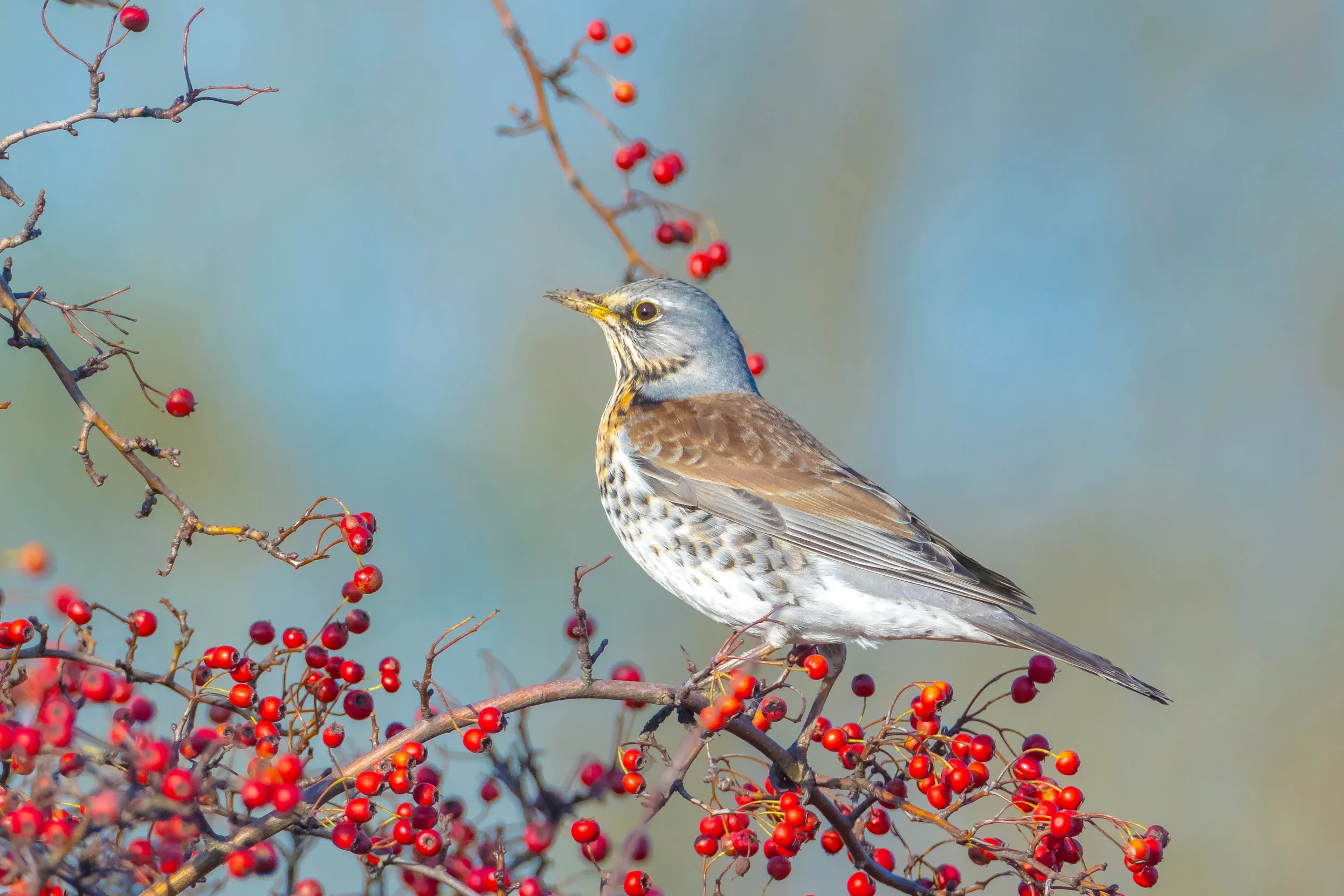


Fieldfares join mixed flocks with Redwings and can be seen coming into roost together at dusk. Look out for these birds perched at the tops of trees with other thrushes in local parks, countryside and nature reserves. They can be identified by their very ‘upright’ silhouette.
Medium
Red-listed in the UK but categorised as Least Concern globally. The cause of their decline here is not understood completely but is thought to be linked to loss of woodlands.

Learn more about how to identify Fieldfares
and where to see them.
A small bird scuttles along the shoreline. It’s plain brown-grey on top, with a white chest and jet-black legs. This Starling-sized sandpiper probes the mudflats with its downcurved bill, feasting on the worms and crustaceans on offer.
This is a Dunlin, and when it comes to recognising wading birds, they’re a great yardstick. Get confident with Dunlins and you’ll be able to rule them out when scanning for Knots and other rarer whatnots.
A small number of Dunlins breed in the UK, but in the winter months, our populations are boosted by breeders further north. When they first arrive on their overwintering sites, you may be able to spot some black feathers on their bellies – remnants of their breeding plumage. The UK’s mudflats in bays and river estuaries are vital habitat for birds like the Dunlin. As the tides recedes, it leaves muddy feeding areas exposed behind.
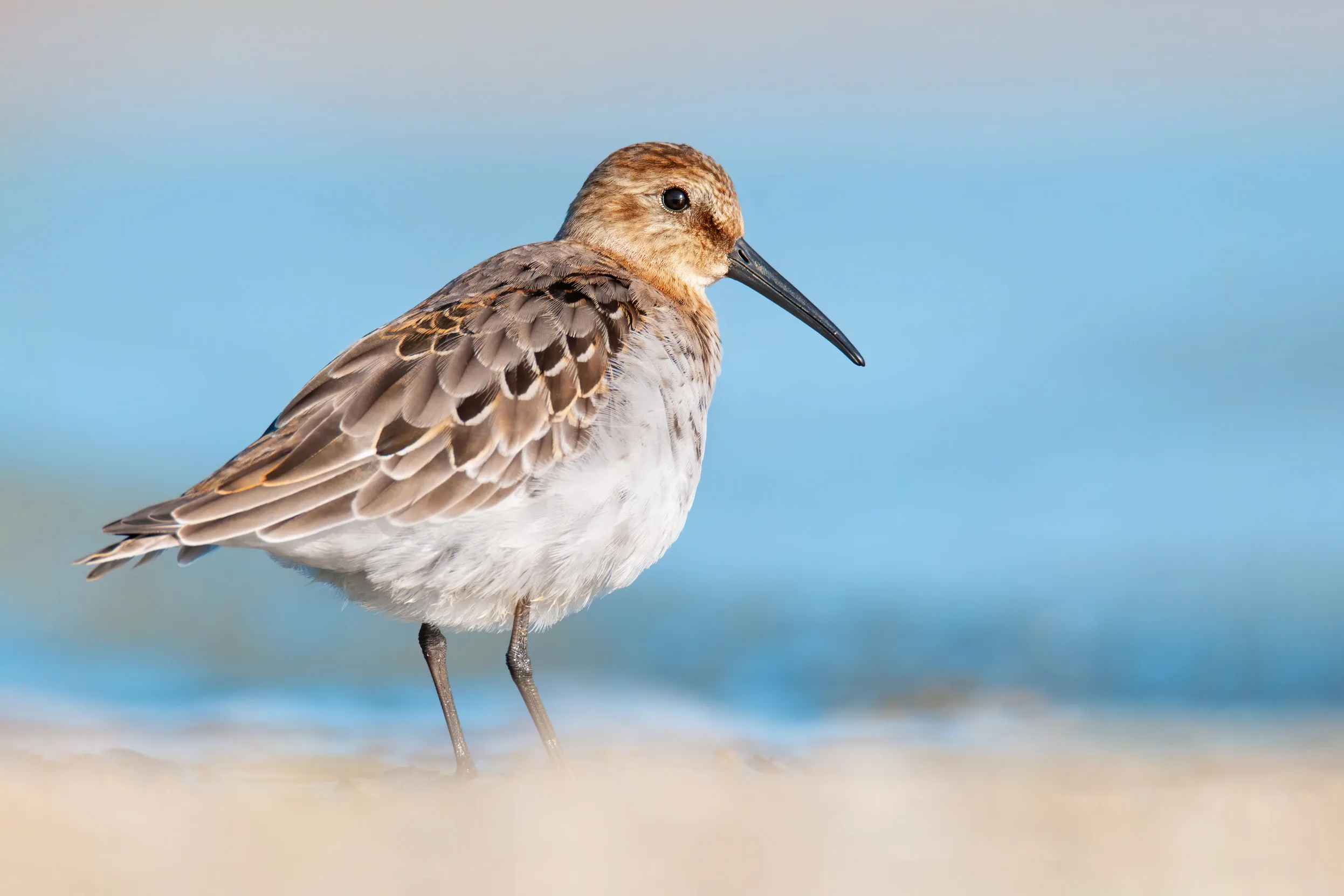

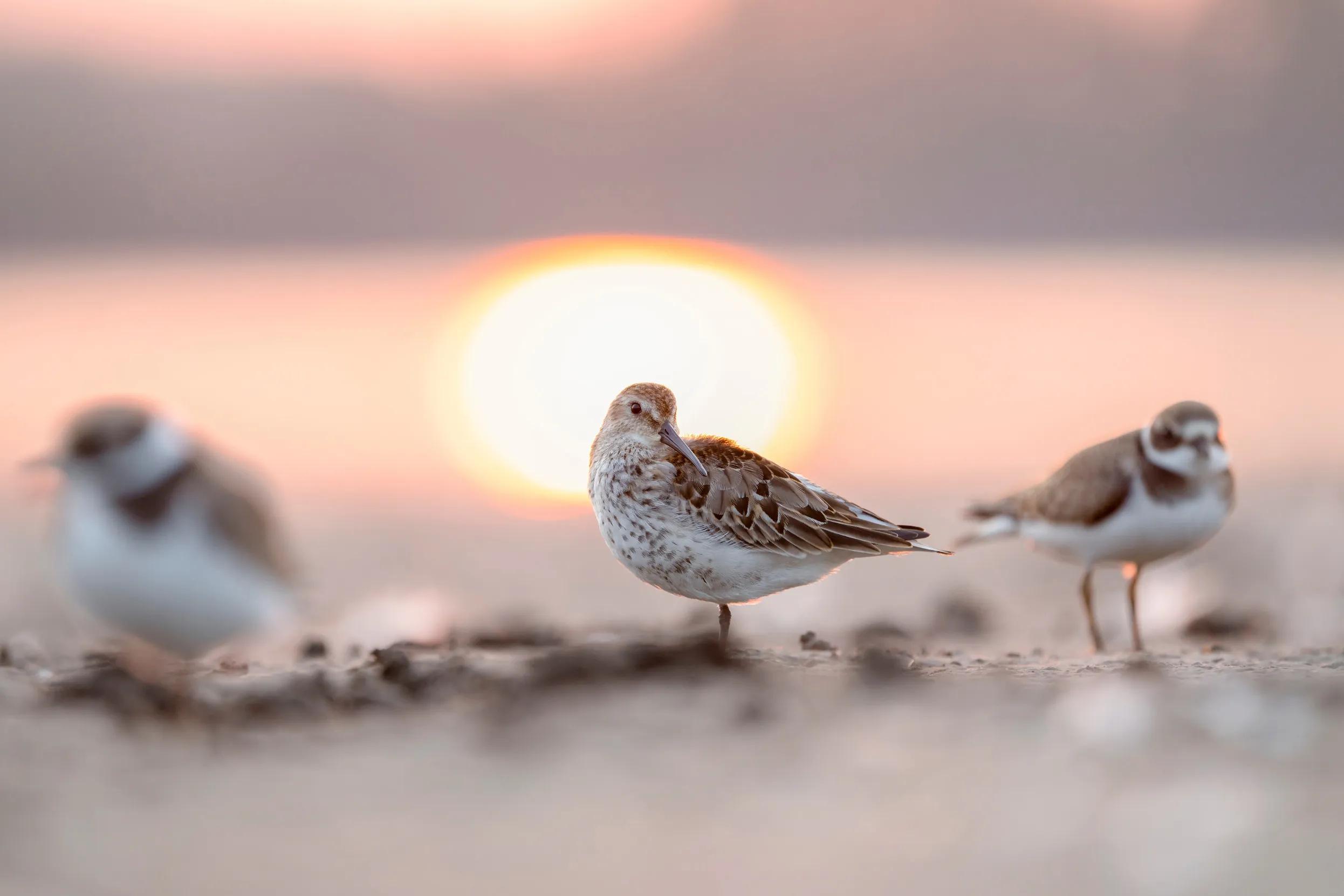
Most estuaries and bays around the UK are a great place to spot Dunlins from late summer through to spring. The Mersey Estuary in England holds the highest number of Dunlins in the UK – with up to 50,000 birds making the most of the mudflats.
Medium
Dunlin were added to the Red List in 2021, as their wintering populations in the UK have massively decreased. They’ve declined by 20% globally since the early 2000s.

Learn more about how to identify Dunlins and where to see them.
As the tide rushes in, it brings rich nutrients with it, topping up an all-you-can-eat buffet for waders. At the same time, birds feeding on the mudflats retreat to the shore to seek refuge. In areas with large concentrations of waders, this can be a true nature spectacle. More than 100,000 birds fill the skies, whirling over the mudflats like a vast shoal of fish. When a flock turns in unison, they expose their white underbellies, like scales glinting in the light.
Their full name is the Red Knot, although you might wonder why when you see them on our shores in winter, decked out in a colour palette not too dissimilar to a packet of HB pencils. But these birds are a russet red when they’re on their Arctic breeding grounds, in the tundra of Greenland, Canada and Russia.
Regularly hanging around with Dunlins, the two can be separated if you know what to look for. Knots are a larger bird – think Blackbird size. Its plumage is more of a slate grey, and its belly less ‘clean’; look out for tell-tale chevron-like grey patterning down its sides. Their legs have a green hue, and their bill is well-proportioned, about the same length as their head.

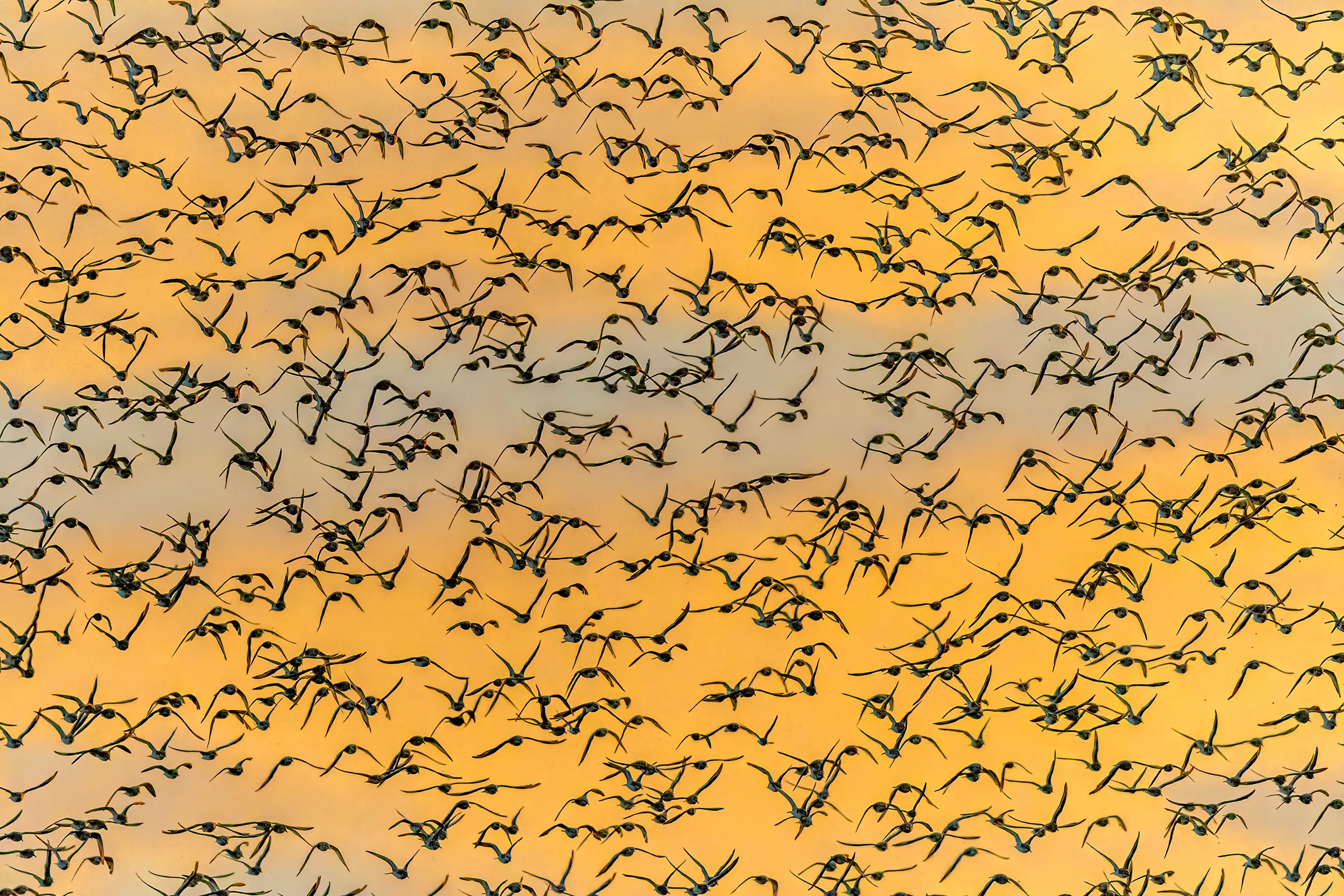

The best place to see Knots in the UK is on the North Norfolk coastline, especially on The Wash, with mudflats there hosting internationally important numbers of birds.
Medium
In the UK, wintering Knots have declined by 13% in 25 years, putting them on the Amber List. Last winter, it was estimated that 37% of Great Britain’s populations of Knots were on RSPB nature reserves at one time. This emphasises just how important your support for our East Coast Wetlands nature reserves is to help save threatened species.

Learn more about how to identify Knots and where to see them.
Now, forget all the delicate ID intricacies. Waders can be tricky, but there’s no mistaking the noisy Oystercatcher. Its black-and-white getup and its carrot-orange bill and legs make this one of our most distinctive wading birds.
Oystercatchers are on our shores all-year round, and, thanks to their adaptability, they turn up in some surprising locations like car parks and urban rooftops. However, from autumn, you’ll likely see them in big groups along our shorelines. Through the colder months, they eat cockles and mussels, using their strong bill to prise open or hammer their prey.
Last year, the world’s oldest Oystercatcher was discovered by the Wash Wader Research group – thanks to the power of long-term bird ringing projects. Oystercatchers have an average life expectancy of 12 years old, but this record breaker had reached a whopping 43 years old.

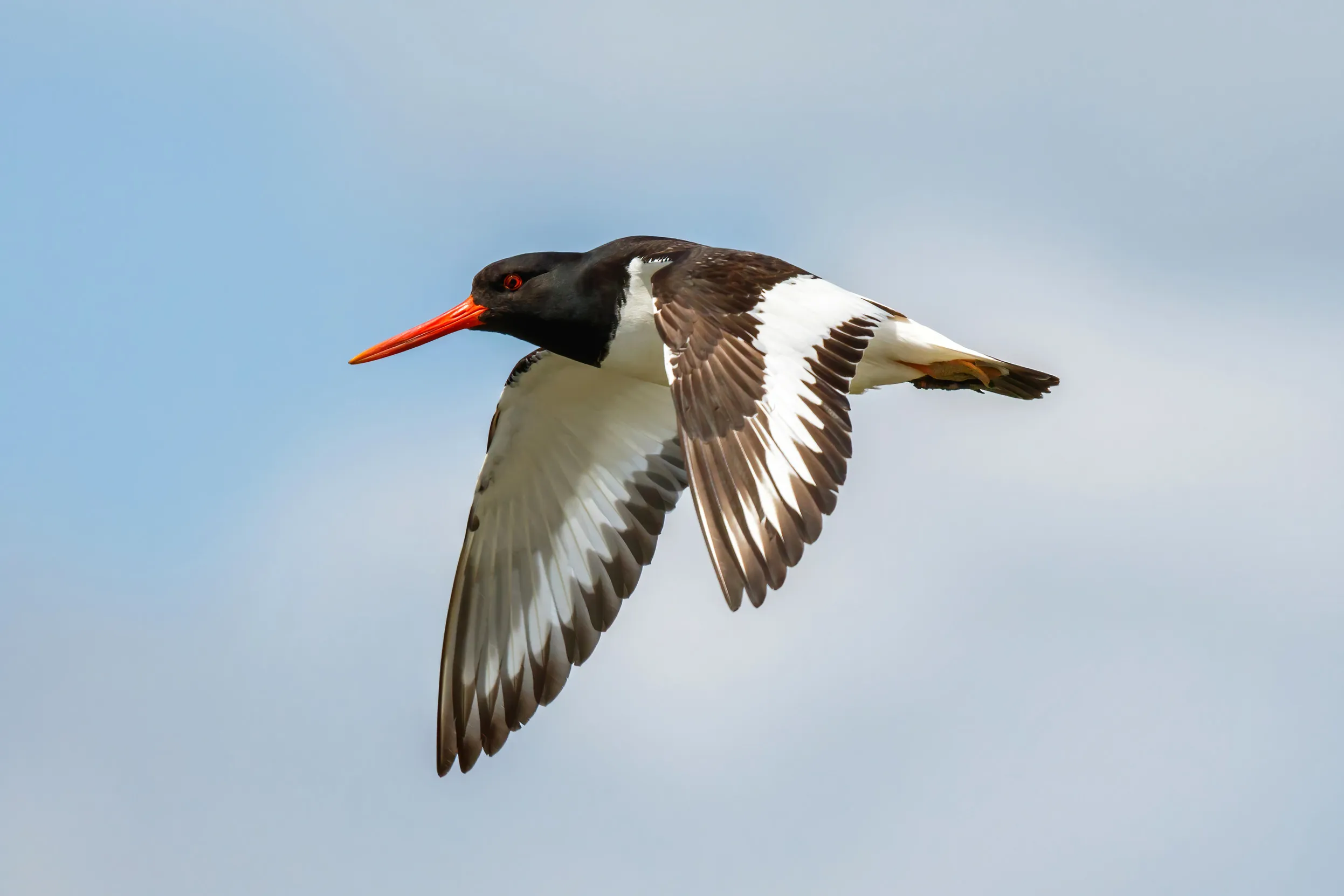

Although associated primarily with the coast and estuaries, Oystercatchers can be found across a large part of the UK, with breeding strongholds in the interior of Scotland However, they’re typically a feature of estuaries and bays throughout October. Morecambe Bay hosts the most wintering Oystercatchers in the UK with approximately 40,000 birds counted at high tide roosts last winter.
Easy
Despite being a familiar species to many, Oystercatchers are on the UK’s Amber List.

Learn more about
identifying Oystercatchers,
their call, and where to see them.
Hidden deep in the reedbeds of the UK, flocks of Bearded Tits flit from reed stem to reed stem. Their pinging contact call helps to them to keep in touch with the rest of their party in the dense vegetation. This species is present year-round in our reedbeds, thanks to a nifty trick where they can change their diet from insects to seeds.
These birds are easier to spot in autumn, when they swap their usual skulking antics for excitable group flights. We’re still not entirely sure why this behaviour happens, but it tends to occur after a successful breeding season, ahead of birds preparing to seek out their own patch.
You might hear them referred to as ‘Reedlings’ because calling them Bearded Tits is a misnomer; they’re neither a tit nor bearded. They don’t have any close relatives either and sit in a family group on their own instead. The males’ dark facial plumage, from which it gets its name, looks more like dramatic eyeliner or a well-waxed moustache than a beard!

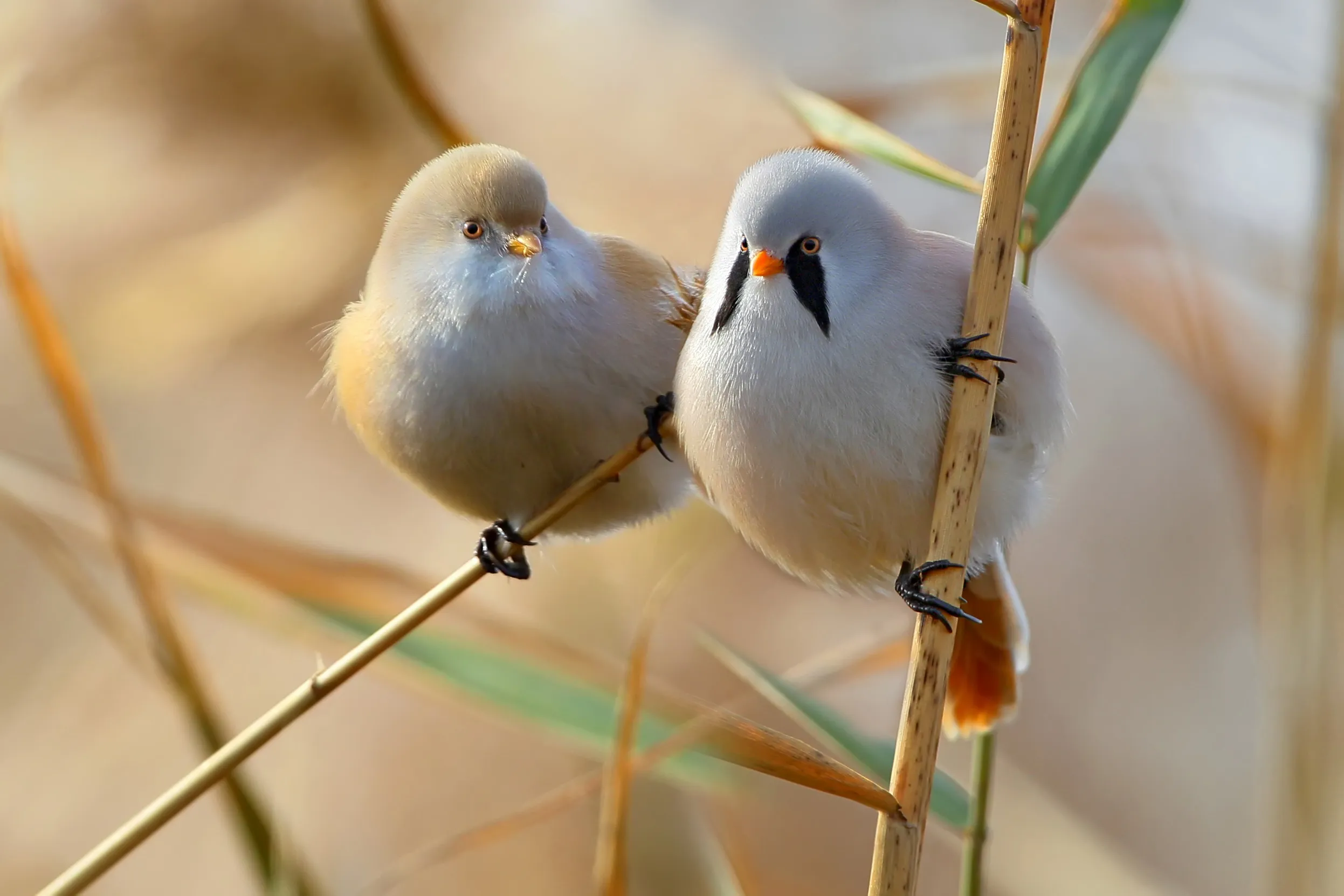

In reedbeds from East Anglia to the River Tay. Visit:
RSPB Leighton Moss
RSPB Lakenheath Fen
RSPB Ham Wall
RSPB Newport Wetlands
RSPB Tay Reedbeds
RSPB Radipole Lake
RSPB Minsmere
RSPB Titchwell Marsh
RSPB Blacktoft Sands
Hard
Despite being a scarce species in the UK, Bearded Tits are a conservation success story. Thanks to our members and supporters, reedbeds around all four UK countries have been restored – and many of the species that depend on them are now thriving.

Learn more about how to identify Bearded Tits, their call, and where to see them.
We hope you feel inspired to try and see some of these birds this month. We’d love to hear how you get on. You can send your photos to us at NotesonNature@rspb.org.uk We’ll share some of the best in a future issue of Notes on Nature.
Please be mindful when taking photos not to disturb wildlife or habitats. Further guidance can be found in The Nature Photographer's Code of Practice.


