
Advice
Feeding birds near you
If you want to attract birds to your garden, you’ve come to the right place.
Follow our tips to ensure that your group works well together and gets the best outcome for nature.
.jpg)
Once you have decided to set up a campaign to protect nature that may be under threat from development (eg as a result of a local plan/local development plan allocation or a planning application), it’s a good idea to find allies to help you with your cause.
For advice on getting started with a campaign, check out our How to set up your own campaign to protect nature from a development threat guide.
As soon as you have found a group of people willing to be involved in your planning campaign, the next step is to meet together. This can either be in person in a venue in your community, or online. Make sure to bring pens, paper and post-it notes for capturing people’s ideas, or if you’re meeting online, you can use an online whiteboard. Once you come together you can:
Write a Statement of Purpose so that everyone understands your overall goals
Share out different roles and responsibilities between members of the group
Set up house rules for the group so that everything runs smoothly
A Statement of Purpose is a simple short explanation of who you are, what you’re going to do and how you’re going to do it. Setting a shared purpose at the start of your campaign means everyone shares the same vision and can easily check if goals are being achieved as the campaign progresses.
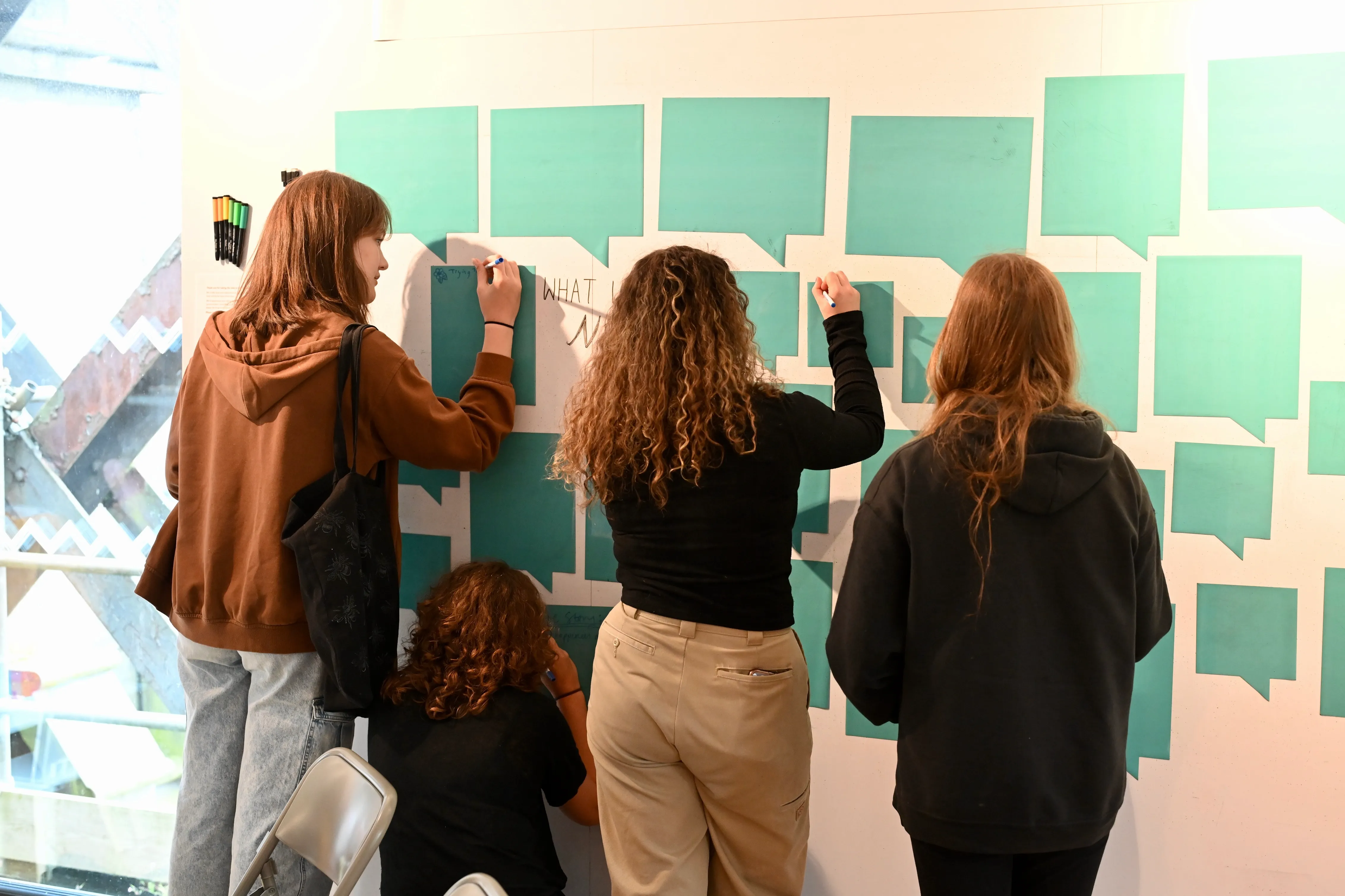
Write the start of each of the sentences below and get your group to start answering the questions by adding notes underneath. Then, as a group, combine the notes into coherent sentences to complete your shared purpose statement.
What is your group name?
Who are you as a group? Are you a group of neighbours? Working on a shared project together? People with a special relationship to a particular green space or species?
What nature issue are you united under?
What is your group’s big vision for change? What would the future look like if you succeed?
To see this change, what are your group’s campaign goals? What steps are needed to achieve your overall vision?
What tactics will your campaign use to gain attention and influence decision makers?
How will you work together?
What skills can your group members use to help do this?
What dates do you want to achieve your goals by?
The more specific you can make your statement, the easier it will be to check if you are achieving your goals.
It’s a good idea to give people within the group different roles depending on what skills they have. This means that you’re making use of the different talents in your group, and that the work is shared so that it doesn’t all fall on one person. It can also help people to stay involved if they feel they have a specific and meaningful contribution to make.
Some examples of roles you might need in your group are below. This is not an exhaustive list, and your group may decide that there are other roles you need. It may also be possible to share these roles between more than one person.
Working together in a planned group who concentrate on separate aspects is the best way to achieve for nature” -Mel, Chippenham, local nature champion

Someone with the skills to help with social media for all your campaign actions and who can help promote the group’s meetings through social media.
One or two people who can help make sure the meetings go ahead as planned by guiding the conversation and keeping everyone on track.
Someone who is confident at typing or writing fast and can keep track of what is discussed, to be shared afterwards with others.
People who are connected to the issue and know about the details, so that they are confident enough to speak to the public, media and decision makers about what the campaign wants to do. Must be able to stick to what the campaign as a whole has agreed to say.
Someone who is confident in being able to gently challenge group members who are breaking the house rules, to help keep the meeting a respectful and collaborative space.
Campaign actions that involve creativity and strong visual components help to capture the imagination of the media and decision makers. If you have creative or artistic people involved in your campaign, they can help develop ideas to keep your campaign fresh and exciting!

'House rules' are a set of rules or guidelines that have been collectively agreed on by your campaign group. These rules can be used in all of your campaign meetings and in your campaign planning generally. They are especially useful when you are welcoming new group members or holding public meetings.
Having an agreed set of rules means you can decide together how you want to be treated, and how you should treat others. Having more structure in your group helps ensure that everyone gets their voice heard equally and fairly. It also allows you to hold guests to campaign meetings (such as politicians) to account with how they behave.
It’s a good idea if the whole group collaborates on writing your house rules, with individual members making their own suggestions. That way, the rules are something that everyone has agreed on together, rather than being imposed from the top-down. These don’t have to be set in stone – you can always revisit them if you feel you need to add to or edit them as your campaign develops and you learn what works for you.
Some examples of rules you might want to consider include:
Everyone is welcome to our campaign meetings
We will start and finish on time
We treat each other with respect
We do not tolerate racism or discrimination of any kind
Everyone who attends our meetings gets the chance to speak
We allow others to finish their sentences before we speak
Your ground rules should make clear who group members can speak to, or how they can raise any issues that arise. This could be your House Rules Adviser if you have assigned one, or it could be the group’s facilitator.
You should also think about what you’ll do if someone breaks one of your rules. Most of the time, this will be small or accidental breaches. In these cases, asking someone to acknowledge what they’ve done and keep to the rule in future will be fine. If someone is repeatedly disruptive and breaks the rules of the group, it may be necessary to ask them to leave.
We have lots of other information to support you on your campaigning journey, however big or small! Explore the guides using the links below.


